







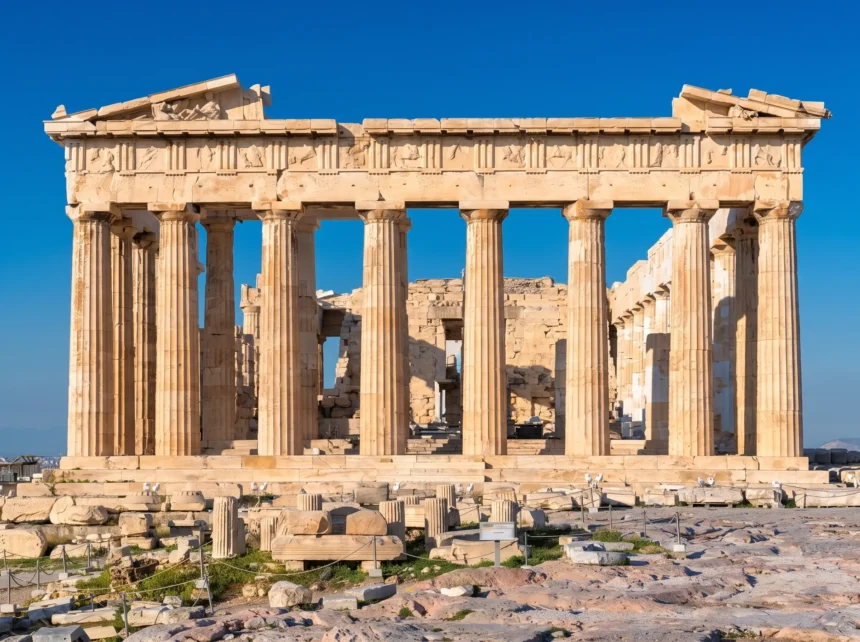
Buy a €30 timed entry ticket on the official Hellenic Heritage platform, arrive at 08:00 or late afternoon, and use the south east entrance near the Acropolis Museum. Allow two to three hours; the old combined ticket no longer exists.
To visit the Acropolis in 2026, buy a timed entry ticket online from the official Hellenic Heritage platform, arrive at opening time (08:00) or in the last two hours before closing, and use the quieter south entrance near the Acropolis Museum. A standard ticket costs €30, there is no longer an official combined ticket for the other Athens sites, and you should allow two to three hours on the hill. Prices, hours and rules change, so check the official ticket site before you go.
Quick facts
- Ticket price (2026): €30 full, €15 reduced for eligible visitors; free for EU citizens under 25 and non-EU visitors under 18, with ID.
- Opening hours: 08:00 to 20:00 in summer and 08:00 to 17:00 from November to March, with earlier closing in September and October.
- Timed entry: every ticket is for a one hour entry window and a daily visitor cap applies.
- Time needed: 2 to 3 hours for the hilltop and south slope, plus 2 hours for the Acropolis Museum.
- Nearest metro: Akropoli on line 2 for the south entrance; Monastiraki or Thissio for the west entrance.
Acropolis tickets in 2026
Prices
The full price ticket for the Acropolis and its slopes costs €30 in 2026, the same all year round. A reduced ticket of €15 is available to specific groups, such as EU citizens over 65 at certain times of year; the list of eligible groups is published on the Ministry of Culture site and you must show proof at the gate. Admission is free for EU citizens under 25 and for non-EU visitors under 18, with a passport or ID card. Free and reduced tickets still need to be issued, either online or at the ticket office, so that you are allocated a time slot.
Where to buy
The only official online shop is the Hellenic Heritage e-ticket platform (hhticket.gr, also reached through tickets.hh.gr). Tickets bought there are delivered as a QR code on your phone, so there is no need to queue at the ticket windows. Many resellers and tour companies sell tickets at a mark up, sometimes bundled with an audio guide. Be wary of anything advertised as a “skip the line” Acropolis ticket: the Ministry has stated that there is no such official product, and everyone goes through the same security gates.
Timed entry and the visitor cap
Since September 2023 the Acropolis has run on timed entry, with a maximum of around 20,000 visitors a day spread across hourly slots. Your ticket shows a one hour window and you must enter within it. Arrive at the start of your window rather than the end, since gate staff can be strict. Once inside, there is no time limit beyond closing time. In summer, the 08:00 and 09:00 slots are the most popular and can sell out days or weeks ahead, so book as soon as your dates are fixed.
Is there still a combined ticket?
No. The old combined ticket covering the Acropolis, the Ancient Agora, the Roman Agora, Hadrian’s Library, the Temple of Olympian Zeus, Kerameikos and other sites was discontinued in April 2025. Each site now has its own ticket, bought separately on the same official platform. The Acropolis ticket itself covers the hilltop monuments and the north and south slopes, but it is single entry: once you exit the site or the south slope, you cannot use it to go back in. The Acropolis Museum is run separately and needs its own ticket, around €20 for adults in 2026.
Free admission days
Entry is free for everyone on 6 March, 18 April, 18 May, the last weekend of September and 28 October, as well as on selected Sundays between November and March. These days are very busy, and you may still need a free timed ticket, so check the official site for the exact dates in the season you are visiting.


Opening hours and closures
From April to August the Acropolis opens from 08:00 to 20:00. Closing time moves earlier in stages through September and October as the days shorten, and from November to March the site is open from 08:00 to 17:00. Last entry is 30 minutes before closing. The site is closed on 1 January, 25 March, 1 May, Orthodox Easter Sunday and 25 and 26 December, and hours can be shorter on some other holidays.
During heatwaves, which hit Athens most summers, the Ministry closes the Acropolis in the middle of the day, typically from midday until 17:00. Strong winds or storms can also close it at short notice. If your trip is in July or August, keep the morning slot and check the news the day before.
When to visit
The best times are the first slot of the day, when the light is soft and the tour groups have not arrived, and the last two hours before closing, when the cruise ship crowds have gone and the marble glows in the low sun. Mid morning, from around 09:30 to 12:00, is the busiest period. Spring and autumn are the most comfortable seasons. In winter, the site is quiet and the light is crisp, and you can often walk around the Parthenon almost alone late in the afternoon.
Which entrance to use
There are two entrances. The main west entrance, reached from Apostolou Pavlou street or the path past Areopagus Hill, is close to the Propylaia and is used by most tour groups, so queues for security can be long in the morning. The south east entrance on Dionysiou Areopagitou, near the Theatre of Dionysus and a short walk from Akropoli metro and the Acropolis Museum, is usually quieter. Entering here also lets you see the south slope first before climbing to the top.


Visitors with limited mobility can use the lift on the north face of the hill; it is reached from the main entrance and should be arranged with staff on arrival. Paths on the summit have been improved, but surfaces remain uneven.
A suggested route around the Acropolis
- Theatre of Dionysus: from the south east entrance, start at the birthplace of Greek drama, where plays by Aeschylus, Sophocles and Euripides were first staged.
- The south slope path: walk west past the Asklepieion and the long Stoa of Eumenes, with views down into the Odeon of Herodes Atticus, the Roman theatre still used for summer performances.
- The Propylaia: climb to the monumental gateway, the busiest pinch point on the hill. Take your time and watch your footing on the polished marble steps.
- Temple of Athena Nike: the small, elegant Ionic temple perched on the bastion to the right of the Propylaia.
- The Parthenon: the temple of Athena Parthenos, completed in the 5th century BC. You cannot go inside, but walk all the way around it, since the east end is usually quieter than the west.
- The Erechtheion: the temple linked to the contest between Athena and Poseidon for the city, with its porch of six Caryatids. The figures on the building are copies; five originals are in the Acropolis Museum and one is in the British Museum.
- The Belvedere: at the eastern tip of the hill, a flagpole marks a viewpoint over Plaka, Lycabettus and the Temple of Olympian Zeus.
Return by the same route or leave by the west entrance and climb Areopagus Hill for the classic view back up to the Propylaia. From there, the Ancient Agora is a few minutes downhill on a separate ticket.
Combining the Acropolis with the Acropolis Museum
The Acropolis Museum is the natural partner to the site and many visitors prefer to see it first, because it explains what you will see on the hill and displays the original sculptures. Others prefer to climb in the cool of the morning and retreat to the museum when the sun is high. Either works. The top floor Parthenon Gallery is aligned with the temple itself, so you look up from the frieze to the real building. For a full day around the hill, our Athens travel guide sets out how to fit in the Ancient Agora and Plaka, and our list of things to do in Athens has plenty more for the rest of your stay.
Guided tour or on your own?
The site has little on site interpretation beyond a few panels, so a licensed guide adds a lot, especially for first time visitors interested in history and mythology. Official guides carry a Ministry licence, and tours normally do not include the entry ticket, so check what you are paying for. If you go alone, read up beforehand or download an audio guide, and combine the visit with the museum, which fills in the story.
Practical tips
- Book early: fix your Acropolis slot first and plan the rest of your Athens days around it.
- Shoes with grip: centuries of feet have polished the marble to a slippery shine. Avoid flip flops and smooth soles.
- Water and sun: there is almost no shade on the summit. Bring water, a hat and sunscreen, even in spring.
- Bags: large bags and suitcases are not allowed. If you are arriving or leaving on the same day, use a luggage storage service in town.
- Toilets and water: facilities are near the entrances, not on the summit, so plan ahead.
- Stay nearby: waking up in Koukaki, Makrygianni or Plaka makes the 08:00 slot easy; see where to stay in Athens.
- Arriving by air: the metro from the airport reaches Syntagma and Monastiraki without changes; see Athens airport to the city.
Frequently Asked Questions
How much does it cost to visit the Acropolis in 2026?
A full price ticket costs €30 and a reduced ticket €15 for eligible groups. Entry is free for EU citizens under 25 and non-EU visitors under 18 with ID. Check the official Hellenic Heritage ticket site for current rules before booking.
Do you need to book the Acropolis in advance?
Yes, in practice. Entry is by one hour timed slots with a daily cap of around 20,000 visitors, and summer morning slots often sell out. Book on the official e-ticket platform as soon as your dates are fixed.
Is there a combined ticket for the Acropolis and other sites?
Not any more. The official combined ticket was discontinued in April 2025. The Acropolis, the Ancient Agora, the Roman Agora and the other sites now each need their own ticket, as does the Acropolis Museum.
What is the best time of day to visit the Acropolis?
Go at 08:00 opening or in the last two hours before closing. Mid morning is the busiest time, and in summer the midday heat can lead to temporary closures.
How long does it take to see the Acropolis?
Allow two to three hours for the hilltop monuments and the south slope, including the Theatre of Dionysus. Add around two hours if you also visit the Acropolis Museum.
Which Acropolis entrance is less crowded?
The south east entrance on Dionysiou Areopagitou, near Akropoli metro and the Acropolis Museum, is usually quieter than the main west entrance used by tour groups.