




In Athens, eat souvlaki, cheese and spinach pies, loukoumades and shared meze with house wine. Head to Psyrri and the Central Market for classics and to Pangrati, Petralona and Koukaki for local tavernas, and dine after 21:00 like Athenians.
The best food in Athens is not in fine dining rooms but in its souvlaki counters, pie shops, old basement tavernas and neighbourhood mezedopoleia. Eat souvlaki and pies on the go by day, graze through the Central Market in the morning, and sit down for meze and house wine late in the evening, as Athenians do. This guide covers what to order, which classic places are worth the detour and which neighbourhoods to head for.
Quick facts
- Must try: souvlaki, a cheese or spinach pie, loukoumades, a meze spread and a home-style stew.
- Best areas: Psyrri and the market streets for classics, Koukaki and Petralona for tavernas, Pangrati and Exarchia for local value.
- Typical prices (2026): around 3.50 euros for a souvlaki near Monastiraki, less in residential areas; pies around 1.50 to 3 euros; casual dinner around 15 to 25 euros per person.
- Meal times: lunch from about 14:00, dinner rarely before 21:00.
- Good for: food lovers on any budget.
What to eat in Athens
Souvlaki and gyros
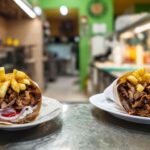
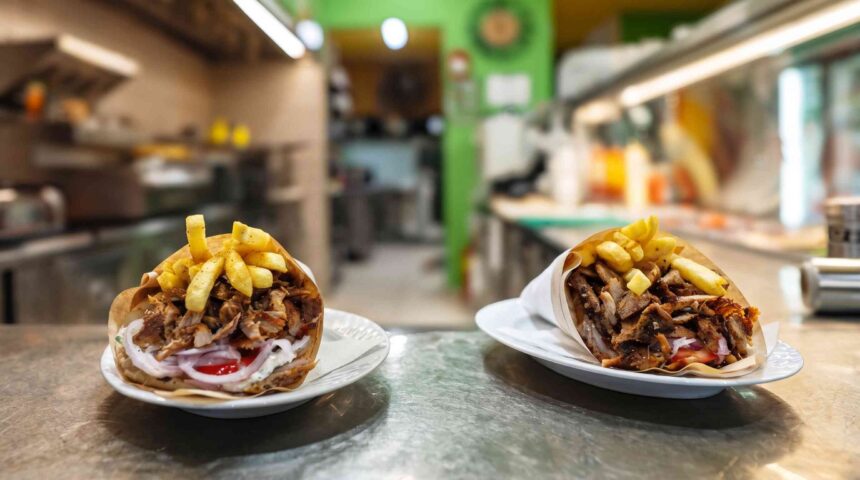
Souvlaki is the city’s everyday meal. Order it wrapped in pita with tomato, onion, tzatziki and often a few chips inside, or as plain skewers (kalamakia) on a plate. Pork is the classic choice, chicken the lighter one; gyros, shaved from a vertical spit, is the other wrap you will see everywhere. Eat it straight away, before the pita softens. Useful phrases: xoirino (pork), kotopoulo (chicken), horis kremidi (no onion).
Pies and bakery breakfasts
Athenians start the day with something from the bakery: tiropita (cheese pie), spanakopita (spinach pie), bougatsa (filo with custard or cheese) or a sesame koulouri ring from one of the street carts. These cost little and make a perfect breakfast on the move with a freddo espresso, the iced coffee that the city runs on.
Meze, tavernas and home cooking
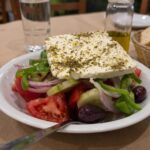
Dinner in Athens usually means sharing. At a mezedopoleio or ouzeri you order a series of small plates: fava (yellow split pea purée), grilled octopus, fried courgettes, keftedes (meatballs), saganaki cheese, horta (boiled wild greens) and a Greek salad, with ouzo, tsipouro or a carafe of house wine. Look also for a mageireio, a simple cook shop that prepares home-style dishes each morning: gemista (stuffed tomatoes and peppers), moussaka, giouvetsi (meat with orzo), fasolada (bean soup) and vegetables slow-cooked in olive oil. These are the dishes Greeks eat at home and some of the best value in the city. For the wider national menu, see our guide to Greek dishes to try.

Sweets
Loukoumades are small fried dough balls soaked in honey syrup and dusted with cinnamon, sometimes served with ice cream or chocolate. Pastry shops also sell baklava, kataifi and galaktoboureko (semolina custard in filo). In summer, Greek yoghurt with honey and walnuts is a simple, cooling dessert.
Classic places worth a detour
Athens changes fast, but a handful of long-running addresses remain reliable reference points. Opening days and hours vary, and several close on Sundays or in August, so check before going.


Souvlaki around Monastiraki
On Mitropoleos street, at the edge of Monastiraki square, Thanasis and Bairaktaris face each other and have fed the city for decades. Thanasis is known for its kebab-style minced meat in pita, Bairaktaris for sit-down plates. They are central and busy, and prices are slightly above the city average for that. A short walk away, Kostas on Agia Irini square is a tiny counter famous for its simple pork souvlaki, which often closes by mid-afternoon and has a queue at lunchtime.
Pies and loukoumades
Ariston on Voulis street near Syntagma is one of the oldest pie shops in the city, a good place to try several fillings. On Aiolou street, Krinos (at number 87) is an old-school spot for loukoumades, while Lukumades (at number 21) offers a modern take with toppings and ice cream.
Around the Central Market
Ta Karamanlidika tou Fani, at Sokratous and Evripidou streets, is a deli and meze restaurant built around cured meats and cheeses from the cooking of the Greeks of Asia Minor; try the pastourma and spicy sausages. Diporto, a basement taverna on Sokratous street, has no sign worth mentioning and no real menu: you eat a handful of dishes of the day with barrel wine, among market workers. O Telis, on Evripidou street, is a no-frills grill famous for one thing: plates of pork chops with chips.
Coffee, drinks and late-night food
Coffee in Athens is a social ritual rather than a quick fix. In summer almost everyone drinks a freddo espresso or freddo cappuccino, shaken over ice and sipped slowly for an hour; in 2026 these cost around 3 to 5 euros in most cafés, more on rooftops with Acropolis views. Traditional Greek coffee, boiled in a small pot and served with the grounds, is still ordered in older kafeneia: ask for it sketo (no sugar), metrio (medium) or glyko (sweet). In the evening, ouzo and tsipouro come with a small plate of meze, and the city’s wine bars have embraced Greek grape varieties such as Assyrtiko, Malagousia and Xinomavro. After midnight, the answer is the same as at lunch: a souvlaki.


The Central Market (Varvakios Agora)
The Varvakios Agora on Athinas street is the city’s main meat and fish market, with the fruit and vegetable stalls across the road and spice shops, delis and olive sellers in the streets around it. Go on a weekday morning, ideally between about 07:00 and 13:00; it is closed on Sundays. It is loud, wet underfoot and completely authentic, and it is the best place to buy olives, cheese, dried herbs, honey and spices to take home. The market tavernas and the side streets of Sokratous and Evripidou are good for an early lunch afterwards.
Where to eat by neighbourhood
- Plaka and Monastiraki: central and touristy. Some good tavernas, but many menus with photos and waiters calling you in; walk a few streets away before choosing.
- Psyrri: dense with meze places, tavernas and bars, busy until late. Good for a lively first night.
- Koukaki: just south of the Acropolis, with bakeries, small tavernas and wine bars that mix visitors and locals; convenient if you stay there, as many do (see our Athens neighbourhood guide).
- Petralona: a residential area with classic tavernas, such as Taverna tou Oikonomou, and outdoor tables in summer.
- Pangrati: one of the best areas for eating like a local, with old tavernas like Karavitis and many newer bistros around Varnava square.
- Exarchia and Kypseli: student and creative districts with cheap eats, cafés and some of the most interesting new restaurants in the city.
- Piraeus and the coast: head to the harbours and seaside suburbs for fish tavernas, especially at sunset.
How Athenians eat
Lunch is the main meal for many people and starts around 14:00. Dinner starts late: tavernas fill from 21:00 and stay busy past midnight, especially in summer. Bread is often brought automatically and charged as a small cover. Order a few dishes for the table rather than one main each, and add more as you go. House wine is sold by the kilo or half kilo (a volume measure, roughly a litre or half a litre) and in 2026 was often around 8 to 12 euros per half kilo. Service is not usually included in the way it is in some countries; rounding up or leaving around 5 to 10 percent for good service is normal.
Weekly street markets, the laiki, are another way into local food. Each neighbourhood has its day, and the Saturday market on Kallidromiou street in Exarchia is one of the best known.
Practical tips
- Avoid the touts: any restaurant with staff pulling people in from the street, especially by the Acropolis, is usually overpriced.
- Read prices carefully: fish is often priced by the kilo. Ask to see and weigh the fish before it is cooked.
- Combine with sightseeing: the market area is a short walk from Monastiraki, so it fits well with a morning on our list of things to do in Athens, and Koukaki is ideal for lunch after an early Acropolis visit.
- August: many family-run places close for part of the month while Athenians go on holiday.
- Vegetarians: Greek cooking is generous with vegetables and pulses. Look for ladera (olive oil dishes), gemista, fava, horta and the many bean dishes.
- Go further: if you are continuing north, our Thessaloniki food guide covers the country’s other great eating city, and our Athens travel guide helps you plan the rest of your stay.
The simplest way to eat well in Athens is to follow the locals: a pie in the morning, a souvlaki at lunch, and a long, late dinner of meze with friends.
Frequently Asked Questions
What food is Athens known for?
Athens is known for souvlaki and gyros, bakery pies such as tiropita and spanakopita, loukoumades and long dinners of shared meze. Home-style dishes such as moussaka, gemista and bean stews are found in traditional cook shops.
How much does a souvlaki cost in Athens?
In 2026 a souvlaki in pita cost around 3.50 euros near Monastiraki and roughly 2.50 to 3.20 euros in residential neighbourhoods. Sit-down restaurants with table service charge more.
Where do locals eat in Athens?
Locals favour neighbourhoods such as Pangrati, Petralona, Koukaki, Exarchia and Kypseli, plus the old tavernas around the Central Market. Restaurants with staff calling people in near the Acropolis are mostly aimed at visitors.
What time do people eat dinner in Athens?
Dinner usually starts after 21:00 and tavernas stay busy until midnight or later, especially in summer. Lunch is often the main meal and begins around 14:00.
When is the Athens Central Market open?
The Varvakios Agora on Athinas street is busiest on weekday mornings and is closed on Sundays. Go between about 07:00 and 13:00 for the full experience, and check hours on public holidays.