


Cretan food centres on olive oil, wild greens, barley rusks and sheep and goat cheeses. Must-try dishes include dakos, kalitsounia, Sfakian pie, boureki, snails, antikristo lamb, gamopilafo, staka and apaki, finished with tsikoudia.
Cretan food is built on olive oil, wild greens, barley rusks, sheep and goat cheeses, slow-cooked lamb and goat, and herbs gathered from the hills. It is simpler and more rustic than the Greek food many visitors know from home, and it changes from one end of the island to the other. These are the 20 dishes and products worth seeking out, with notes on where and when you are most likely to find them.
Quick facts
- Signature flavours: olive oil, mizithra and graviera cheese, wild greens, thyme honey, rusks
- Where to eat best: village tavernas and family places away from the main resort strips
- Typical meal: several shared plates, then fruit or a small sweet and a glass of tsikoudia on the house
- Best season for variety: spring for greens and Easter dishes, autumn for harvest food
- Good for: vegetarians as well as meat lovers, thanks to the many vegetable and greens dishes
What makes Cretan food different
Crete is large, mountainous and for much of its history was poor, so its cooking grew out of what shepherds and farmers could produce themselves. Olive oil is used generously in almost everything, and the island is one of Greece’s biggest olive oil producers. Wild greens (horta) are foraged and eaten year round. Meat was traditionally kept for feast days, which is why so many of the best-known meat dishes are wedding, festival or Easter food. The traditional diet of rural Crete became famous in the second half of the 20th century through research into Mediterranean eating and heart health, and it still underpins what is cooked in village kitchens today.
Each region has its own specialities. Chania is known for boureki and Sfakian pies, Rethymno and the Psiloritis villages for shepherd cooking and cheeses, and the east for its own pies and cured meats. Our regional guides to Chania and the west and Rethymno’s mountain villages point to the best places to try them.
Starters, pies and small plates
1. Dakos
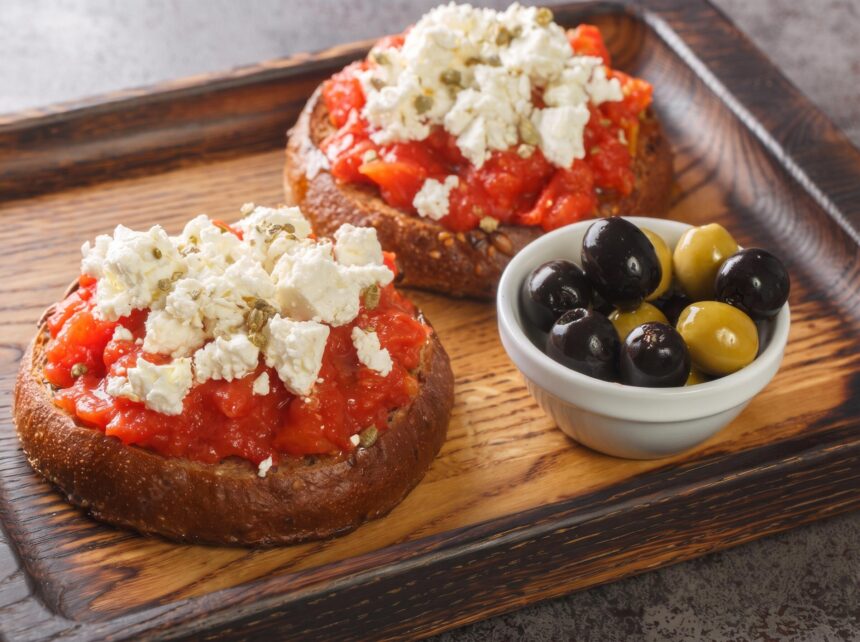
The most famous Cretan starter: a hard barley rusk topped with grated tomato, crumbled mizithra or xinomizithra cheese, olive oil and oregano, sometimes with olives and capers. The rusk softens as it absorbs the juices. It is on almost every menu and makes a light lunch on its own.

2. Kalitsounia
Small pies or open pastries filled with fresh soft cheese such as mizithra, sometimes with mint, sometimes with wild greens. They can be baked or fried, and some versions are eaten with honey. They are traditionally associated with Easter but are found all year.
3. Sfakiani pita
A thin, round pie from the Sfakia region, made by folding soft cheese into the dough and rolling it out very thin before cooking it in a dry pan. It is served hot, drizzled with thyme honey. Look for it at breakfast in Chora Sfakion, Loutro and Chania.

4. Boureki
A baked dish from the Chania area of sliced courgettes and potatoes layered with mizithra cheese and mint. Some versions are made with a pastry crust and some without. It is a summer dish, made when courgettes are plentiful.
5. Marathopites
Small fried or baked pies filled with wild fennel and other greens. The fennel gives a fresh, aniseed flavour. They are popular in spring and are a good choice for vegetarians.
6. Kolokythoanthoi
Courgette flowers stuffed with rice, herbs and sometimes cheese, then baked in olive oil. They appear in early summer and are one of the more delicate dishes on a Cretan menu.
7. Chochlioi boubouristi
Snails fried face down in hot olive oil with salt, then finished with vinegar and rosemary. Snails are gathered after rain and are a genuine local favourite rather than a tourist novelty. They are usually ordered as a shared starter.

Meat, rice and slow cooking
8. Antikristo
A shepherd’s method of cooking lamb: pieces of meat on long skewers are set upright around a fire, facing it rather than above it, and cooked slowly for hours. The name means across the fire. It is often prepared for festivals and for groups, so some tavernas in mountain villages ask you to order in advance.
9. Gamopilafo
Wedding pilaf: rice cooked in a rich stock from goat, lamb or rooster, finished with lemon and butter or staka. The meat is served alongside or on top. It is traditional at weddings and celebrations and is a speciality of the Psiloritis villages, though restaurants across the island now serve it.
10. Tsigariasto
Lamb or goat browned and then slowly cooked in olive oil and its own juices until very tender, with little more than salt. It is simple, rich and a good test of a taverna’s quality.
11. Gourounopoula
Slow-roasted pork, cooked for hours until the skin crackles, often found in the Heraklion area and at village festivals. It is usually sold by weight and served with potatoes.
12. Apaki
Pork marinated in vinegar and then smoked over aromatic herbs and wood. It is sliced thin and eaten as a meze, fried with eggs, or added to pies and rice dishes. It is especially associated with western Crete.
13. Kreatotourta
A pie of lamb or goat with soft cheese, traditionally made at Easter. It is substantial and usually found in bakeries and homes around the holiday rather than on everyday taverna menus.
Greens, grains and dairy
14. Stamnagathi
A spiny wild chicory that grows across the island. The young leaves are eaten raw in salads or boiled and dressed with olive oil and lemon. It is also cooked with lamb or goat, a classic Cretan combination. Restaurants often list it simply as wild greens.
15. Xinochondros
Cracked wheat fermented with sour milk and dried in the sun, then used to make thick soups, often with tomato or with snails. It is a traditional winter food and worth ordering if you see it.
16. Staka
A rich cream made by slowly heating the top layer of sheep or goat milk with a little flour until it thickens. It is eaten with fried eggs, stirred into pilaf, or spread on bread. The butter separated from it, called stakovoutyro, is used in cooking.
17. Cretan cheeses
Graviera Kritis is a hard sheep’s milk cheese with a nutty flavour and protected status. Mizithra is a soft fresh whey cheese, xinomizithra a sour version, and anthotyros a mild fresh cheese. Around Chania look for pichtogalo, a soft, slightly tangy spreadable cheese. Cheese shops in Chania market and Heraklion’s market street are good places to taste before buying.
Sweets and drinks
18. Xerotigana
Thin strips of dough twisted into spirals, fried and soaked in honey syrup, sometimes scattered with sesame or walnuts. They are traditional at weddings and baptisms and are sold in bakeries across the island.
19. Sarikopites
Coiled cheese pies, shaped like a turban (sariki), fried until crisp and served with honey. They straddle the line between savoury and sweet and are often eaten in the morning or as a dessert.
20. Tsikoudia
The Cretan grape spirit, also called raki, distilled from the skins and pips left after winemaking. It is offered at the end of almost every taverna meal, often with fruit or a small sweet, and is part of daily hospitality. The distilling season in autumn is a social event in the villages. For the island’s wines, see our guide to Cretan wine regions.
Where to eat well in Crete
The best Cretan food is usually found in family tavernas in the villages and in the older neighbourhoods of the towns, not on the waterfront strips of the big resorts. A short menu written partly in Greek, local wine from the barrel, and other tables full of Greek families are all good signs. In Heraklion, the central market street and the tavernas around it are a good start; our Heraklion travel guide has more on the city.
Village festivals (panigyria), especially in July and August, are an excellent chance to eat traditional food among locals, often with live Cretan music. Cooking classes and farm visits are increasingly common if you want to learn rather than just eat; our list of things to do in Crete includes some options.
Practical tips
- Order to share: Cretan meals work best as several plates for the table rather than one main each.
- Ask what is fresh: greens, pies and vegetable dishes change with the season, and the best ones are often not on the printed menu.
- Vegetarians: dakos, boureki, marathopites, kolokythoanthoi, greens and cheese pies make a full meal without meat.
- Food to take home: olive oil, thyme honey, graviera, rusks and dried herbs travel well; check your airline’s rules for liquids.
- Plan the island: our Crete travel guide helps you combine food stops with the main sights.
Frequently Asked Questions
What is the most famous Cretan dish?
Dakos is the best known: a barley rusk topped with tomato, soft cheese, olive oil and oregano. Kalitsounia cheese pies and antikristo lamb are also strongly associated with the island.
Is Cretan food different from other Greek food?
Yes. It relies more on wild greens, barley rusks, local cheeses such as mizithra and graviera, and slow-cooked lamb and goat. Many dishes, such as staka, apaki and Sfakian pie, are rarely found outside Crete.
Is Crete good for vegetarians?
Very good. Dakos, boureki, wild greens, stuffed courgette flowers, fennel pies and cheese pies are all meat-free and widely available. Ask whether dishes are cooked with meat stock if that matters to you.
What is tsikoudia?
Tsikoudia, often called raki in Crete, is a clear spirit distilled from grape pomace after winemaking. Tavernas commonly offer a small carafe free at the end of a meal.
What food should I bring home from Crete?
Olive oil, thyme honey, graviera cheese, barley rusks and dried mountain herbs are the most popular. Buy vacuum-packed cheese for travel and check liquid limits for hand luggage.