


Cretan wine comes mainly from the Heraklion area, especially the Peza, Archanes and Dafnes PDO zones, with Sitia in the east. Look for Vilana and Vidiano whites and Kotsifali, Mandilari and Liatiko reds, and visit wineries such as Minos in Peza or Lyrarakis in Alagni.
Cretan wine comes mainly from the hills south of Heraklion, where the Peza, Archanes and Dafnes appellations sit within a short drive of the city and of Knossos. The island’s own grape varieties (Vilana, Vidiano, Kotsifali, Mandilari and Liatiko among them) give wines you will not find elsewhere, and many family wineries welcome visitors for tastings. This guide explains the regions and grapes and suggests how to plan a day among the vineyards.
Quick facts
- Main wine area: the Heraklion regional unit, especially Peza, Archanes and Dafnes
- Other zones: Sitia in the east, and the hills west and south of Chania
- Key grapes: Vilana and Vidiano (white), Kotsifali, Mandilari and Liatiko (red)
- Best time to visit: spring to October; the harvest runs from late summer into autumn
- Getting there: Peza is about 17 km south of Heraklion by car
- Good for: a half-day or full-day trip combined with Knossos or Archanes
A very old wine island
Wine has been made on Crete for thousands of years. At Vathypetro, a Minoan villa south of Archanes, excavators found one of the oldest known wine presses in Europe, still in place in its room. Wine was a major export under Venetian rule, when Cretan sweet Malvasia was shipped across Europe. In the 20th century much of the island’s wine was sold in bulk, but since the 1990s a new generation of winemakers has focused on bottled wines and on reviving local grapes that had nearly disappeared.
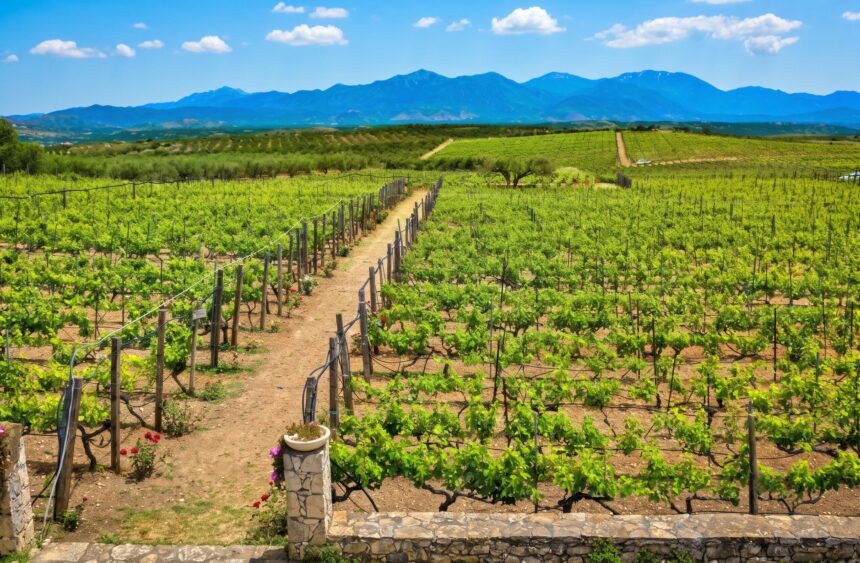
Today the Heraklion area produces most of Crete’s wine, and two thirds of its vineyards fall within protected designation of origin (PDO) zones. The landscape helps: vineyards climb from the coastal plain to several hundred metres on the slopes of Mount Giouchtas and the hills towards Psiloritis, where cooler nights keep the grapes fresh.
The wine regions
Peza
Peza is the heart of Cretan wine country, a cluster of villages on rolling hills south-east of Heraklion with vineyards rising to around 800 metres. The PDO Peza white is made from Vilana, the most widely planted white grape on the island, giving light, fresh, lemony wines. The PDO red blends Kotsifali, which brings softness and spice, with Mandilari, which adds colour and structure. Peza is also home to one of the island’s oldest bottlers and to a large agricultural cooperative.
Archanes
Next door, Archanes gives its name to a PDO for dry reds, again made from Kotsifali and Mandilari, from vineyards at around 300 to 450 metres. The town of Archanes itself is one of the best-kept in Crete, with restored neoclassical houses, cafés on its squares and a small archaeological museum. It makes a natural lunch stop on a wine day, and Vathypetro is a few kilometres to the south.
Dafnes
West of Peza, on the road towards the Psiloritis foothills, Dafnes is the zone for Liatiko, an ancient red variety. Liatiko is used for both dry and sweet wines. Its dry wines are pale in colour and gentle in tannin, closer in style to a light Pinot Noir than to the dark reds people often expect from a southern island.


Sitia and the west
In the far east, Sitia has its own PDO, also based on Liatiko, and a tradition of sweet wines. In the west, the villages around Chania and Kissamos grow Romeiko, a local red grape, and some winemakers there work with international varieties alongside Cretan ones. These areas are further from Heraklion and are best visited as part of a stay in the east or west of the island.
Grapes to look for
| Grape | Colour | Style |
|---|---|---|
| Vilana | White | Light, fresh, citrus; the classic Peza white |
| Vidiano | White | Fuller, with stone fruit; widely replanted in recent decades |
| Thrapsathiri | White | Rounder whites, often blended with Vilana |
| Dafni and Plyto | White | Rare local grapes revived by Cretan winemakers |
| Kotsifali | Red | Soft, spicy, high in alcohol |
| Mandilari | Red | Deep colour and firm tannins, usually blended |
| Liatiko | Red | Pale, aromatic, used for dry and sweet wines |
Sweet wines and the Malvasia story
During the centuries of Venetian rule, the sweet wine shipped from Candia (the Venetian name for Heraklion) and from Crete in general was one of the most sought-after wines in Europe, known in English as Malmsey. Modern Cretan winemakers have worked to bring this style back, and you will find sweet wines based on Malvasia Aromatica and on sun-dried Liatiko at several wineries in the Heraklion and Sitia areas. They are usually served in small glasses at the end of a tasting, and pair well with Cretan cheese and with honey-soaked sweets.
When to go
Spring is a lovely time for a wine trip, with green vineyards, wild flowers on the hillsides and comfortable temperatures for walking around Archanes. Summer is hot inland, so plan tastings for the morning or late afternoon and keep the middle of the day for a long lunch in the shade. Late August to October brings the harvest and then the tsikoudia distilling season, when the villages are at their busiest and most sociable. In winter, many wineries still sell wine but tours and tasting rooms often need to be arranged in advance. Our month-by-month guide to the best time to visit Crete has more detail on weather and crowds.
Wineries that welcome visitors
Dozens of wineries in the Heraklion area are open to visitors, from large family companies to small organic estates. Opening hours vary, many reduce them in winter, and smaller estates prefer a call or email in advance. The following are established wineries that offer tastings or tours.
- Minos (Miliarakis), Peza: a family company that made the first successful bottling of Cretan wine in 1952. At the time of writing its tasting hall opens from April to October, Monday to Friday 09:00 to 16:00 and Saturday 10:30 to 15:00, with visits by arrangement in winter; check before you go.
- Lyrarakis, Alagni: a family winery known for reviving the white grapes Dafni and Plyto, with vineyard and cellar tours and tastings.
- Douloufakis, Dafnes: a family winery in the Dafnes zone, offering guided visits and tastings on request.
- Rhous, Houdetsi: an organic winery within the Peza zone, with tastings indoors or on a terrace in summer.
- Stilianou, Kounavi: a small boutique winery with tastings and winemaker-led tours.
- Paterianakis, Melesses: one of the early organic producers on Crete, with vineyard tours and tastings.
- Domaine Zacharioudakis, Plouti: a hilltop estate in the south near ancient Gortyn, open for visits and tastings with local food.
In the west, Manousakis Winery at Vatolakkos, inland from Chania, offers tours and tastings and is the easiest visit if you are based in that part of the island.
A day in the wine villages
A practical plan is to visit Knossos Palace early in the morning, before the heat and the coach groups, then drive south through Kounavi and Peza for one or two tastings. Have lunch in Archanes, then continue to Vathypetro and, if time allows, a winery near Houdetsi in the afternoon. In Houdetsi, the Labyrinth Musical Workshop of Ross Daly is a centre for traditional music from Crete and further afield. Allow a full day and limit yourself to two or three wineries.
The obvious problem is driving. Tasting measures are small, but Greek drink-driving limits are strict, so the driver should spit or abstain, or you can book a guided wine tour from Heraklion. Our guide to driving in Crete covers the rules. The Heraklion travel guide suggests where to stay if you want to base yourself close to the vineyards.
Wine with Cretan food
Cretan wines are made to go with the local table. A chilled Vilana or Vidiano suits dakos, cheese pies and grilled fish, while a Kotsifali and Mandilari blend stands up to lamb with greens or slow-cooked goat. Liatiko’s lighter reds work well with snails and tomato dishes. In tavernas, the house wine is usually local and served from the barrel by the kilo or half kilo; quality varies, but it can be very good in wine villages. See our guide to Cretan food for dishes to pair.
Practical tips
- Book ahead: even wineries with set hours appreciate notice for tours, and smaller ones may only open by appointment.
- Harvest time: from late August into October some estates let visitors watch or join parts of the harvest; ask in advance.
- Buying wine: wineries usually sell bottles on site and many can ship within the EU; pack bottles in checked luggage.
- Combine sights: wine country lies close to Knossos and Archanes and fits neatly into a one-week Crete itinerary.
- Ideas nearby: our list of things to do in Crete includes more stops in the Heraklion hinterland.
Frequently Asked Questions
What are the main wine regions of Crete?
The main PDO zones are Peza, Archanes and Dafnes in the Heraklion area, and Sitia in the east. Most of the island’s wine is made in the hills south of Heraklion.
Which grapes are used for Cretan wine?
The key local whites are Vilana, Vidiano and Thrapsathiri, with rarer Dafni and Plyto. The main reds are Kotsifali, Mandilari and Liatiko, plus Romeiko in the west.
Can you visit wineries in Crete without booking?
Some larger wineries have set tasting hours from spring to autumn, but many smaller estates work by appointment. Calling or emailing a day or two ahead is the safest approach.
How far are the wineries from Heraklion?
Peza is about 17 km south of Heraklion, and Archanes and Dafnes are a similar distance. A wine day can easily be combined with a morning at Knossos.
What is the Vathypetro wine press?
Vathypetro is a Minoan villa south of Archanes where an ancient wine press was found in place. It is one of the oldest known in Europe and makes a fitting stop on a wine route.