


Ithaca is a small, green Ionian island next to Kefalonia, linked by Homer to Odysseus. Reach it by ferry from Sami, base yourself in Vathy, Kioni or Frikes, and give it three to five days for coves, villages and walks.
Ithaca is the quiet island of the Ionian: small, steep and green, with three harbour villages, a handful of pebble coves and no big resorts at all. It sits just east of Kefalonia, has no airport, and is reached by a short ferry crossing from Sami or, in summer, from Lefkada. Come for slow days, good walks and the story of Odysseus rather than for long sandy beaches or nightlife, and give it at least three days.
Quick facts
- Where: Ionian Sea, between Kefalonia and the mainland coast of Aitoloakarnania.
- Getting there: ferry from Sami (Kefalonia) to Pisaetos all year; seasonal boats from Vasiliki (Lefkada) and Fiskardo (Kefalonia) to Frikes; longer routes from Astakos and Patras on the mainland.
- Time needed: 3 days minimum, 5 if you want to walk and take boats to the coves.
- Best time: May to June and September to early October.
- Good for: couples, walkers, sailors, readers of Homer, anyone escaping busier islands.
Understanding the island
Ithaca is shaped like two pieces of land tied together by a narrow isthmus at Aetos. The southern half holds Vathy, the capital, set at the end of a deep, almost enclosed bay that is one of the finest natural harbours in Greece. The northern half is wilder and higher, with Mount Neritos rising to just over 800 metres, the mountain villages of Anogi, Exogi and Stavros, and the two small ports of Frikes and Kioni. A single main road links the two halves, winding along the cliffs above the channel that separates Ithaca from Kefalonia.
The island is small enough to cross in under an hour, but the roads are narrow and twisting, and the drive is part of the pleasure. Life is local: fishermen in the harbours, yachts that tie up for a night or two, and Greek families who return to their villages every summer.
Where to base yourself
Vathy
Vathy is the practical choice for a first visit. It has most of the shops, the bank machines, the pharmacy, a small archaeological museum and the widest choice of tavernas and rooms. The waterfront curves around the bay, with the little islet of Lazaretto in the middle, once a quarantine station and now topped by a small chapel. Without a car, Vathy is the only sensible base, because water taxis to the southern coves leave from here.
Kioni
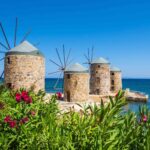
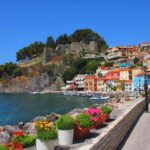
Kioni, in the northeast, is the prettiest village on the island: a horseshoe harbour lined with Venetian era houses, old stone windmills on the headland and a short row of cafés and tavernas facing the moored yachts. It is small and quiet, and it fills with sailors in the evening in July and August. Rooms are limited, so book early.
Frikes
Frikes, a few kilometres west of Kioni, is even smaller, a fishing harbour in a narrow valley with a couple of tavernas, a few rooms and the seasonal ferry quay. It suits travellers arriving from Lefkada and those who want to walk the north of the island.
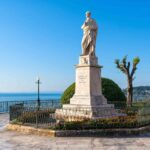
The Odyssey on Ithaca
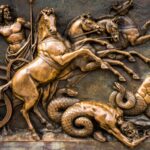
In Homer, Ithaca is the home Odysseus spends ten years trying to reach after the Trojan War, where Penelope waits and fends off the suitors. Scholars still argue about whether the modern island is Homer’s Ithaca, and the debate is part of the fun. Several places on the island have long been linked with the poem.
- Cave of the Nymphs (Marmarospilia): above Vathy, traditionally the cave where the Phaeacians left the sleeping Odysseus and his treasure. It has not been open to visitors in recent years.
- The School of Homer: an archaeological site near Exogi in the north, where excavations have found remains from Mycenaean times onwards. It has been closed for restoration work, so treat it as something to see from outside.
- Loizos Cave: near Polis Bay, a cult site where finds included pottery and offerings linked to Odysseus.
- Arethousa Spring: south of Vathy, traditionally the spring near the hut of the swineherd Eumaeus, reached on foot.
The best place to make sense of all this is the small Archaeological Collection in Stavros, which displays finds from the northern sites, including material from Loizos Cave and the Mycenaean settlement at Pilikata. Opening days are limited, so check locally before you drive up.
Beaches and coves
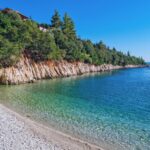
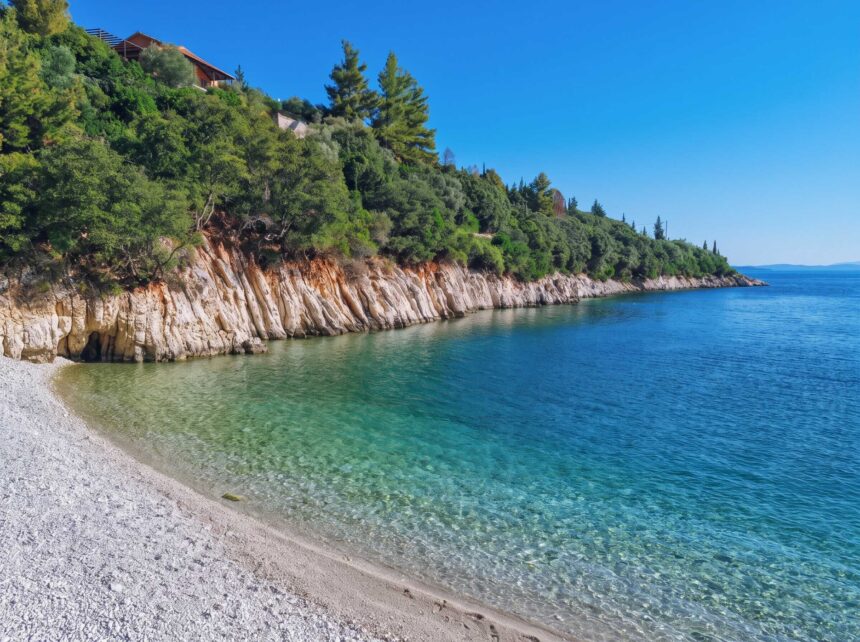
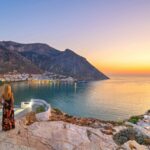
Ithaca has no long sandy beaches. What it has instead is a series of small pebble coves with very clear water, many of them reachable only by boat or on foot. That keeps them quiet even in August.
Around Vathy
Gidaki is the best known: a long white pebble beach east of Vathy with no road access. In season, small boats run there from Vathy harbour, or you can walk over the hill on a footpath. Filiatro is the easiest beach to reach by car, a pine backed cove with sunbeds in summer. Sarakiniko and Skinos are quieter coves to the east of the bay, with few or no facilities.
In the north
Polis Bay, below Stavros, is a sheltered cove with views across the channel to Kefalonia. Afales is a big, wild bay on the north coast, exposed to the wind but beautiful. Around Kioni and Frikes, small coves such as Dexia and those along the road between the two villages make easy afternoon swims, and boat trips from Kioni reach beaches you cannot get to by road.
Bring water shoes, a snorkel and some shade, because most coves have no services at all.
Villages and walks
Some of the best of Ithaca is inland. The mountain village of Anogi has a church with old frescoes and strange standing rocks in the fields around it. Higher still, the Monastery of Kathara looks out over the Gulf of Molos and Vathy, and its terrace is one of the best viewpoints on the island. Perachori, on the hill above Vathy, is surrounded by vineyards and has paths down to the medieval ruins of Paliochora. Stavros is the main village of the north, with a square, a few tavernas and a bust of Odysseus.
Old mule paths connect many of these villages, and spring and autumn are excellent for walking. Popular routes include Kathara to Anogi (an easy hour or so), Anogi down to Kioni (around two hours, mostly downhill), and the path from Vathy to Arethousa Spring. Paths are not always well marked, so carry a map or an offline app, plenty of water, and avoid the middle of the day in summer.
Food on Ithaca
Food is simple and local. Look for rovani, a traditional Ithacan sweet soaked in honey; rabbit or goat cooked slowly in tomato or wine; wild greens pies; and fresh fish in the harbour tavernas of Vathy, Kioni and Frikes. Like neighbouring Kefalonia, Ithaca also makes pastitsada, meat cooked in a spiced tomato sauce and served with pasta. Small vineyards around Perachori produce local wine, often served from the barrel.
Combining Ithaca with other islands
Ithaca works best as part of a longer Ionian trip. The obvious pairing is Kefalonia, a short ferry away, covered in our Kefalonia travel guide and our list of things to do in Kefalonia. In summer, Frikes connects with Vasiliki on Lefkada; see our Lefkada travel guide, and note that many boat trips from Lefkada also call at Ithaca for a few hours. For route ideas across the islands, read our guide to Ionian island hopping.
Practical tips
- Ferries: the Sami to Pisaetos crossing runs all year and takes well under an hour. Foot passenger fares started from around 2.50 euros in 2026, more with a car. Seasonal routes to Frikes generally run from June to September. Timetables change every year, so check them close to your dates; our guide to Greek ferries explains how booking works.
- Arriving at Pisaetos: the port is a quay with little around it. Arrange a taxi or collect a hire car in advance, because buses are very limited.
- Getting around: a car or scooter is close to essential if you stay outside Vathy. Drive slowly, as the roads are narrow and goats are common.
- Money: cards are accepted in most places, but carry some cash for small canteens and boat taxis.
- Mobile signal: weak on mountain roads and in remote coves.
- Off-season: many rooms and tavernas in Kioni and Frikes close from late October to May, while Vathy stays open all year.
Ithaca suits travellers who are happy with a few things done well: a swim in a clear cove, a long lunch by the harbour, a walk between villages and an evening watching the boats come in. It is one of the least spoilt islands in the Ionian, and it rewards a slow pace.
Frequently Asked Questions
How do you get to Ithaca?
Ithaca has no airport. Most people fly to Kefalonia and take the ferry from Sami to Pisaetos, which runs all year. In summer there are also boats from Vasiliki on Lefkada and Fiskardo on Kefalonia to Frikes, and longer ferries from Astakos and Patras on the mainland.
How many days do you need in Ithaca?
Three days is enough to see Vathy, Kioni, Frikes and a few coves. Five days lets you add walks between the mountain villages and boat trips to beaches without road access.
Does Ithaca have good beaches?
Ithaca has small pebble coves rather than long sandy beaches. The water is very clear, and places such as Gidaki, Filiatro and Polis Bay are lovely, but if sand matters most to you, Kefalonia or Lefkada are better choices.
Do you need a car in Ithaca?
Buses are very limited, so a car or scooter makes life much easier, especially if you stay in the north. Without one, base yourself in Vathy and use taxis and water taxis.
Is modern Ithaca really the home of Odysseus?
Nobody can say for certain. Homer’s description does not match the modern island perfectly, and some researchers argue for other locations, including part of Kefalonia. Ithaca has Mycenaean remains and an old cult of Odysseus, and the island is proud of the connection.