


Rethymno is a central, compact Venetian town: spend a day on the Fortezza and old town, then explore the Arkadi Monastery, mountain villages such as Anogia and the south coast beaches around Plakias and Preveli.
Rethymno is a compact Venetian and Ottoman town on the north coast of Crete, halfway between Chania and Heraklion, with a huge fortress, a long sandy town beach and a mountainous hinterland full of traditional villages. It is smaller and calmer than Chania, and its central position makes it the most practical base for exploring both ends of the island. Give the old town a day, then spend the rest of your time on the villages, the Arkadi Monastery and the south coast beaches.
Quick facts
- Where: central north coast, around 60 km east of Chania and 80 km west of Heraklion.
- Getting there: fly into Chania or Heraklion and drive or take the KTEL bus along the national road, roughly an hour from Chania and 1.5 hours from Heraklion.
- Time needed: one day for the town, four to six days including villages and the south coast.
- Best time: May, June, September and October; February for the carnival.
- Good for: history, village drives, a central base, beach holidays and families.
The old town
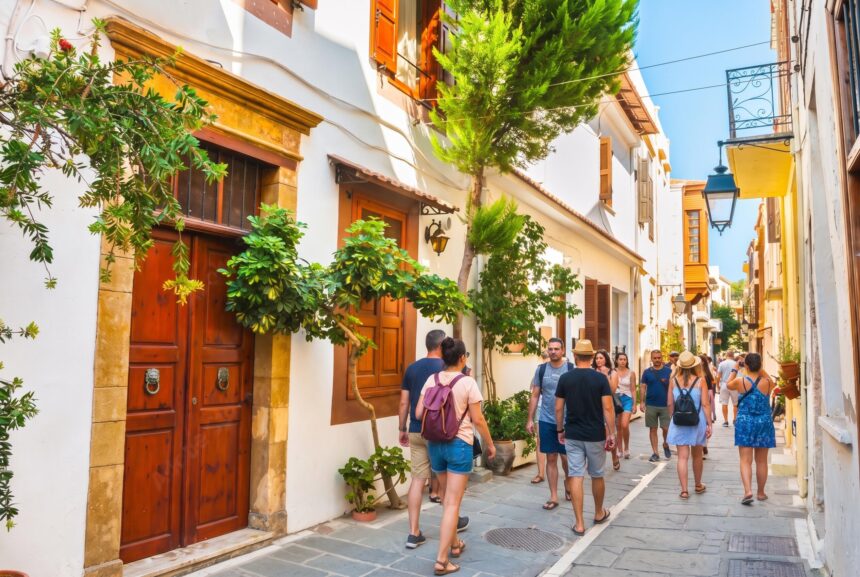
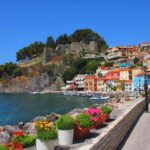
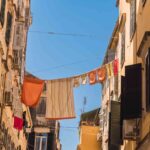
Rethymno’s old town fills a small promontory on the coast, crowned by the Fortezza. It grew under Venetian rule into a lively centre of learning and the arts, and after the Ottoman conquest in 1646 domes and minarets were added to the skyline. Much of that mix survives, which makes the old town one of the best preserved in Greece: Venetian doorways with carved stone frames, Ottoman wooden balconies (kioskia), fountains and narrow lanes that change direction every few metres.
The Fortezza
The Venetians built the Fortezza between 1573 and 1590 on the hill called Paleokastro, after pirate raids had devastated the town. It is a pentagonal fortress with bastions at the corners and is one of the largest Venetian castles in Greece. Inside its walls are the domed Mosque of Sultan Ibrahim, small churches, the remains of storerooms and barracks, and wide open spaces with views over the town and along the coast. The fortress fell to the Ottomans in 1646 after a siege. In summer the open-air Erofili theatre inside hosts concerts and performances, including events of the Renaissance Festival. Go early in the morning or late in the afternoon, as there is little shade.
Rimondi Fountain and the Loggia
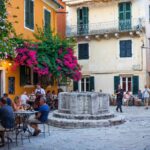
The Rimondi Fountain, built in 1626 and named after the Venetian governor who paid for it, is the town’s best known meeting point. Water still flows from three lion-head spouts between Corinthian columns, and the square around it is full of cafés. Nearby, the Venetian Loggia, a 16th-century meeting place for the nobility, now houses a shop selling museum replicas.
Mosques, churches and museums
The Neratze Mosque, originally an Augustinian church converted in the 17th century, has the tallest minaret in town and is used as a concert hall. The Kara Musa Pasha Mosque and the restored Venetian church of St Francis are also worth a look; the Archaeological Museum of Rethymno now occupies St Francis, with finds from across the prefecture. The small Historical and Folk Art Museum shows textiles, tools and everyday objects from rural Crete.
The Venetian harbour
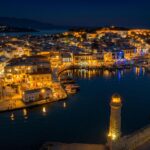
The little inner harbour is ringed by fish restaurants and has a 19th-century stone lighthouse at the end of its breakwater. It is pretty, especially in the evening, but the restaurants on the quay are aimed at visitors; eat a few streets inland for better value.

Beaches in and near Rethymno
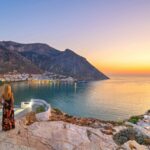
Rethymno’s town beach starts right beside the old town and runs east for many kilometres, past a long strip of hotels to Platanes, Adelianos Kampos and beyond. It is wide and sandy, with sunbeds and watersports near town and quieter patches further along, but it is exposed to the north wind and can have strong waves and currents. To the west, Episkopi and Petres offer long stretches of sand and shingle with fewer people. Bali, around 35 km east, is a former fishing village with small coves that are more sheltered.
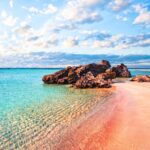
The south coast of the prefecture is wilder and more beautiful. Plakias has a long beach and a relaxed village, with smaller beaches such as Damnoni and Ammoudi nearby. Preveli Beach, at the mouth of the Kourtaliotiko gorge, has a river lined with palm trees running into the sea and is reached by a steep path or by boat from Plakias or Agia Galini. Further east, Triopetra and Agios Pavlos have dramatic rock formations and dunes. Our guide to the best beaches in Crete compares them with the rest of the island.
Mountain villages and the hinterland
Arkadi Monastery
About 23 km southeast of town, the Arkadi Monastery is one of Crete’s most important historical sites. During the Cretan revolt of 1866, hundreds of villagers and fighters sheltered here against the Ottoman army. On 8 November 1866, as the attackers broke in, the defenders set fire to the gunpowder store, killing themselves and many of their enemies. The event drew international attention to the Cretan cause. The church has a fine Venetian Renaissance façade, and a small museum and ossuary tell the story. Dress respectfully.
Margarites and Eleftherna
Margarites, a short drive from Arkadi, is a pottery village where workshops still produce traditional pieces, and the potters are often happy to show their work. Nearby, the archaeological site of Ancient Eleftherna and its modern museum present a city that thrived from the Geometric period onwards.
Anogia and the Nida plateau
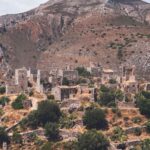
Anogia, on the slopes of Psiloritis, is a proud mountain village famous for its music, weaving and grilled lamb. It was destroyed by German forces in 1944 in reprisal for the Cretan resistance, and rebuilt. From Anogia a road climbs to the Nida plateau, at around 1,400 metres, and the Ideon Cave, linked in mythology with the childhood of Zeus.
The Amari valley and Spili
The Amari valley, below the southern flanks of Psiloritis, is a peaceful area of olive groves, small villages and frescoed Byzantine churches, ideal for a slow day by car. Spili, on the road south to Plakias, is known for its fountain with a long row of lion-head spouts and for its herb and honey shops. Elsewhere, the Melidoni cave, northeast of town, is impressive in itself and is remembered for a massacre during the 1824 revolt.
Food and festivals
Rethymno’s tavernas serve the full range of Cretan cooking: dakos, kalitsounia, snails, lamb with stamnagathi greens, and the local fried pastry called sarikopites, wrapped like a turban and drizzled with honey. In the villages, look for tavernas with their own olive oil and wine. The Rethymno Carnival, in the weeks before Lent, is one of the largest in Greece, with parades, treasure hunts and street parties. Our guide to Cretan dishes to try has more ideas.
Where to stay
- Old town: restored Venetian and Ottoman houses converted into small hotels and apartments; best for atmosphere and walking.
- Town beach and the eastern strip: larger hotels and apartments along the sand, good for families.
- Plakias or Agia Galini: for a slower stay on the south coast.
- Village stays: in the hills around Arkadi, Margarites or the Amari valley, if you have a car.
Practical tips
- Rethymno is well placed for day trips in both directions; Chania is about an hour away, and our Chania travel guide covers the west.
- Heraklion and Knossos make an easy day out too; see our Heraklion city guide.
- A car is the best way to explore the villages and the south coast; read our tips on driving in Crete before you set off.
- Swim with care on the town beach when red flags are flying, as currents can be strong.
- Check opening hours of the Fortezza and the museums before visiting, as they vary by season.
- For how Rethymno fits into a longer trip, see our Crete travel guide.
Frequently Asked Questions
Is Rethymno worth visiting?
Yes. Its old town is one of the best preserved in Greece, with Venetian and Ottoman buildings under a large fortress, and it has a long sandy beach. It is also the most central base on Crete for day trips.
Is Rethymno or Chania better?
Chania has the more famous harbour and the west’s big-name beaches. Rethymno is smaller, often calmer, and better placed for reaching both ends of the island and the south coast.
How far is the Arkadi Monastery from Rethymno?
Around 23 km southeast of town, roughly a 30-minute drive. Local buses also run there, though not frequently, so check times in advance.
Does Rethymno have a good beach?
The town beach is long and sandy and starts right by the old town, but it is exposed to the north wind and can be rough. For calmer or more scenic swimming, head to Bali on the north coast or to Plakias and Preveli in the south.
When is the Rethymno Carnival?
It takes place in the weeks before Orthodox Lent, usually in February or early March, with the grand parade on the final Sunday. Dates change each year with Easter.