



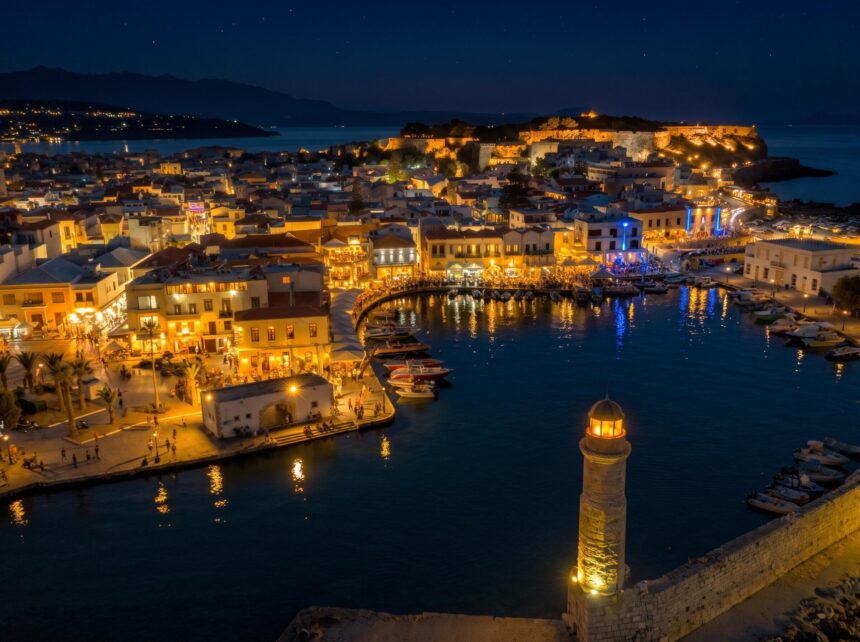
Crete is Greece's biggest island, so plan by region (Chania, Rethymno, Heraklion, Lasithi), hire a car and allow at least a week, ideally ten to fourteen days with two or three bases.
Crete is Greece’s biggest island, and the key to planning a trip is accepting that you cannot see all of it in one go. It stretches roughly 260 km from west to east, with high mountains, deep gorges, Minoan palaces, Venetian harbour towns and beaches on three different seas. Pick one or two regions, base yourself well, hire a car, and give it at least a week; ten days to two weeks is better if you want both the west and the east.
Quick facts
- Size: about 8,300 square kilometres and around 620,000 residents, the largest and most populous Greek island.
- Getting there: international airports at Heraklion and Chania, a smaller one at Sitia, and overnight ferries from Piraeus to Heraklion and Souda (Chania).
- Time needed: one week for a single region, ten to fourteen days for a fuller road trip with two or three bases.
- Best time: May, June, September and October; July and August are hot and crowded.
- Getting around: a hire car gives the most freedom; KTEL buses link the main towns along the north coast.
- Good for: road trips, hiking, archaeology, food lovers, families and long beach holidays.
Understanding the island
Crete is divided into four regional units, which are also the most useful way to think about a trip. From west to east they are Chania, Rethymno, Heraklion and Lasithi. Each has a main town on the north coast, and the national road, the VOAK (often written BOAK), runs along that coast and connects them. The south coast faces the Libyan Sea and is wilder, with fewer resorts and slower roads that cross the mountains.
Three mountain ranges form the backbone of the island: the White Mountains (Lefka Ori) in the west, Mount Ida or Psiloritis in the centre, which at 2,456 metres is the highest point of Crete, and the Dikti range in the east. Snow can sit on the peaks well into spring, and the mountains shape everything, from the weather to the time it takes to drive from north to south.
Chania: the west
The west is the most scenic part of the island for many travellers. Chania town has the most attractive Venetian harbour on Crete, and the region holds the big-name natural sights: the Samaria Gorge, Balos lagoon, Falassarna and Elafonisi. It is a good choice for walkers and beach lovers. Read our full Chania travel guide for the town and its surroundings.
Rethymno: the middle ground
Rethymno has a compact old town under a large Venetian fortress, a long sandy town beach, and a hinterland of mountain villages, with the Arkadi Monastery and the Amari valley within easy reach. Being central, it is a practical base for seeing both halves of the island. More in our Rethymno and its villages guide.
Heraklion: the capital and the Minoans
Heraklion is the island’s capital and main transport hub. It is busy and not pretty at first sight, but it holds the Archaeological Museum, one of the most important in Greece, and the Palace of Knossos is just south of the city. The wine villages around Peza and Archanes and the Phaistos and Matala area in the south are also in this region. See our guide to Heraklion for how to spend time there.
Lasithi: the east
The east is quieter and greener in places. Agios Nikolaos and Elounda sit on the Mirabello Bay, Spinalonga island lies just offshore, and the Lasithi Plateau with its old windmills and the Dikteon Cave is up in the mountains. Further east are Sitia, the palm beach at Vai and the south coast town of Ierapetra. Our Lasithi travel guide covers the region in detail.
How long to stay and how to split it
The single most common mistake is booking one hotel and trying to see the whole island in day trips. Chania to Agios Nikolaos is around 200 km by road, which can take three hours or more in summer traffic, and the roads to the south coast are slow and winding. A better approach:
- One week: choose either the west (Chania plus Rethymno) or the centre and east (Heraklion, Agios Nikolaos and Elounda). Use one base, or two if you want the south coast too.
- Ten days: split between Chania and a base in the centre or east, adding a few nights on the south coast at Plakias, Loutro or Matala.
- Two weeks: three bases, such as Chania, Rethymno or the south coast, and Elounda or Agios Nikolaos, with time for a gorge walk and a lazy beach day or two.
If you prefer a ready-made plan, our one-week Crete road trip lays out a route day by day.
Getting to Crete
By air
Heraklion’s Nikos Kazantzakis Airport is the busiest on the island, with domestic flights from Athens all year and a large number of seasonal international routes. It sits just east of the city centre. Chania’s airport is on the Akrotiri peninsula, about 15 km from town, and is the better arrival point for the west. Sitia has a small airport mainly served by domestic flights. A new airport is being built at Kastelli, southeast of Heraklion, and is officially scheduled to replace the current Heraklion airport around 2028, though large Greek projects often slip.
By ferry
Ferries run from Piraeus to Heraklion and to Souda, the port of Chania, all year. The classic way is the overnight boat with a cabin, which arrives early in the morning. There are also seasonal links from Santorini and other Cyclades to Heraklion, which makes Crete an easy final stop on an island-hopping trip. Our guide to Greek ferries explains routes, booking and what to expect on board.
Getting around
A car is the best way to explore Crete, because many beaches, villages, monasteries and gorge trailheads are poorly served by public transport. Book early for July and August, especially for an automatic. Drive defensively: local habits include using the hard shoulder as a slow lane on the national road, mountain roads have sharp bends and the occasional goat, and the south coast roads take longer than the map suggests. Our article on renting a car in Greece covers licences, insurance and deposits.
If you would rather not drive, the KTEL bus network is reasonable along the north coast, linking Chania, Rethymno, Heraklion, Agios Nikolaos and Sitia, with branches to many south coast villages and to trailheads such as the start of the Samaria Gorge in season. Organised day tours also go to Knossos, Spinalonga, Balos and Elafonisi.
What to see and do
Archaeology and history
Crete was the heart of the Minoan civilisation, Europe’s first great Bronze Age culture. Start with the Archaeological Museum in Heraklion, which displays the Phaistos Disc and the Knossos frescoes, and then visit Knossos itself. Phaistos and its neighbour Agia Triada in the south are quieter and set in finer landscape, while Malia and Zakros in the east complete the main palace sites. Later layers are equally visible: Venetian fortresses in Chania, Rethymno and Heraklion, Ottoman fountains and mosques, and the Arkadi Monastery, a national symbol of the 1866 uprising.
Gorges and mountains
The Samaria Gorge is the famous one, a long day walk from the Omalos plateau down to the sea at Agia Roumeli, open from late spring to autumn depending on conditions. There are many shorter alternatives: Imbros near Sfakia, Aradena, the Kourtaliotiko gorge near Preveli and the Richtis gorge in the east. The European long-distance path E4 crosses the island for those with more time.
Beaches
The west has the headline beaches: Balos, Falassarna and Elafonisi. The south coast has long, quiet stretches such as Triopetra, Agios Pavlos and Komos, and coves reached only by boat or on foot around Loutro. The north coast resorts offer easy, organised beaches with sunbeds and tavernas. Expect wind on exposed beaches in July and August, when the meltemi blows.
Food and wine
Cretan food is a reason to come on its own. Look for dakos (barley rusk with tomato and mizithra cheese), slow-cooked lamb or goat with greens, snails (chochlioi), kalitsounia cheese pies and wild greens called stamnagathi. Raki (tsikoudia) arrives at the end of most meals, often free. The island also has a lively wine scene, with local grapes such as Vidiano, Vilana, Liatiko and Kotsifali.
When to go
Crete has one of the longest seasons in Greece. May and early June are green, with wildflowers on the hills and pleasant walking weather, although the sea is still cool. July and August are hot, busy and expensive, and strong winds are common. September and October are many visitors’ favourite months: the sea is at its warmest, the crowds thin out and the Samaria Gorge is usually still open. Winter is mild on the coast and many towns remain lively, especially Chania and Heraklion, but beach hotels close and the mountains get snow.
Where to stay
Choose your base according to your priorities. Chania old town suits those who want atmosphere, restaurants and easy day trips in the west. Rethymno is a central compromise with a town beach. Heraklion works for a night or two around flights or museum visits rather than a whole holiday. Elounda and Agios Nikolaos have the island’s largest choice of upmarket resorts. On the south coast, Plakias, Paleochora, Loutro and Matala are quieter and slower, ideal for a few days of reading, swimming and walking.
Practical tips
- Do not underestimate driving times; plan no more than two or three hours on the road a day.
- Carry cash for small village tavernas, kiosks and some beach parking, although cards are widely accepted in towns.
- Book the most popular sights early in the day: Knossos, Balos and Elafonisi are much calmer before 10:00.
- Wear proper shoes and take plenty of water for gorge walks, and check conditions the day before, as gorges can close in strong wind or heavy rain.
- Respect dress codes at monasteries: covered shoulders and knees.
- Ticket prices and opening hours at archaeological sites change regularly; check the official site of the Ministry of Culture before you go.
Frequently Asked Questions
How many days do you need in Crete?
A week is enough to see one region properly, for example Chania and the west. To cover the west and the east without rushing, allow ten to fourteen days and use two or three different bases.
Which is the best part of Crete to stay in?
Chania is the favourite for atmosphere and the west’s famous beaches and gorges. Rethymno is the most central base, while Elounda and Agios Nikolaos offer the widest choice of resorts in the east.
Do I need a car in Crete?
It is strongly recommended. Buses connect the main north coast towns well, but many beaches, villages and monasteries are only practical to reach by car. Book early for summer, especially if you need an automatic.
Which airport should I fly into for Crete?
Fly into Chania if you plan to stay in the west, and Heraklion for the centre and east. If your itinerary covers the whole island, flying into one and out of the other saves a long drive back.
When is the best time to visit Crete?
May, June, September and October offer warm weather, a swimmable sea from June onwards and fewer crowds. July and August are the hottest and busiest months, with frequent strong winds.