



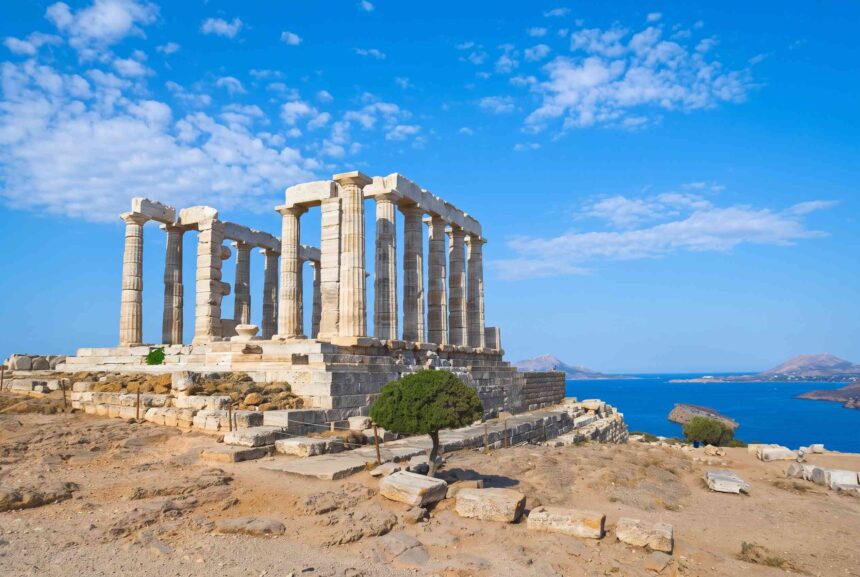
Cape Sounion is the southern tip of Attica, about 70 km from Athens, home to the Temple of Poseidon built around 440 BC. Drive the coastal road or take the KTEL bus, and arrive at least an hour before sunset.
Cape Sounion is the southern tip of Attica, about 70 km from central Athens, and its Temple of Poseidon has stood on the cliff edge above the Aegean since the 440s BC. It is the easiest half day trip from the capital: a scenic drive down the coast, an hour or so among the columns, a swim and dinner by the sea. Go in the late afternoon and stay for sunset, but expect company, because half of Athens has the same idea in summer.
Quick facts
- Where: the southernmost point of Attica, in the municipality of Lavreotiki, about 70 km from Syntagma.
- Getting there: roughly 1 hour 15 minutes to 1 hour 30 minutes by car on the coastal road, or about 2 hours on the KTEL Attikis bus from central Athens.
- Time needed: 1 to 2 hours at the site, half a day including the drive and a swim.
- Tickets: in 2026 around 20 euros from April to October and around 10 euros in winter; check before you go.
- Best time: late afternoon to sunset from April to October; weekday mornings if you want the temple to yourself.
The Temple of Poseidon
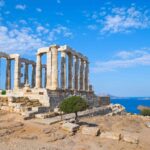
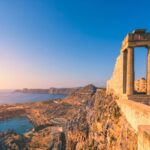
The marble temple you see today was built between about 444 and 440 BC, in the same burst of Athenian building that produced the Parthenon, and many scholars attribute it to the same unnamed architect who designed the Temple of Hephaestus in the Athenian Agora. It replaced an earlier temple of poros stone that was still under construction when the Persians burned it in 480 BC. The new building was a classic Doric temple with a ring of 34 columns, and some 15 of them still stand along the long sides, white against the sea and visible from boats far offshore.
Look closely at the columns and you will see they are slimmer than those of the Parthenon and have only 16 flutes instead of the usual 20, a choice usually explained as a way to help the stone shed salt spray and wind. The marble came from Agrileza, a quarry a few kilometres north of the cape, so it is a local stone with a faintly grey tone that turns honey coloured at sunset.
Lord Byron’s name
Generations of travellers carved their names on the temple, and the most famous signature is Byron’s, cut into the base of a column on the approach side during his visit in 1810 or 1811. He later wrote about the cape in his poem “The Isles of Greece”, with the line about placing him on Sunium’s marbled steep.
Myths and history of the cape
Sounion appears in the Odyssey as the “sacred cape of Athens”, where Menelaus stopped to bury his helmsman on the way home from Troy. The best known story, though, is the one about King Aegeus. He waited here for his son Theseus to return from Crete, where he had gone to kill the Minotaur. Theseus had promised to change his black sails for white ones if he survived, forgot, and his father, seeing black sails on the horizon, threw himself from the cliff into the sea that has carried his name ever since: the Aegean.
In the classical period the cape mattered for practical reasons too. It guarded the sea route to Piraeus and the grain ships coming from the Black Sea, and it lay close to the silver mines of Lavrio that funded the Athenian fleet. During the Peloponnesian War, around 413 BC, the Athenians built a fortification wall around the headland, and you can still trace parts of it on the way up from the car park, along with the remains of the propylon, the monumental entrance to the sanctuary.
The Temple of Athena Sounias
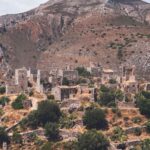
Most visitors miss the second sanctuary on a low hill a few hundred metres northeast of the temple, dedicated to Athena. Only foundations remain, and it is not always accessible, but from the road you can see the outline of the site and understand that Sounion was a double sanctuary to the god of the sea and the patron goddess of Athens. Two large marble kouroi found at Sounion, among the earliest monumental statues in Attica, are now in the National Archaeological Museum in Athens, worth seeing if you are spending time in the city.
Getting to Cape Sounion
By car
Driving is the best way to see the cape, because the road is half the pleasure. Take the coastal avenue south from Athens through Glyfada, Vouliagmeni, Varkiza, Lagonisi and Saronida, a stretch that locals call the Athens Riviera. The road hugs the shore for much of the way, with swimming coves and beach clubs on the right. There is a free car park just below the site. On summer evenings it fills up an hour before sunset, so arrive early. Return inland via Lavrio and Keratea if you want a faster drive back, or to make a loop. Our guide to hiring a car in Greece covers licences, insurance and driving tips.
By bus
KTEL Attikis buses leave from the terminal on Mavromateon street, beside Pedion tou Areos park, close to the National Archaeological Museum. The coastal line takes about 2 hours and stops along the Riviera; a second, inland line runs via Markopoulo and Lavrio. Services run roughly every one to two hours in summer, less often in winter, and the fare in recent years has been a few euros each way, paid on board or at the kiosk. Check the current timetable, and especially the time of the last bus back after sunset, before you set out.
By tour or taxi
Many Athens agencies run afternoon sunset tours by coach, which take about four hours in total and save you the planning. A taxi from central Athens is also possible but expensive for a round trip; agree a price in advance. If you are flying out of Athens airport, the cape is closer to the airport than to the city centre, roughly 50 km away, which makes it a good last afternoon before an evening flight.
Visiting the site
The archaeological site opens daily from around 09:30 and closes at sunset, with last entry about 20 minutes before closing, and on the longest summer days the gates stay open until about 19:30 or a little later. Hours change with the season and on public holidays, so check the current schedule. The site is free on the first Sunday of the month from November to March and on several national days such as 28 October, and it closes on major holidays including 25 December and Easter Sunday.
From the ticket office a short gravel path climbs gently to the temple. It is not steep, but the ground is uneven and there is almost no shade, so wear proper shoes and a hat in summer. Allow 45 minutes to an hour to walk around the temple and the fortification walls and to look out over the cliffs, where on a clear day you can see Kea, Kythnos and the outline of Aegina and the Peloponnese. There is a café and restaurant by the entrance with a terrace that faces the temple.
Sunset or morning?
Sunset at Sounion is famous for a reason: the sun drops into the sea to the west of the temple and the marble glows. The catch is the crowd. On a July evening you will share the rocks with hundreds of people and the car park will be full. If photos and quiet matter more to you than the ritual, come at opening time instead, when the light is softer than you might expect and the site is close to empty. In winter, sunset falls around 17:30 and the crowds thin out completely.
Swimming and eating near Sounion
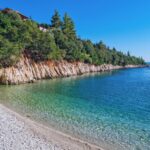
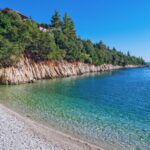
Below the temple, the bay of Sounion has a sandy beach with a couple of hotels and tavernas, and it is a calm place for a swim before you walk up. Legrena, a few kilometres west, has a pretty beach in a rocky cove, and Charakas and Saronida beaches lie on the way back towards Athens. Along the Riviera, the Vouliagmeni lake, a brackish lake with warm water fed by underground springs, is a popular stop with its own entrance fee.
The tavernas on the bay serve grilled fish, fried calamari, horta and Greek salad; prices are on the tourist side, as you would expect at a sight like this. For a more local evening, drive on to Lavrio, a working port town about 9 km north, where the waterfront fish tavernas are used by Athenians waiting for the ferries to Kea and Kythnos.
Combine Sounion with Lavrio
If you have a car and a few spare hours, Lavrio is worth a look. The silver mines of ancient Laurion, worked since prehistoric times, made Athens rich, and the area has an archaeological site at Thorikos with one of the oldest theatres in Greece, an unusual oval shape cut into the hillside. Most of the inland area between Lavrio and the cape is the Sounion National Park, a protected area of pine forest and old mine shafts crossed by dirt roads.
Fitting Sounion into an Athens trip
Sounion works best as an afternoon outing after a morning of sightseeing in the city: see the Acropolis early in the day, rest in the heat of the afternoon and leave Athens around 16:00 in summer. If you are planning several excursions, our list of the best day trips from Athens compares Sounion with Delphi, Nafplio and the islands. For an island alternative, a day on the island of Aegina is just 40 minutes by fast boat from Piraeus. And for everything else in the capital, start with our Athens travel guide and our pick of things to do in Athens.
Practical tips
- Arrive early for sunset: in summer, aim to reach the car park at least an hour before sunset to find a space and walk up without rushing.
- Bring layers: the cape is exposed and often windy. Even in June the evening breeze can feel cool after a hot day.
- Tickets: you can buy at the gate or online from the official e-ticket service, which saves a queue at sunset.
- Bus timing: if you rely on the bus, confirm the last departure back before you go, as missing it means an expensive taxi.
Sounion is not a big site and you will not need long among the ruins. What makes it special is the setting: a temple on a cliff at the end of the land, the sea on three sides, and a road down the coast to get there. Plan for the light and the traffic and it is one of the most rewarding few hours you can spend near Athens.
Frequently Asked Questions
How long does it take to get from Athens to Cape Sounion?
By car it takes about 1 hour 15 minutes to 1 hour 30 minutes on the coastal road, depending on traffic. The KTEL Attikis bus from central Athens takes around 2 hours. Organised sunset tours last about four hours in total.
Is Cape Sounion worth visiting?
Yes, if you go for the setting rather than a large archaeological site. The temple is small and you will see it in under an hour, but the clifftop position, the coastal drive and the sunset make it one of the most memorable short trips from Athens.
How much is the ticket to the Temple of Poseidon?
In 2026 the full ticket was around 20 euros from April to October and around 10 euros in winter, with reduced and free categories for some visitors. Prices change, so check the official ticket service before you go.
Can you see the sunset from the Temple of Poseidon?
Yes, the site stays open until sunset, and in summer that means until around 19:30 or a little later. It is the most popular time to visit, so arrive at least an hour early to park and find a spot on the rocks.
Where is Byron’s name on the temple?
Lord Byron carved his name on the base of one of the columns on the side facing the visitor path, during his trip to Greece in 1810 or 1811. The temple is roped off, so you see it from a few metres away.