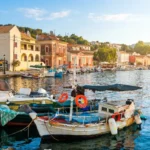

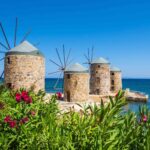

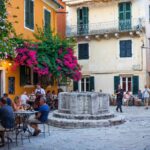

Naxos is best seen over four to seven days, combining the long sandy beaches south of Naxos Town with the marble mountain villages of Halki, Filoti and Apiranthos, the Portara and a hike up Mount Zas.
Naxos is the largest island in the Cyclades and one of the most rewarding: long sandy beaches on the west coast, marble villages in a green, mountainous interior, the highest peak in the group, and a medieval town crowned by a Venetian castle. It is also big and fertile enough to feed itself, so it feels like a working island rather than a stage set, and it is noticeably better value than Santorini or Mykonos. Plan at least four or five days and rent a car for part of your stay.
Quick facts
- Best time: late May to early July and September to mid October.
- Getting there: ferries from Piraeus taking around 3.5 hours on fast boats and 5 hours or more on conventional ones; short flights from Athens of about 40 minutes.
- Time needed: 4 to 7 days to combine beaches, villages and a mountain walk.
- Main base: Naxos Town (Chora) or the beach areas of Agios Georgios, Agios Prokopios and Agia Anna.
- Good for: families, walkers, food lovers and travellers who want a real island with fewer crowds.
Naxos Town (Chora)
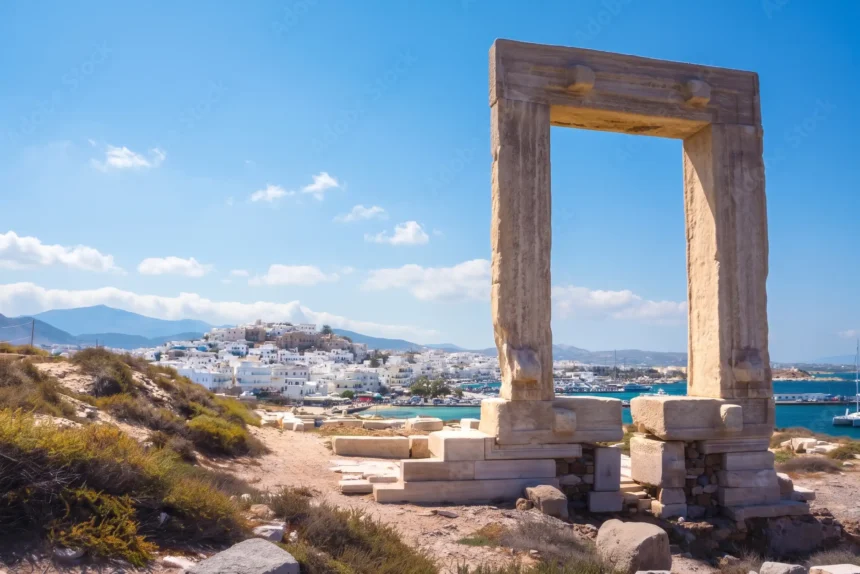
The first thing you see from the ferry is the Portara, a colossal marble doorway standing alone on the islet of Palatia, joined to the harbour by a causeway. It is all that remains of a Temple of Apollo begun around 530 BC and never finished. Entry is free, and it is the town’s favourite sunset spot, so arrive early on summer evenings.
Above the harbour, the old town climbs in a tangle of covered passageways to the Kastro, the fortified quarter built after the Venetian Marco Sanudo made Naxos the seat of his Duchy of the Archipelago in the early 13th century. Catholic families descended from those rulers still live here, and you will see coats of arms over doorways, the Catholic cathedral and the old Ursuline school. The Archaeological Museum in the Kastro holds Cycladic figurines and finds from across the island. Below, the Bourgos quarter and the waterfront offer the best choice of tavernas and cafés on the island.
The beaches
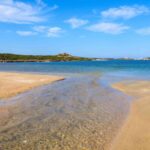
The west coast south of Chora is one long run of sand, and it is the main reason many families choose Naxos.
- Agios Georgios: right on the edge of town, shallow and sheltered, ideal for young children.
- Agios Prokopios and Agia Anna: organised beaches with clear water, hotels and tavernas; Agia Anna has a small fishing harbour.
- Plaka: several kilometres of golden sand backed by dunes, quieter the further south you walk.
- Mikri Vigla: a headland with beaches on both sides; the north side is a well-known kitesurfing and windsurfing spot, while the southern bay is more sheltered.
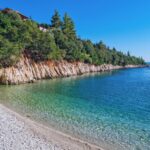
- Alyko and Pyrgaki: further south, with cedar trees, rocky coves and few facilities, so bring shade and water.
Buses run frequently along the west coast as far as Plaka in summer, which makes a car optional if you are staying on this stretch. The east coast beaches, such as Moutsouna and remote Kalantos in the far south, need a car or a boat trip and a willingness to drive slowly on winding roads.
The mountain villages
Inland Naxos is the island’s real surprise: terraced valleys, olive groves, Byzantine chapels and fortified tower houses, with Mount Zas rising just over 1,000 metres above them. The fertile Tragea valley is the heart of it.
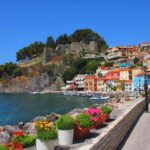
Halki
Once the island’s commercial centre, Halki has neoclassical mansions, a lovely small square and the Vallindras distillery, which has produced kitron, a liqueur flavoured with the leaves of the citron tree, since the 19th century. Byzantine churches with fine frescoes lie in the olive groves around the village.
Filoti
The largest village on the island, spread over the slopes of Mount Zas. It has a busy plane-shaded square and is the starting point for the climb to the summit.
Apiranthos
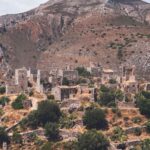
Known as the marble village, Apiranthos has streets and arches paved and built in white marble, a Venetian tower, and several small museums. Its inhabitants traditionally speak with a distinctive dialect linked to Cretan settlers.
Koronos and the north
Further north, the road winds through the former emery mining villages of Koronos and Skado before descending to Apollonas, a fishing village on the north coast. Near Apollonas, an enormous unfinished marble statue known as the Kouros of Apollonas lies in an ancient quarry: it is about 10.5 metres long, the largest known statue of its kind from the Archaic period. Two smaller abandoned kouroi lie near Melanes, closer to Chora, one of them in a peaceful garden at Flerio.
Ancient sites beyond the Portara
The Temple of Demeter near Sangri, about 1.5 km south of the village in the area called Gyroula, is one of the most attractive small sites in the Cyclades. Built in marble around 530 to 520 BC and carefully restored, it stands on a quiet hillside with a small museum beside it. Combined with the kouroi and the Portara, it shows how important Naxian marble and Naxian sculptors were in the Archaic period.
Walking and hiking
Naxos has one of the best walking networks in the Cyclades, with waymarked paths linking villages along old stone mule tracks. The most popular route climbs from Filoti past the Cave of Zeus to the summit of Mount Zas, the highest point in the Cyclades, taking around four to five hours return. Easier options include the path from Melanes through the valley of Mili to the Kouros of Flerio, and village to village walks in the Tragea valley around Halki. Spring and autumn are the best seasons; in midsummer start early, as many paths have little shade.
Food and local products
Naxos is the breadbasket of the Cyclades. Look for graviera, the island’s protected hard cheese, as well as softer arseniko and fresh xinomizithra, the famous Naxos potatoes (often served simply fried), local beef and pork, and citron-based kitron liqueur in its three styles. Village tavernas in Halki, Filoti and Apiranthos serve hearty dishes such as rooster in wine and slow-cooked goat. Visiting a cheese dairy or a local cooperative shop in town is a good way to bring home something better than a fridge magnet.
Getting there and getting around
Naxos lies at the centre of the Cyclades ferry network, with daily boats from Piraeus and Rafina and frequent links to nearby islands. Neighbouring Paros is often less than an hour away, lively Mykonos is a short hop to the north, and dramatic Santorini is easy to reach to the south, so Naxos makes an excellent base for island hopping. Our guide to Greek ferries explains booking and choosing boats. The small airport south of Chora has flights from Athens, which is handy if you are combining the island with a stay in the capital; see our Athens city guide.
KTEL buses leave from the station opposite the port and serve the west coast beaches frequently, with fewer services to the mountain villages and the north. To see the interior properly, hire a car for at least two or three days. Roads are mostly good, but the mountain routes are narrow and winding. Our article on renting a car in Greece covers licences and insurance.
Where to stay
- Naxos Town: best for evenings, restaurants and buses, and right by the ferry port.
- Agios Georgios: walkable to town with a calm family beach.
- Agios Prokopios and Agia Anna: beach holiday atmosphere with good bus links to Chora.
- Plaka and Mikri Vigla: quieter, more spread out; best with a car.
- Halki or Filoti: village stays for walkers, cooler in summer evenings.
Practical tips
- Allow time for the interior; many visitors stay on the beaches and miss the best of the island.
- The north wind (meltemi) blows in July and August. The southwest beaches are usually the most sheltered, while Mikri Vigla attracts kitesurfers precisely because it catches the wind.
- Dirt roads to some southern beaches are rough; check whether your rental insurance covers unpaved roads.
- Visit the Portara at sunrise if you want it without the crowds.
- Many village museums and smaller sites keep short hours; check before you set out.
Frequently Asked Questions
How many days do you need in Naxos?
Four to seven days lets you combine beach time with the mountain villages, the ancient sites and a hike. With only two or three days, stay near Chora and pick one day for a drive into the interior.
Do you need a car in Naxos?
Not for the west coast beaches, which are served by frequent buses in summer. To explore the mountain villages, the north coast and the quieter southern beaches, a car for a few days is very helpful.
Is Naxos good for families?
Yes. Agios Georgios, Agios Prokopios and Agia Anna have shallow, sandy water and plenty of facilities, food is good value, and the island is relaxed compared with Mykonos or Santorini.
What is the Portara in Naxos?
The Portara is a huge marble doorway on the islet of Palatia, next to Naxos harbour. It belongs to a Temple of Apollo begun around 530 BC and never completed, and it is free to visit.
How high is Mount Zas?
Mount Zas rises just over 1,000 metres and is the highest mountain in the Cyclades. The usual route starts from Filoti and takes around four to five hours there and back.