


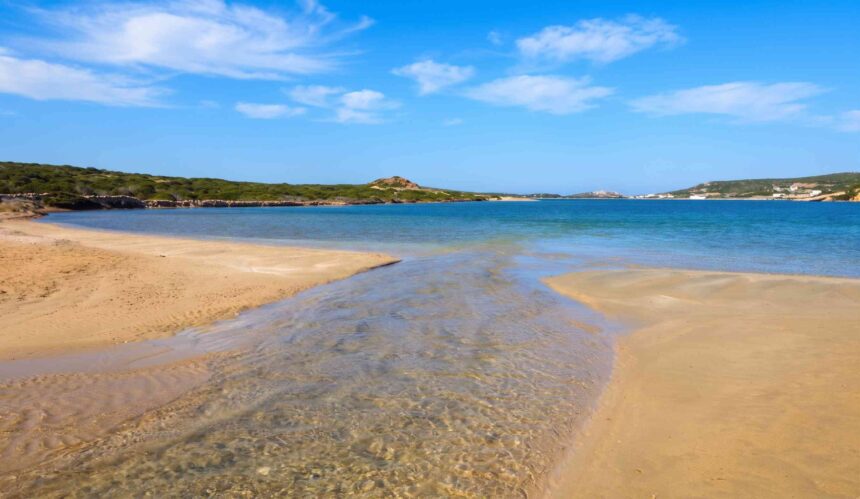
The best Paros beaches are Kolymbithres and Monastiri near Naoussa, Santa Maria and Golden Beach for long sand, and Faragas and Aliki on the south coast, which stay calm when the north wind blows.
The best beaches in Paros are Kolymbithres and Monastiri in the north for granite rocks and calm coves, Santa Maria and Golden Beach for long sand and water sports, and Faragas, Aliki and Glyfa in the south for shelter when the wind blows. The single most useful rule on Paros is to match the beach to the wind: when the summer meltemi blows from the north, head for the south coast. Most beaches are within 30 minutes of Parikia or Naoussa by car, and many are on the bus network.
Quick facts
- Best for families: Aliki, Logaras, Monastiri and Santa Maria, all shallow and sandy.
- Best on windy days: Faragas, Aliki, Glyfa and Tripiti on the south coast.
- Best for windsurfing and kitesurfing: Golden Beach and Pounta.
- Quietest: Kalogeros, Lageri, Tsoukalia and Voutakos, none of them organised.
- Getting around: KTEL buses from Parikia and Naoussa reach the main beaches; a car or scooter opens up the rest.
How the wind shapes your beach day
From roughly July to the end of August, and often in June and September too, the meltemi blows hard from the north across the Cyclades. On those days the north coast around Naoussa and the east coast can be choppy and sandblasted, while the south coast stays calm. On still days the picture reverses, and the northern coves are at their prettiest. Check the wind forecast each morning before you choose; it makes more difference than any ranking.
North coast: around Naoussa
Kolymbithres
Kolymbithres, across the bay from Naoussa, is the most photographed beach on Paros. Smooth granite boulders, shaped by wind and water into rounded forms, divide the shore into small sandy coves with shallow, clear water between them. It has sunbeds, beach bars, tavernas and kayak rental, and it gets very busy in August. Arrive early for a spot between the rocks, and explore the quieter coves on the edges.
Monastiri
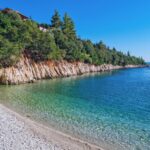
A few minutes further along the same peninsula, Monastiri is a small sheltered cove of about 200 metres, named after the monastery of Agios Ioannis above it. The water is shallow and calm, which makes it good for children, and there is a beach bar plus a quieter free end. Behind it lies Paros Park, a protected headland with walking trails, a lighthouse and small bays you can reach on foot. In summer, small boat taxis run from Naoussa harbour to Monastiri, an easy alternative to driving and parking.
Santa Maria and Lageri
East of Naoussa, Santa Maria is a long sandy beach with very shallow, green-blue water and plenty of water sports, including diving. The main stretch is lively with music from the beach bars, while Mikri Santa Maria next door is calmer. A dirt track continues to Lageri, a long natural beach with dunes and no facilities, popular with naturists at its far end. Bring water and shade.
Piperi
If you are staying in Naoussa and have no transport, Piperi is a small sandy beach just outside the village, with trees for shade and no organised sunbeds.
West coast: around Parikia
Livadia, Krios and Marcello
Livadia is the long sandy beach just north of Parikia’s harbour, fully organised and the easiest swim if you are based in town. Across the bay, Krios and Marcello have golden sand, beach clubs and water sports, and in summer small boats shuttle across from Parikia port, so you can skip the drive around the bay.
Parasporos and Agia Irini
About 2 km south of Parikia, Parasporos has two sandy beaches, each with a beach club, and is easy to reach by any southbound bus. A little further, Agia Irini is lined with palms and tamarisks, with a small chapel on the shore and a calmer northern section that suits families.
Pounta
Pounta, on the west coast where the car ferry leaves for Antiparos, is a wide, shallow, windy beach given over to kitesurfing and windsurfing schools. It is poor for an ordinary swim on a blowy day, but great for watching or learning. If you are crossing to the small island of Antiparos, its own beaches are a short ferry hop from here.
South coast: the wind shelter
Aliki
Aliki is a fishing village on the south coast, about 20 minutes from Parikia, with a sandy, shallow beach that is usually calm even when the meltemi blows. Tavernas line the waterfront, the bus stops here, and the unorganised Piso Aliki is a short walk away. It is one of the best family beaches on the island.
Faragas, Glyfa and Tripiti
Further east, Faragas is a pine-fringed bay of three small coves with clean, calm water, a relaxed beach bar and kayak and paddleboard rental. It is the classic escape on windy days. Close by, Glyfa is small and sandy with a few trees, and Tripiti is quieter still and good for swimming. Neither of the last two has a bus, so you need your own wheels.
Voutakos
Between Pounta and Aliki, Voutakos is a soft sandy cove with a few shade trees and nothing else: no shop, no sunbeds. Pack supplies and enjoy the quiet.
East coast: long sand and water sports
Golden Beach (Chrissi Akti)
Golden Beach is the longest beach on Paros, a wide arc of golden sand on the southeast coast with clear water and several windsurfing schools. Paros has hosted international windsurfing competitions here, which tells you how reliably windy it is in high summer. On calm days it is a fine swimming beach; on windy days it belongs to the boards. New Golden Beach (Nea Chrissi Akti) next door is similar.
Logaras, Piso Livadi and Punda
Logaras is a sandy, tamarisk-lined bay that runs into the little harbour of Piso Livadi, with tavernas, cafés and calm water good for children. Just south, Punda (not to be confused with Pounta in the west) is a party beach with a large beach club, loud music and a pool, and a small free area at one end. Choose it for atmosphere rather than peace.
Kalogeros, Molos, Glyfades and Tsoukalia
North of Marpissa, Kalogeros is a wild little cove reached by a short walk, known for the natural clay in its rocks that some visitors rub on their skin. There are no facilities; the nearest taverna is at Molos. Further north towards Naoussa, Glyfades and Tsoukalia are two sandy, unorganised beaches side by side, reached by a decent dirt road. Tsoukalia in particular is quiet and shallow.
Which Paros beach should you choose?
| If you want | Go to |
|---|---|
| Rock formations and photos | Kolymbithres |
| Calm, shallow water for children | Aliki, Monastiri, Logaras |
| Shelter from the north wind | Faragas, Glyfa, Tripiti |
| Windsurfing or kitesurfing | Golden Beach, Pounta |
| Beach bar and music | Punda, Santa Maria |
| No facilities, no crowds | Kalogeros, Lageri, Voutakos |
Where to base yourself for the beaches
Where you stay on Paros changes which beaches are easy. Naoussa puts Kolymbithres, Monastiri, Santa Maria and Piperi within a short drive or boat ride, but those are exactly the beaches the meltemi hits hardest, so plan a car or bus trip south on windy days. Parikia, the port town, has Livadia on its doorstep, boats to Krios and Marcello, and the best bus connections to every part of the island, including the south coast. The east coast villages of Piso Livadi and Drios suit families and windsurfers, with Logaras and Golden Beach close by. Aliki is a quiet base for those who want a calm sea most days and do not need nightlife.
A practical pattern for a week is to spend calm mornings on the north coast coves, when the water at Kolymbithres is glassy, and save windy afternoons for Faragas or Aliki. Beaches are generally busiest from late morning to late afternoon in July and August, so an early swim is the simplest way to see the famous ones at their best.
Practical tips
- Buses: KTEL Paros runs routes from Parikia and Naoussa to many beaches, including Golden Beach, Aliki, Santa Maria and Kolymbithres. Summer timetables are often published only days ahead, so check locally.
- Car or scooter: the quieter beaches need your own transport. See our advice on renting a car in Greece, and be careful on dirt tracks with a small hire car.
- Sunbeds: organised beaches charge for sunbeds and umbrellas, and prices rise sharply at beach clubs. Almost every beach has a free stretch where you can lay a towel.
- Shade: trees are rare on Paros beaches. Bring an umbrella to the unorganised ones.
- Early and late season: in May and October many beach bars are closed, but the sea is often still warm in October.
For the rest of the island, from the marble lanes of Lefkes to the harbour at Naoussa, read our Paros travel guide. Paros is also the hub of the central Cyclades, so it is easy to combine with neighbouring islands: our guide to the best beaches in Naxos covers the island just across the strait, and Greek ferries explained will help you plan the crossings.
Frequently Asked Questions
What is the most beautiful beach in Paros?
Kolymbithres, near Naoussa, is the most famous for its smooth granite rocks dividing small sandy coves. Many visitors also love Monastiri next door and the sheltered bay of Faragas on the south coast.
Which Paros beaches are best when it is windy?
When the meltemi blows from the north, go to the south coast. Faragas, Aliki, Glyfa and Tripiti are usually the calmest. Avoid Golden Beach and the north coast unless you want to windsurf.
Can you reach Paros beaches by bus?
Yes, KTEL buses from Parikia and Naoussa serve many beaches, including Kolymbithres, Santa Maria, Golden Beach, Logaras and Aliki. The quieter coves, such as Tripiti, Kalogeros and Voutakos, need your own transport.
Which beaches in Paros are good for kids?
Aliki, Logaras, Monastiri and Santa Maria are all sandy and shallow, with tavernas or beach bars nearby. Agia Irini’s northern section is also calm and popular with families.
Is there a nudist beach in Paros?
Lageri, a long natural beach beyond Santa Maria, is the best known for naturism at its far end. It has no facilities, so bring water and shade.