


Milos is a volcanic Cycladic island known for its coloured rock beaches, sea caves and fishing villages. Stay four to six days, base yourself in Adamas, Plaka or Pollonia, hire a car and take a boat trip to Kleftiko.
Milos is the Cycladic island for people who care more about the sea than about nightlife. Its volcanic past has left it with white moonscape rocks, red and ochre cliffs, sea caves and more than 70 beaches, while its villages stay low-key and genuinely lived in. Give it four to six days, hire a car for at least part of the stay, and keep one calm day for a boat trip around the coast to Kleftiko.
Quick facts
- Where: the southwest Cyclades, between Sifnos and Folegandros, roughly 160 km southeast of Piraeus.
- Getting there: ferries from Piraeus take roughly 3 to 7 hours depending on the boat; short flights from Athens land at the small airport near Adamas.
- Time needed: four days minimum, a week if you want to explore the wild west of the island.
- Best time: June and September, with May and October good for walking and quieter beaches.
- Getting around: a hire car or quad is close to essential; buses link the main villages in summer only.
- Good for: couples, swimmers, photographers and anyone happy with quiet evenings.
Understanding the island
Milos is shaped like a horseshoe wrapped around one of the largest natural harbours in the Mediterranean, the flooded caldera of an old volcano. The eastern half holds almost everything visitors use: the port of Adamas, the hilltop capital of Plaka with its cluster of villages, the fishing village of Pollonia in the northeast and the famous beaches of the north and south coasts. The western half, around Mount Profitis Ilias, is wilder and more mountainous, reached largely on unpaved roads. Mining has shaped Milos for thousands of years, from obsidian in prehistoric times to bentonite, perlite and kaolin today, and you will see quarries and old loading stations along the coast.
The most important practical point is the wind. In July and August the northerly meltemi can blow for days, which makes the north coast rough and sends everyone to the sheltered south. The rule is simple: check the forecast every morning and pick beaches on the opposite side to the wind.
The villages
Plaka and the Kastro
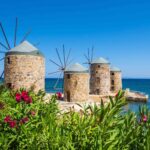
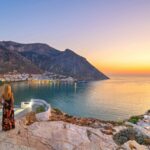
Plaka, the capital, sits on a ridge above the bay and is the most beautiful place on the island to spend an evening. Whitewashed lanes lead up to the Kastro, the site of a medieval castle, where the church of Panagia Thalassitra and the rocks around it are the island’s favourite sunset spot. Arrive early in high season because the climb is narrow and fills fast. Plaka has the island’s archaeological museum, with a plaster copy of the Venus de Milo, and the folk and history museum. Nearby Tripiti has the windmills, a small Roman theatre facing the sea, and the early Christian catacombs, an underground burial complex that ranks among the most important of its kind in Greece. The spot where a farmer found the Venus de Milo in 1820 is marked on the path down to the theatre; the statue itself is in the Louvre.
Klima, Mandrakia and Firopotamos
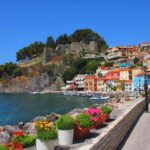
The fishing hamlets of Milos are famous for their syrmata, boathouses cut into the rock at sea level, with living quarters above and brightly painted doors. Klima, below Tripiti, is the best known and the most photographed. Mandrakia and Firopotamos on the north coast are smaller and quieter; Firopotamos has a little chapel on a rock and a sheltered swimming cove that is lovely when the wind drops. These are residential places, so park at the top and walk down respectfully.
Adamas and Pollonia
Adamas is the port and the practical base, with the widest choice of hotels, car hire, supermarkets and boat trip departures. It is busy rather than charming but very convenient. Pollonia, in the northeast, is the more relaxed alternative: a curved bay with a sandy beach, tamarisk trees, good fish tavernas and the small ferry across to Kimolos. It is popular with couples and fills up fast in August.
The beaches
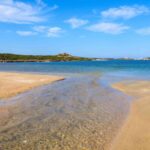
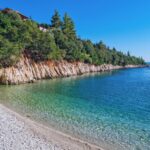
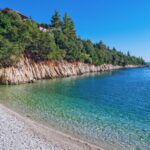
Milos beaches are the main reason people come, and each one is different in colour and texture. We cover them coast by coast in our full guide to the best beaches in Milos, but these are the names to know.
- Sarakiniko: white volcanic rock smoothed into waves, with a narrow inlet for swimming. Go early morning or at sunset; at midday the glare and the lack of shade are tough, and it is unsafe in strong north wind.
- Firiplaka: a long south coast beach backed by pink, white and ochre cliffs, with a canteen and sunbeds on part of it.
- Tsigrado: a tiny cove reached by a rope and a wooden ladder through a gap in the rocks. Not for everyone, but memorable.
- Paleochori: a long beach of mixed sand and pebbles where volcanic gases warm the sand in places, with tavernas and good facilities.
- Papafragas: a narrow fjord-like inlet in the cliffs near Pollonia, reached by steps cut in the rock.
- Agia Kyriaki and Provatas: easy, family-friendly sandy beaches on the south coast.
Boat trips and Kleftiko
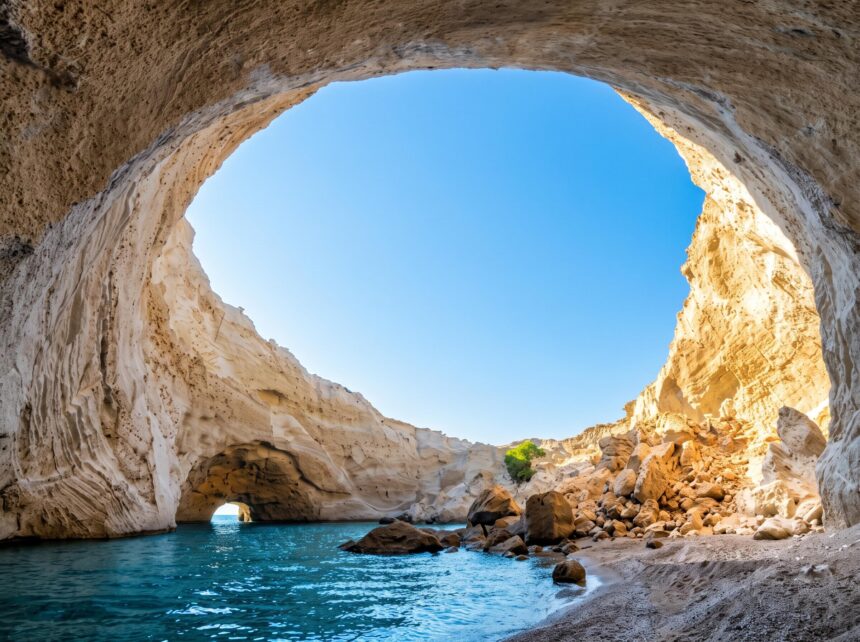
Many of the island’s best sights can only be reached from the sea, which is why a boat trip is not optional on Milos. The classic full day runs from Adamas around the south and west coasts to Kleftiko, a former pirate hideout of white rock pillars, arches and caves in turquoise water, where boats anchor for swimming and snorkelling. Most trips also stop at Gerakas and the Sykia cave, whose collapsed roof lets light into the water, and some continue to Polyaigos, the uninhabited island opposite Pollonia. You can choose between larger boats with lunch on board, small sailing yachts with a handful of guests, and half-day options. Trips depend on the weather and are cancelled or rerouted when the sea is rough, so book for early in your stay to leave room for a second chance.
Another easy trip is to Kimolos, the quiet neighbouring island, a short crossing from Pollonia. Its whitewashed Chorio, empty beaches and slow pace make a good day out, and you can take a car across if you want to explore the far end.
The west of Milos
If you have time and a suitable vehicle, spend a day in the western half. Dirt roads lead to Triades and Ammoudaraki beaches, the Monastery of Agios Ioannis Siderianos and the pale cliffs around Kleftiko seen from above. Check whether your hire contract covers unpaved roads, take water and fuel up beforehand, as there are no services out there. A four-wheel drive or a guided jeep tour is the sensible choice.
Food on Milos
Milos has a strong local food culture. Look for pitarakia, small fried cheese pies, and karpouzopita, a sweet watermelon pie with honey and sesame. Local cheeses, capers, sun-dried tomatoes and fresh fish appear on most menus, and Pollonia and Klima have some of the best seafood tavernas on the island. Plaka has a cluster of good restaurants for an evening after sunset at the Kastro.
Getting there and around
Milos is on the western Cyclades ferry line from Piraeus, which also calls at Kythnos, Serifos and Sifnos, and it links south to Folegandros, Santorini and beyond in summer. High-speed boats take about three hours from Piraeus, conventional ferries much longer. Our guide to Greek ferries explains how to book, which boats to choose in windy weather and how to read the timetables. Short flights from Athens arrive at the small airport near Adamas, the quickest option when ferries are full.
Milos combines naturally with its neighbours on an island-hopping trip. From the south, it pairs well with quiet Folegandros and lively Santorini; to the east, the central Cyclades of Paros and Naxos are reached via a change of boat.
On the island, a car is the most practical choice, and summer demand is high, so book well in advance. Quads are popular but tiring on long hot days and less safe on dirt roads. A summer bus service connects Adamas with Plaka, Pollonia and some south coast beaches, and taxis are few. Many visitors hire a car for two or three days and spend the others on boat trips and in their base village.
Practical tips
- Book ahead: accommodation, cars and the best boat trips sell out for July and August.
- Read the wind: check the forecast nightly and choose north or south coast beaches accordingly.
- Bring shade: many beaches have no trees and no facilities. An umbrella, water and snacks make a big difference.
- Respect the rocks: the volcanic formations are fragile and some cliffs are unstable. Keep away from cliff edges and overhangs, and obey closure signs.
- Sunset plans: go up to the Kastro in Plaka early, or watch from the Plaka lanes or a taverna terrace instead.
- Off season: from late October to April many hotels and restaurants close and ferries are fewer, but May and October are lovely for walking.
Milos rewards travellers who slow down: a few days of beaches chosen by the wind, one or two days on the water and evenings in Plaka or by the sea in Pollonia make for one of the most satisfying island trips in the Aegean.
Frequently Asked Questions
How many days do you need in Milos?
Four days is the minimum to see the main beaches, Plaka and take a Kleftiko boat trip. Five to seven days lets you explore the western half, visit Kimolos and allow for windy days when boats do not sail.
Where is the best place to stay in Milos?
Adamas is the most practical base for ferries, car hire and boat trips. Plaka and Tripiti are quieter with the best sunsets, while Pollonia suits couples who want a relaxed seaside village with good tavernas.
Do you need a car in Milos?
A car is strongly recommended because many beaches are far from the bus routes, and the summer buses do not run often. Check whether your contract allows unpaved roads before driving in the west of the island.
Can you get to Kleftiko without a boat?
It is possible to hike down from a dirt road in the southwest, but the path is long, exposed and hot. Most visitors go by boat from Adamas, which also lets you swim among the rocks and caves.
How do you get to Milos from Athens?
Take a ferry from Piraeus, which takes roughly three hours by high-speed boat and much longer on a conventional ferry, or fly from Athens to Milos airport in under an hour. Book early for July and August.