



The best Greek islands for families with young children are Crete, Corfu, Rhodes, Kos and Naxos, thanks to direct flights or easy access, shallow sandy beaches and family facilities. Kefalonia and Paros are good alternatives, while Santorini and Mykonos are harder with toddlers.
The best Greek islands for families with young children are the ones with direct flights, short transfers, shallow sandy beaches and plenty of choice of family accommodation: Crete, Corfu, Rhodes, Kos and Naxos lead the list, with Kefalonia and Paros close behind. Small children care far more about calm, shallow water and short journeys than about famous sights, so choose the island around those needs and keep the itinerary simple.
Quick facts
- Easiest for toddlers: Naxos and Kos, for shallow sandy beaches and short distances
- Most to do: Crete and Rhodes, with water parks, aquariums and big, easy archaeological sites
- Greenest and most varied: Corfu, with sheltered bays and short flights from much of Europe
- Best months: June and September, warm sea without the July and August heat
- Islands to think twice about: Santorini and Mykonos, for steep paths, expensive stays and a nightlife focus
What makes an island work with small children
Before comparing islands, it helps to be clear about what matters at this age. With children under about eight, the following make or break a holiday:
- Direct flights and a short transfer: an island with an international airport saves you a connecting ferry and a night in Athens. Islands that need a flight plus a long ferry are better kept for when the children are older.
- Sand and shallow water: pebbly beaches that shelve steeply are harder work with toddlers. Look for beaches where the water stays knee-deep for a good distance.
- Shelter from the wind: the summer meltemi blows from the north across the Aegean in July and August, so south and east-facing beaches are usually calmer.
- Shade and facilities: trees, beach umbrellas, lifeguards and a taverna nearby matter more than remoteness.
- Short drives: a base close to several beaches avoids long hours in car seats on winding roads.
The best islands for families
Crete: the most to do
Crete has direct flights into Heraklion and Chania, a huge range of family hotels and enough variety to fill two weeks. The north coast between Heraklion and Malia has the big family resorts, a water park in Hersonissos and the CretAquarium near Gournes, which is ideal for a hot afternoon. Knossos is a manageable site for children who like stories of the Minotaur, and the shallow lagoon at Elafonisi in the south-west is a natural paddling pool, though it is a long drive. The trade-off is size: pick one area rather than trying to see the whole island. Our guide to Crete with kids covers beaches and attractions in detail.
Corfu: green, sheltered and easy to reach
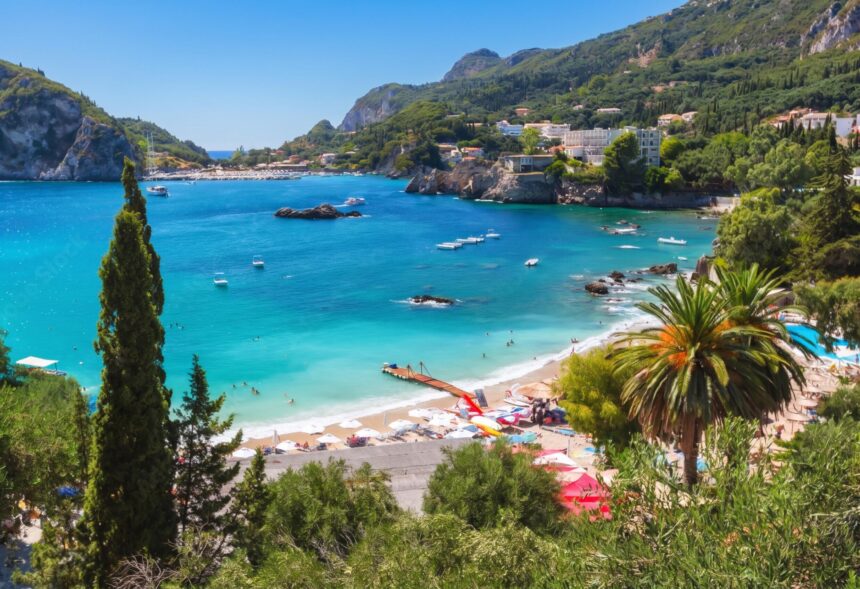
Corfu has some of the shortest flights to Greece from much of northern Europe and a short transfer from the airport to most resorts. The north-east coast has calm, clear bays, the north coast around Acharavi and Roda has long shallow sandy beaches, and Aqualand water park sits in the centre of the island. Corfu Town, with its fortresses, cricket ground and kumquat sweets, is an easy half-day out. Our Corfu with kids guide explains which coast suits which age.
Rhodes: big beaches and a castle town
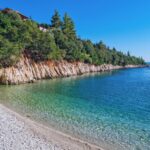
Rhodes combines the medieval Old Town, where children can walk the walls and explore the Palace of the Grand Master, with long beaches on the east coast and a water park at Faliraki. The east side is more sheltered than the windy west coast, and resorts like Kolymbia and Faliraki have shallow sand and every facility. Lindos, with its acropolis and donkeys, works well as a morning trip before the heat. See our guide to the best Rhodes beaches for which coast to pick.
Kos: flat, compact and bike-friendly
Kos is one of the easiest Greek islands with young children. It is relatively flat, distances are short, and the area around Kos Town has dedicated cycle paths, so families can ride to the beach. The north coast has long sandy beaches with gently shelving water at Tigaki, Marmari and Mastichari, and there is a water park near Marmari. The ancient remains scattered around Kos Town, including the Asklepion, are short visits rather than all-day expeditions. Our Kos travel guide has the details.

Naxos: the best Cycladic island for toddlers
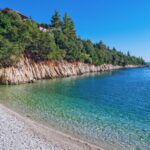
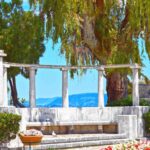
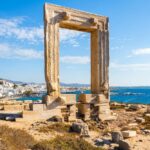
Naxos has the long sandy beaches that most of the Cyclades lack. Agios Georgios, right by Naxos Town, is shallow and sheltered and easy to walk to from many hotels. Further south, Agios Prokopios, Agia Anna and Plaka have soft sand and water that stays shallow for a long way. Naxos also has good, simple food, from local potatoes to cheeses and meat, and prices are friendlier than on Santorini or Mykonos. The catch is access: most visitors arrive by ferry from Piraeus or Rafina, or fly via Athens. Our Naxos travel guide covers the ferries and where to stay.
Kefalonia: caves and calm bays
Kefalonia suits families with slightly older children who enjoy a boat ride into a cave or spotting loggerhead turtles in Argostoli harbour. The beaches range from big sandy Skala in the south-east to pebbly coves, and the island is quieter than Corfu or Crete. Distances are longer and roads are mountainous, so a central base around Argostoli or Lassi works best. See our Kefalonia with kids guide.
Paros: an easy Cyclades alternative
Paros is a good second choice in the Cyclades, with sandy beaches at Golden Beach and around Naoussa and a flat, walkable harbourfront in Parikia that works with a buggy. It has a small airport with flights from Athens and frequent ferries, and its villages are lively without being overwhelming. Our Paros travel guide covers the beaches.
Islands that are harder with young children
Santorini is stunning but awkward with toddlers: the famous caldera villages are full of steps, many hotels are not suitable for small children, prices are high and the beaches are dark volcanic sand that gets very hot. Mykonos has good beaches but is expensive and built around nightlife. Neither is a bad place to visit as a family, but they are better with older children or as a two-night stop. Small islands with no airport, such as Folegandros, are wonderful but involve long ferry journeys that young children may not enjoy.
One island or two?
With young children, one island is usually enough for a week and often for two. Every ferry day costs you a morning of packing, a crossing and a new set of routines, and small children rarely enjoy that as much as adults do. If you want variety, combine two areas of a big island instead: on Crete, for example, a week near Chania followed by a week on the north coast near Heraklion gives you two very different holidays without a boat. If you do want to island hop, choose short, frequent routes such as Naxos and Paros, which are less than an hour apart on fast ferries, and travel in the morning before the wind picks up.
When to go
June and September are the sweet spot: the sea is warm, the beaches are quieter and the midday heat is easier to manage. July and August bring the highest temperatures and prices, and the meltemi wind can make north-facing Aegean beaches rough. School holidays tie many families to summer; if so, book early, choose accommodation with shade and a pool, and plan beach time for mornings and late afternoons. May is lovely for walking but the sea is still cool for small children.
Practical tips
- Book flights first: a direct flight with a short transfer is the single biggest improvement to a holiday with toddlers.
- Choose location over luxury: a simple apartment a short walk from a shallow beach beats a fancier hotel that needs a drive.
- Bring or book car seats: car hire companies offer them but stocks can be limited in peak season.
- Respect the sun: keep the hours around midday for shade, a nap or the pool, and pack rash vests and hats.
- Eat early or late: Greek tavernas are relaxed about children, and many families eat dinner from 20:00 onwards, which suits a long afternoon nap.
- Check the beach flags: many busy beaches have lifeguards in summer, but quieter coves do not.
Frequently Asked Questions
Which Greek island is best for toddlers?
Naxos and Kos are two of the easiest, thanks to long sandy beaches with shallow water and short distances. Crete and Corfu are also excellent, especially if you want direct flights and a wide choice of family hotels.
Is Santorini good for families with young children?
It is possible but not ideal. The caldera villages are full of steps, many hotels are not designed for small children, and the beaches are dark volcanic sand that gets very hot. A short stay works better than a whole holiday.
When is the best time to visit Greece with young children?
June and September offer a warm sea, fewer crowds and more manageable temperatures. July and August are the hottest and busiest months, so plan beach time for mornings and late afternoons if you travel then.
Which Greek islands have water parks?
Crete has water parks in the Hersonissos area, Corfu has Aqualand, Rhodes has a water park at Faliraki and Kos has one near Marmari. Opening seasons are usually from late spring to early autumn.
Do you need a car on a family holiday in Greece?
It depends on the base. On big islands such as Crete, Corfu and Rhodes a car makes beach hopping much easier. On Kos or Naxos you can manage without one if you stay close to a good beach and town.