


Kos is best enjoyed from a base in Kos Town, visiting the Asklepieion and the ancient ruins by bike, then exploring Zia, Paleo Pyli and the Kefalos beaches by car. Allow 4 to 7 days, ideally in May, June or September.
Kos is the Dodecanese island where ancient medicine, Knights’ castles and long sandy beaches sit within an easy bike ride of each other. Base yourself in Kos Town for the ruins, the Asklepieion and the flat cycle routes, or on the north and west coasts for the beaches, and give it at least five days. It is busy and package-friendly in midsummer, but it rewards anyone who rents a bike or a car and heads for the hill villages.
Quick facts
- Where: Southeastern Aegean, in the Dodecanese, a short crossing from the Turkish coast at Bodrum.
- Getting there: Kos International Airport near Antimachia, or ferries from Piraeus (roughly 10 to 12 hours) and Rhodes.
- Best time: May, June and September for warm sea without the August crowds.
- Time needed: 4 to 7 days, longer if you add Nisyros or Kalymnos.
- Good for: Cyclists, families, history lovers and island hoppers.
Kos at a glance
Kos is long and narrow, around 40 km from end to end, with a mountain spine (the Dikaios range) running along its southeastern side and flat farmland and beaches across the north. Around 33,000 people live here, many of them in Kos Town on the northeastern tip. The island is the third largest in the Dodecanese after Rhodes and Karpathos, and its history runs from the Hellenistic period through Roman, Byzantine, Knights of St John, Ottoman and Italian rule, all of it visible in the stones of the capital.
The island’s reputation is split. The big resorts of Kardamena and parts of the north coast are built for package holidays and can feel generic. Away from them, Kos still has proper villages, quiet bays on the Kefalos peninsula and one of the most important ancient sites in the Aegean. Treat it as a base for a wider trip too: it sits in the middle of the ferry network that links Rhodes and the southern islands with Patmos, Leros and Samos further north.
Kos Town: ruins in the middle of daily life
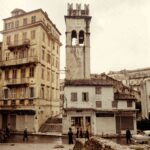
What sets Kos Town apart is how much of the ancient city lies open between the modern streets. Earthquakes, especially the one in 1933, levelled much of the town, and the Italian archaeologists who worked here afterwards excavated large areas instead of rebuilding over them.
The Ancient Agora and the Plane Tree of Hippocrates
The Ancient Agora sits right behind the harbour: a broad field of foundations, columns and paved streets that you can view from the surrounding pavements and walk through when the site is open. Nearby, on Platanos Square, stands the Plane Tree of Hippocrates. Tradition says the father of medicine taught beneath it; the tree you see is a later descendant, propped up with metal supports and fenced off, but it is still a striking sight with the old Ottoman fountain beside it.
Neratzia Castle
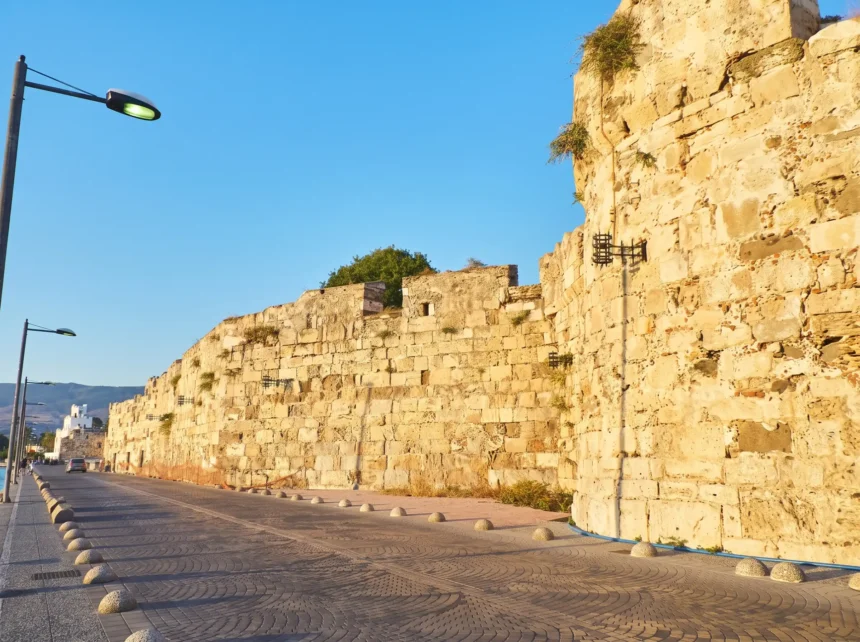
The Castle of the Knights of St John, known locally as Neratzia, guards the harbour entrance and is linked to the town by a bridge over what was once a moat. The Knights built it in stages from the late 14th century to the early 16th century, reusing columns and blocks from ancient buildings. It was damaged in the 2017 earthquake and has spent long periods closed for restoration since, so check locally whether it is open before you plan around it. Even from outside, the walls and the views along the harbour are worth the walk.
The Western Excavations, the Odeon and Casa Romana
West of the centre, the Western Archaeological Site shows a stretch of the ancient main street, the remains of a gymnasium colonnade and floor mosaics. A short walk away is the Roman Odeon, a small, well restored theatre with marble seats. Casa Romana, a large Roman town house rebuilt by the Italians in the 1930s, gives the clearest idea of how wealthy islanders lived, with courtyards, mosaics and wall paintings. The Archaeological Museum on Eleftherias Square holds the best sculptures and mosaics from these sites.
The Asklepieion
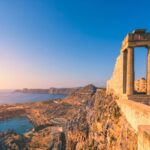
The Asklepieion, around 4 km southwest of Kos Town, was a sanctuary of Asclepius, the god of healing, and one of the great medical centres of the ancient world. It is laid out on three terraces climbing a pine-covered hillside, linked by wide stairways, with temples, porticoes and spring-fed fountains. From the top terrace the view stretches across the town to the Turkish coast.
Most of what you see was built after Hippocrates’ own lifetime, but the site grew out of the medical tradition he founded on the island, and it is easy to imagine patients bathing, sleeping and being treated here. Go first thing in the morning or late in the afternoon in summer: there is little shade on the terraces. Summer opening hours usually run from morning to evening, but hours and ticket prices change, so check with the Ministry of Culture before you go. You can reach the site by bike, by local bus in season or by the little tourist train from town.
Cycling on Kos
Kos is one of the best Greek islands for cycling, and bike hire shops line the streets of Kos Town. The north is largely flat, and the town has dedicated cycle lanes, including a long seafront path running east towards Psalidi and west towards Lambi. Popular easy rides include:
- Kos Town to Tigaki: about 10 km through farmland and salt-marsh country, ending at a long sandy beach.
- Kos Town to Psalidi and Agios Fokas: flat and mostly along the coast, good for an early morning ride.
- Kos Town to the Asklepieion: a gentle but steady climb, short enough for most riders.
For the hill villages of Zia and Pyli, an e-bike makes the climb far more enjoyable. Ride early or late in July and August, carry plenty of water and watch for traffic on the main island road, which has no cycle lane outside the town.
Villages and inland Kos
Zia and Mount Dikaios
Zia, on the slopes of the Dikaios range, is the island’s best known mountain village and a classic sunset spot, with tavernas looking west over the north coast. It gets busy with coach tours in the evening, so arrive early or stay for dinner when the crowds thin. Zia is also the starting point for the walk to the summit of Mount Dikaios, at around 850 metres, which takes a few hours there and back on a rough path. Do it with good shoes, water and a cool morning.
Pyli and Paleo Pyli
Below the mountain, the village of Pyli is a working farming community with an old spring fountain in the square. Above it, Paleo Pyli is the abandoned medieval village: a ruined castle on a rocky hill, the shells of old houses and a small Byzantine church with frescoes. It is one of the most atmospheric places on Kos and rarely crowded.
Antimachia and Kefalos
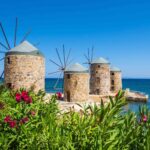
Antimachia, near the airport, has a large Knights’ castle with intact walls and a restored windmill. At the far west end of the island, Kefalos sits on a ridge above Kamari Bay. Down on the shore is Agios Stefanos, where the ruins of an early Christian basilica overlook a sandy beach and the tiny islet of Kastri with its white chapel, one of the most photographed views on Kos.
Beaches
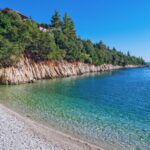
Kos has more sand than most Dodecanese islands. The main options:
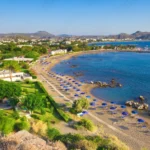
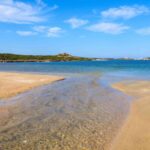
- Tigaki and Marmari: long, shallow sandy beaches on the north coast, good for families. The wind is often brisk in the afternoon, which makes Marmari popular with windsurfers.
- Mastichari: a relaxed village beach with fish tavernas and the boat link to Kalymnos.
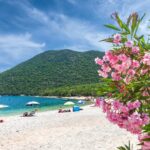
- Paradise Beach and Kamari Bay: on the south coast near Kefalos, with soft sand and clear water. Paradise is organised and very busy in August.
- Therma: at the end of the road past Agios Fokas, around 12 km from town, where a hot spring flows into a small rock pool on the shore. It is crowded at midday; go early or near sunset.
- Lambi and Psalidi: the closest beaches to Kos Town, convenient rather than beautiful.
Day trips and island hopping from Kos
Kos is a natural hub. From Kardamena, boats cross to Nisyros, where you can walk into the floor of the volcanic crater at Stefanos. From Mastichari, small ferries run to Kalymnos and Pserimos. From Kos Town, ferries head north to Leros and the sacred island of Patmos, and south to Rhodes, with stops at smaller islands. A popular combination is Kos with colourful Symi, which is linked by fast boats in summer. Boats also cross to Bodrum in Turkey; you need a valid passport and should check entry rules for your nationality before booking.
For timetables, ticket types and how to pick between conventional and high-speed boats, see our first-timer guide to Greek ferries.
Where to stay
Kos Town is the most practical base: walkable, close to the sights and the ferries, with the widest choice of tavernas. Tigaki and Marmari suit families who want a sandy beach on the doorstep. Mastichari is quieter and well placed for Kalymnos. Kefalos and Kamari are best for travellers who want calmer evenings and the south coast beaches. Kardamena is mainly for nightlife and package hotels.
Practical tips
- Getting from the airport: the airport is in the middle of the island, roughly 25 km from Kos Town. Public buses run in season, and taxis wait outside arrivals. If you are coming via Athens, our guide to Athens airport transfers covers the connection to Piraeus.
- Getting around: local buses link Kos Town with the main beaches and villages. To explore Zia, Pyli and the Kefalos peninsula at your own pace, read our advice on renting a car in Greece first.
- Heat: July and August are hot and the archaeological sites have little shade. Visit them early and save the beach for the afternoon.
- Season: many resort hotels and tavernas close between late October and April, though Kos Town stays open year-round.
- Food to try: krasotyri, a local cheese aged in red wine, pitaridia (hand-cut pasta) and fresh fish in Mastichari.
Frequently Asked Questions
How many days do you need in Kos?
Four days is enough for Kos Town, the Asklepieion, Zia and a couple of beaches. Allow a week if you want to cycle, explore the Kefalos peninsula and take day trips to Nisyros or Kalymnos.
Is Kos good for cycling?
Yes. The north of the island is largely flat and Kos Town has dedicated cycle lanes along the seafront. Bike hire is easy to find in town, and e-bikes help with the climbs to Zia and Pyli.
What is the Asklepieion of Kos?
It is an ancient sanctuary of Asclepius, the god of healing, about 4 km southwest of Kos Town. It served as a healing centre and medical school, and its ruins spread over three terraces with views to the Turkish coast.
Where is the best place to stay in Kos?
Kos Town is the most practical base for sightseeing and ferries. Tigaki and Marmari suit families wanting sandy beaches, while Kefalos and Kamari are quieter and close to the south coast beaches.
Can you visit Turkey from Kos?
Yes, boats cross from Kos Town to Bodrum in Turkey. You need a valid passport, and you should check Turkish entry rules for your nationality before booking.