


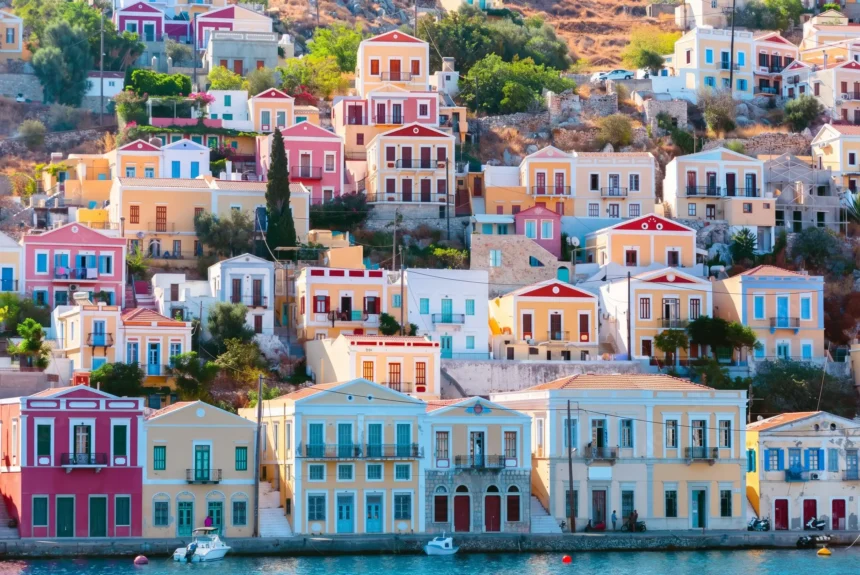
Symi is a small Dodecanese island around 1 to 1.5 hours by boat from Rhodes, known for its colourful neoclassical harbour at Gialos, the Kali Strata steps to Chorio and the Monastery of Panormitis. Stay two or three nights rather than visiting on a day trip.
Symi is a small, steep Dodecanese island an hour or so by boat from Rhodes, famous for the pastel neoclassical mansions that climb the hills around its harbour. Most visitors see it on a rushed day trip; stay at least two or three nights and you get the quiet mornings, the climb up the Kali Strata to Chorio, the boat-only beaches and the evenings when the harbour belongs to the islanders again.
Quick facts
- Where: Dodecanese, between Rhodes and the Turkish coast.
- Getting there: ferries and fast boats from Rhodes in around 1 to 1.5 hours; less frequent sailings from Piraeus and Kos.
- Best time: May, June and September; July and August are very hot.
- Time needed: 2 to 4 nights.
- Good for: Couples, walkers, photographers and anyone who prefers boats to roads.
Why Symi looks the way it does
Symi’s harbour town is the result of a short, spectacular boom. In the 19th century the island lived from shipbuilding, sea trade and sponge diving, and under special arrangements with the Ottoman authorities it kept a degree of self-government and low taxes. Its population grew to well over 20,000, its boatyards turned out hundreds of vessels, and wealthy captains and merchants built grand houses with pediments, painted shutters and tiled roofs.
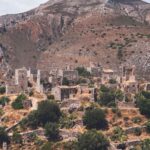
The boom ended with steamships, the decline of the sponge trade and the Italian occupation from 1912. People emigrated in large numbers, and by the Second World War only a fraction of the population remained. Many mansions were left empty and some are still roofless shells, which is part of the island’s strange beauty. On 8 May 1945, the German surrender of the Dodecanese was signed on Symi, and a plaque in Gialos marks the building. Today fewer than 3,000 people live here year-round, and strict building rules have kept the harbour looking much as it did a century ago.
Gialos, the harbour
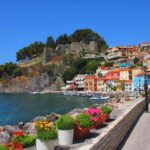
Gialos (also spelled Yialos) is where the ferries arrive and where most of the island’s life happens. The horseshoe harbour is ringed with cafés, tavernas, bakeries and sponge shops, with the clock tower near the entrance and the tall belfry of the church of Panagia Evangelistria rising behind the waterfront. Walk around the whole harbour early in the morning before the day boats from Rhodes arrive, usually late in the morning, and again in the evening once they leave.
Look out for natural sea sponges, which are still sold here as a reminder of the diving trade, and for the local herbs and spices sold in small shops. In the evening, the bridge and quays fill with tables, and the lights of the houses on the slopes reflect across the water.
Climbing the Kali Strata to Chorio
The Kali Strata is a broad 19th-century stone stairway, with several hundred steps, that climbs from the back of Gialos to Chorio, the upper town. Neoclassical mansions line it all the way, some restored, others crumbling with fig trees growing through their floors. At a steady pace the climb takes around 15 to 20 minutes; in summer, do it early in the morning or after 17:00 and take water.

Chorio and the Kastro
Chorio is quieter than the harbour, a maze of whitewashed lanes, small squares, old houses and churches. At the top stands the Kastro, a fortress built by the Knights of St John on the site of the ancient acropolis. Inside is the church of Megali Panagia, rebuilt after the original was destroyed in 1944 when explosives stored nearby blew up during the German withdrawal. The views from here over Gialos, Pedi Bay and across to Turkey are the best on the island.
Chorio also has a small archaeological museum and a restored 19th-century pharmacy, both worth a look if they are open. Hours vary, so ask locally.
The Monastery of Panormitis
On the island’s southwestern side, in a deep, sheltered bay, stands the Monastery of the Archangel Michael Panormitis, the patron saint of sailors in the Dodecanese. It is one of the most important pilgrimage sites in the region, with a tall bell tower, a richly decorated church, pebble mosaic courtyards and small museums of religious and folk objects, including offerings from sailors and their families.
Many boats from Rhodes stop at Panormitis for about an hour on the way to Gialos, so you can see it on a day trip. If you are staying on Symi, you can also get there by bus or taxi across the island, a winding drive of around 45 minutes, and visit when it is quieter. Dress modestly, with shoulders and knees covered.

Beaches and boat trips
Symi has no long sandy beaches. Its coastline is steep, rocky and broken into pebble coves, many of them reachable only by boat. That is the appeal: clear water, cliffs and very few buildings.
By foot or road
- Nos: a small beach about 10 minutes’ walk north of Gialos, convenient for a quick swim.
- Nimborio: a pebbly bay with a taverna further along the coast to the west, reached by a longer walk or a short drive.
- Pedi: a fishing village in a wide bay below Chorio, linked by bus to Gialos. From Pedi, a path continues to the small beaches of Agia Marina and Agios Nikolaos.
- Marathounda: a quiet bay on the east coast, reached by road; check the summer bus or take a taxi.
By boat
In summer, small water taxis leave Gialos each morning for the more remote coves and return in the late afternoon. Destinations usually include Agios Georgios Dysalona, a pebble beach under a towering cliff, Nanou Bay with its taverna, and Marathounda. Some boats run round-island trips with stops at several bays, often including the islet of Agios Emilianos near Panormitis and the island of Seskli to the south. Most remote beaches have no facilities, so bring water, shade and food unless a taverna is listed.
Food on Symi
The dish to try is Symi shrimp: tiny red shrimp, caught in deep water around the island, fried whole and eaten shell and all. You will find them on almost every menu in Gialos. Fresh fish, octopus and local herbs also feature heavily. The tavernas right by the ferry quay tend to be the most expensive; walk a little further around the harbour or up to Chorio and Pedi for better value and a more local crowd.
Day trip or overnight?
A day trip from Rhodes is easy: boats leave from Rhodes Town in the morning and return in the late afternoon, many with a stop at Panormitis. It gives you a few hours in Gialos, enough to see the harbour and perhaps climb partway up the Kali Strata. It is a good option if your time is limited, and it pairs well with a day in the medieval Old Town of Rhodes.
But Symi changes completely once the day boats leave. Staying overnight lets you walk up to Chorio in the cool of the morning, take a water taxi to the remote beaches and have dinner on a quiet harbour. Two or three nights is ideal; a week suits walkers who want to explore the island’s old mule paths and monasteries.
Combining Symi with other islands
Symi is linked most often with Rhodes, so many visitors combine a few days here with our Rhodes travel guide itinerary. In summer, fast boats continue north to Tilos, Nisyros and Kos, which makes it easy to add Kos with its ancient sites to the trip. Further north, Patmos and its monastery makes a fitting contrast. For how ferry tickets and timetables work, read our Greek ferry guide.
Practical tips
- Getting there: Symi has no airport. Fly to Rhodes and take a ferry or fast boat from Rhodes Town; crossings take around 1 to 1.5 hours. Direct ferries from Piraeus run several times a week in summer but take most of a day.
- Getting around: a bus links Gialos, Chorio and Pedi; taxis and water taxis cover the rest. Scooters and small cars can be hired in Gialos, but roads are steep and narrow, and parking in town is very limited.
- Steps everywhere: Symi is built on slopes. Pack light, wear good shoes and ask your accommodation how many steps lead to the door.
- Book ahead: accommodation is limited and fills up in July and August.
- Season: many businesses close from November to March, though the harbour never empties entirely.
- Water: fresh water is scarce on a small, dry island like Symi, so take short showers.
Frequently Asked Questions
Is Symi worth a day trip from Rhodes?
Yes, a day trip gives you a few hours in Gialos harbour and often a stop at Panormitis Monastery. To see Chorio, the remote beaches and the harbour without the crowds, stay at least one night.
How do you get to Symi?
Fly to Rhodes and take a ferry or fast boat from Rhodes Town, which takes around 1 to 1.5 hours. There are also less frequent ferries from Piraeus and connections with Kos and other Dodecanese islands in summer.
How many steps is the Kali Strata on Symi?
The Kali Strata is a stone stairway of several hundred steps linking Gialos harbour with Chorio, the upper town. At a steady pace it takes around 15 to 20 minutes to climb.
Does Symi have good beaches?
Symi has pebble coves rather than sandy beaches. The best, such as Agios Georgios Dysalona and Nanou, are reached by water taxi from Gialos, while Pedi, Nos and Nimborio are reachable by road or on foot.
What food is Symi known for?
Symi shrimp, tiny red shrimp fried whole and eaten shell and all, are the island’s signature dish. Fresh fish, octopus and local herbs are also widely served in the harbour tavernas.