



Base yourself in Rhodes Town for the UNESCO-listed Old Town or on the east coast for beaches, hire a car for a few days and allow 5 to 7 days to see Lindos, Kamiros, Prasonisi and a day trip to Symi.
Rhodes is the largest of the Dodecanese islands and one of the easiest Greek islands to enjoy: a walled medieval Old Town that is still lived in, the white village and clifftop acropolis of Lindos, and long beaches down the sunny east coast. The best plan is to base yourself in or near Rhodes Town for the Old Town and nightlife, or on the east coast between Kolymbia and Lindos for beaches, and to hire a car for at least a couple of days. Allow a week if you can; the island is big, and the quieter south and west reward the extra time.
Quick facts
- Getting there: direct flights to Rhodes airport (Diagoras) from much of Europe in summer, flights from Athens all year, and long ferry crossings from Piraeus.
- Time needed: 5 to 7 days for a good overview; 2 days at the minimum for the Old Town and Lindos.
- Best time: May, June, September and October; July and August are very hot and crowded.
- Getting around: hire car, KTEL buses along both coasts, taxis and excursion boats.
- Good for: history lovers, families, beach holidays and island hopping in the Dodecanese.
Rhodes Town and the Medieval Old Town
The Old Town of Rhodes, a UNESCO World Heritage Site since 1988, is one of the best-preserved medieval towns in Europe. The Knights of St John ruled the island from 1309 until the Ottoman conquest in 1522, and they left massive walls, gates, a moat and the cobbled Street of the Knights, lined with the inns of the different “tongues” or national groups of the order. At its top stands the Palace of the Grand Master, heavily rebuilt by the Italians in the 1930s, and at its foot the former Hospital of the Knights, now the Archaeological Museum.
The Ottoman centuries added mosques, a hammam, fountains and wooden balconies, and the southern part of the town holds the old Jewish quarter and the Kahal Shalom synagogue, the oldest surviving synagogue in Greece. Sokratous Street is the busy shopping lane, while the backstreets to the south are quieter and more residential. Our Rhodes Old Town walking guide gives a full route with gates, monuments and timings.
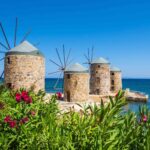
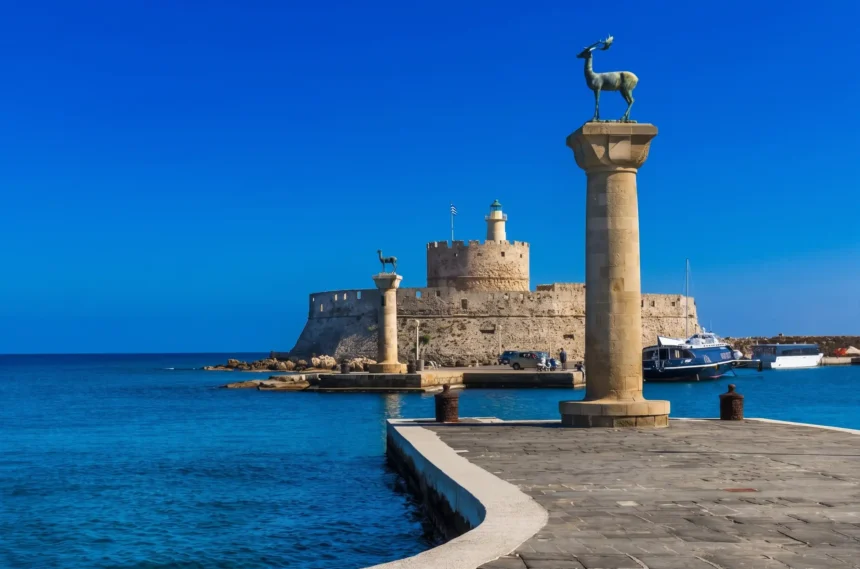
Outside the walls, the “new town” has Mandraki harbour, with its deer statues on the harbour entrance where the Colossus is traditionally said to have stood, a row of old windmills and the fort of St Nicholas. The Italian-era buildings along the waterfront, the covered market (Nea Agora) and the town beach of Elli at the northern tip complete the picture.
Lindos
About 50 km south of Rhodes Town, Lindos is the island’s most photographed village: a tumble of whitewashed houses and captains’ mansions with pebble-mosaic courtyards under a rocky hill crowned by an acropolis. Within the Knights’ castle walls on top are the remains of the Sanctuary of Athena Lindia, a Hellenistic stoa and a stairway, with views straight down to St Paul’s Bay.
The climb from the village takes 15 to 20 minutes on a stepped path, partly shaded by nothing at all; go at opening time or late in the afternoon. Donkeys are offered for the ride up, but many visitors now choose to walk out of concern for the animals. Tickets are sold at the entrance and through the official Hellenic Heritage e-ticket system; prices and hours change by season, so check before you go. Below the village, the main beach and the small, almost enclosed St Paul’s Bay are good for a swim afterwards. Lindos is packed with day trippers from late morning to late afternoon, so an evening there, or a night in the village, shows it at its best.
Beaches
The general rule on Rhodes is simple: the east coast is sheltered, with calmer water, more sand and most of the resorts; the west coast faces the prevailing wind and has wilder, pebbly shores. Highlights include Anthony Quinn Bay, a small rocky cove near Faliraki named after the actor who filmed The Guns of Navarone on the island; the long sandy curve of Tsambika beneath its hilltop monastery; Agathi and Glystra for golden sand in small bays; and Prasonisi at the southern tip, where a sand spit separates two seas and windsurfers and kitesurfers gather. See our full guide to the best beaches in Rhodes for more, including family-friendly options.
Beyond the obvious
Ancient Kamiros and Filerimos
On the west coast, Ancient Kamiros is the remains of a whole Hellenistic town laid out on a hillside facing the sea, quieter and more atmospheric than many better-known sites. Closer to town, Filerimos hill above Ialysos has a monastery, the remains of an ancient temple, a path lined with Stations of the Cross and a huge cross you can climb for views of the north of the island.
Valleys, springs and castles
Inland, the Valley of the Butterflies (Petaloudes) is a shaded gorge with wooden bridges, where Jersey tiger moths gather in large numbers in high summer. Kallithea Springs, a restored Italian-era spa on the coast south of town, is a striking place for a swim and a coffee. Further south and west, the ruined castle of Monolithos sits on a rock pinnacle above the sea, and nearby Fourni has a quiet pebble beach. The mountain villages around Embonas, below Mount Attavyros, are known for wine, and many wineries welcome visitors.
Day trips by sea
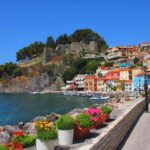
Rhodes is the hub of the Dodecanese. The most popular day trip is to Symi, whose harbour of neoclassical houses in ochre and cream is one of the prettiest in Greece; read our Symi travel guide before you go, as it deserves a night if you can manage it. Boats also connect Rhodes with Kos and the other islands of the chain; see the Kos travel guide if you are island hopping north.


Where to stay
- Rhodes Old Town: small boutique hotels inside the walls. Atmospheric and walkable, but some are reached only on foot over cobbles, and it can be noisy near the bars.
- Rhodes New Town: practical hotels near Mandraki and Elli beach, close to the bus stations and ferries.
- Ixia and Ialysos: large hotels on the windy west coast near town; good for windsurfers, less so for calm swimming.
- Faliraki: big resort with a long sandy beach, a water park and lively nightlife.
- Kolymbia, Stegna, Pefkos and Lindos: east coast bases for beaches; Lindos and Pefkos are quieter in the evenings.
- The south: Gennadi, Kiotari and Lachania for space and quiet, best with a car.
Food to try
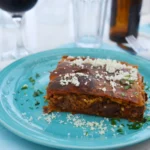
Rhodian cooking is a mix of island Greek and eastern Aegean influences. Look out for pitaroudia (chickpea fritters), matsi (homemade pasta), and melekouni, a bar of honey and sesame traditionally handed out at weddings and christenings. Local wines from the Embonas area, made from the Athiri and Mandilaria grapes, are worth ordering. Away from the tourist strips, the tavernas in villages such as Archangelos, Koskinou and Siana are usually better value than those on the main squares of the Old Town.
Practical tips
- Car hire: the island is about 80 km long, and the most rewarding places are spread out. A car for a few days makes a big difference; our guide to renting a car in Greece covers what you need.
- Buses: KTEL buses run from Rhodes Town along both coasts, with frequent services to Faliraki and Lindos in summer and sparse ones to the far south.
- Ferries: the crossing from Piraeus is long, usually overnight; flying is quicker. For connections to Symi, Kos and beyond, see our Greek ferry guide.
- Heat: in July and August, visit Lindos and the Old Town early or late, and plan beach time around the middle of the day.
- Wind: if the west coast is rough, head east; the meltemi wind in summer often makes the eastern beaches the calmer choice.
- Old Town by car: do not drive into the walled town. Park outside the walls and walk in through one of the gates.
Frequently Asked Questions
How many days do you need in Rhodes?
Five to seven days lets you see the Old Town, Lindos, a few beaches on both coasts and take a day trip to Symi. With only two days, focus on the Old Town and Lindos.
Where is the best place to stay in Rhodes?
Stay in or near Rhodes Town for the Old Town, restaurants and ferry connections, or on the east coast between Kolymbia and Lindos for calm, sandy beaches. Faliraki suits those who want nightlife and a big resort.
Do you need a car in Rhodes?
Not for the Old Town or Lindos, which are well served by KTEL buses. A car is very useful for the south, the west coast, Kamiros, Monolithos and the quieter beaches, even if you hire one for only a few days.
Which side of Rhodes has the best beaches?
The east coast is more sheltered and has most of the sandy beaches, such as Tsambika, Agathi and Glystra. The west coast faces the prevailing wind and is better for windsurfing than calm swimming.
When is the best time to visit Rhodes?
May, June, September and October bring warm sea, sunshine and fewer crowds. July and August are very hot and the busiest months, so plan sightseeing for early morning or evening.