


Mykonos is worth visiting beyond its parties for Chora's lanes, Delos, quiet northern beaches and the village of Ano Mera, but go in May, June or September to avoid peak prices and crowds.
Mykonos is far more than a party island: beyond the beach clubs there is a beautifully preserved Cycladic town, a quiet inland village with a 16th century monastery, wild northern beaches and, a short boat ride away, Delos, one of the most important archaeological sites in Greece. It is also one of the most expensive islands in the country, and in July and August it is very crowded. Go in the shoulder season, base yourself sensibly, and Mykonos can be a relaxed and rewarding stay.
Quick facts
- Best time: May, June and September; late April and early October are quieter but some businesses are closed.
- Getting there: flights from Athens and many European cities, or ferries from Piraeus and Rafina taking roughly 2.5 hours on fast boats and 4 to 5 hours or more on conventional ones.
- Time needed: 3 nights, including a half day on Delos.
- Main base: Mykonos Town (Chora) for walking and dining; Ornos or Agios Stefanos for calmer beach stays.
- Good for: archaeology, beaches, food, nightlife, and couples who visit outside peak season.
The honest picture
The reputation is earned. From late June to the end of August, the beach clubs at Paradise, Super Paradise and Psarou are loud and busy, prices for sunbeds, cocktails and dinners can be startling, and the lanes of Chora are packed each evening. Cruise ships add thousands of day visitors on many days; since 2025 their passengers have paid a disembarkation fee of €20 each in peak season, which shows how seriously the authorities take the pressure on the island.
Yet Mykonos also has an older life that continues alongside the glamour. Farmers still raise pigs and make cheese inland, fishermen work from the harbour, the churches (the island is said to have hundreds of them) are kept whitewashed and tended, and the north coast remains wind-blown and largely undeveloped. The trick is timing and choice: early mornings in town, Delos before the heat, and beaches that do not rent sunbeds by the hour.
Mykonos Town (Chora)
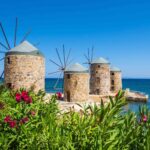
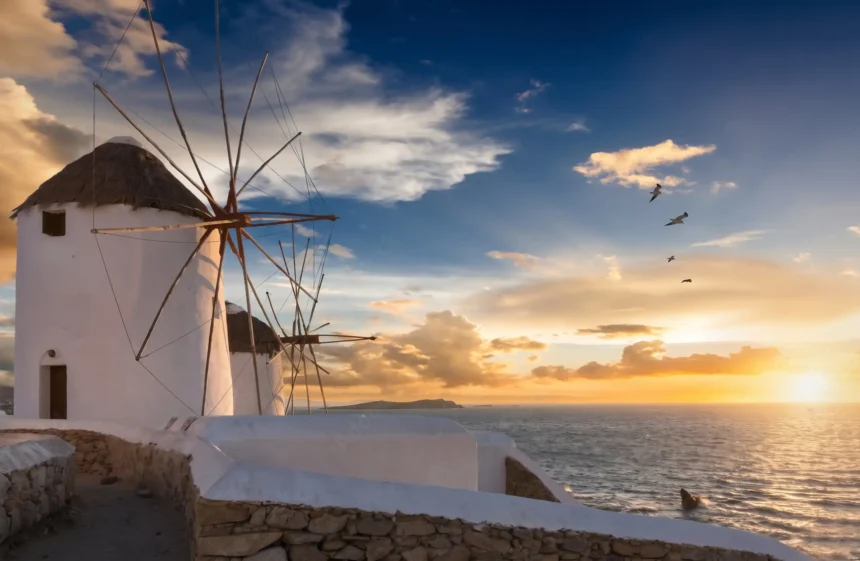
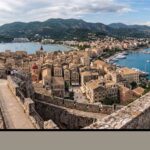
Chora is a maze of whitewashed lanes, blue and red doors and outside staircases, laid out to confuse pirates and the strong north wind. It is at its best between about 8:00 and 10:00, before the shops open and the day crowds arrive. Walk from the old harbour, where fishing boats still tie up, through Matogianni Street to the Church of Panagia Paraportiani, a cluster of chapels joined into one sculptural white building. Continue to Little Venice, where 18th and 19th century houses of sea captains stand directly over the water, and climb to the windmills of Kato Mili on the low ridge beyond.
Chora also has worthwhile small museums: the Archaeological Museum near the old port, the Aegean Maritime Museum and Lena’s House, a preserved 19th century middle-class home that shows how islanders actually lived. Look out for Petros the pelican, the island’s mascot, who is often found strolling around the harbour.
Delos: the reason to come even if you never party
Delos lies about 2 km off the west coast of Mykonos. In myth it was the birthplace of Apollo and Artemis, and for centuries it was one of the great sanctuaries and trading ports of the Aegean. Today the whole island is an archaeological site and a UNESCO World Heritage Site, and nobody is allowed to stay overnight.
Boats leave from the old port of Mykonos Town every morning in season, taking roughly half an hour. Allow at least three hours on the island. The highlights are the Terrace of the Lions (the statues on site are replicas; several originals are in the museum), the residential quarter with its mosaic floors such as the House of Dionysus, the ancient theatre, and the short, steep climb to the top of Mount Kynthos for a view across the Cyclades. There is almost no shade, so bring water, a hat and sun cream. Check the current boat schedule and opening days the day before, as Greek archaeological sites sometimes close or shorten hours, and strong winds can cancel crossings.
Beaches, from busy to wild
South coast
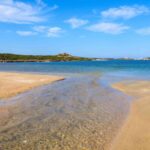
The sheltered south coast holds the organised beaches: Ornos and Platis Gialos are family-friendly with calm water and plenty of tavernas; Psarou is small and upmarket; Paradise and Super Paradise are known for their beach clubs; Elia is long and sandy with a mix of organised sections and space; Kalo Livadi and Kalafatis further east are quieter, and Kalafatis is a windsurfing base.
North coast
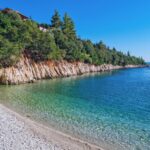
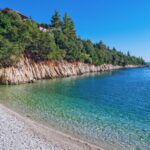
The north is exposed to the meltemi wind, which can make the sea rough in summer, but it rewards calmer days. Agios Sostis is a natural sandy bay with no sunbeds; Fokos and Mersini, reached by a partly unpaved road, feel remote and have very little development; Panormos and Ftelia are broad bays that are popular with windsurfers. Do not expect facilities at these beaches beyond, at most, a single taverna.
Ano Mera and the interior
Ano Mera, the island’s second village, lies about 7 km east of Chora and feels a world away from it. Its central square is lined with tavernas and faces the Monastery of Panagia Tourliani, founded in 1542 and later restored, with a carved wooden iconostasis and a small collection of religious art. It is a good place for lunch: try louza (cured pork loin seasoned with pepper and spices), kopanisti (a sharp, spicy cheese spread) and local thyme honey. From here you can drive to the northern beaches or up to the Armenistis lighthouse on the northwestern cape, a fine sunset spot that is much quieter than Little Venice.
Where to stay
- Chora: best for walking, dining and boat trips to Delos, but rooms are small and expensive, and noise can be an issue in summer.
- Ornos and Agios Ioannis: sheltered southwestern bays close to town, with a calmer atmosphere and good for families.
- Agios Stefanos and Tourlos: north of town near the new port; practical for arrivals and departures.
- Platis Gialos, Elia and Kalafatis: beach stays further from town; a car or the bus is then essential.
Mykonos sits at the heart of the Cyclades ferry network. Paros, with its villages, and Naxos and its mountains are both short hops away and far better value for a longer stay, while Santorini, done the right way, is a natural next stop further south.
Getting there and getting around
Mykonos airport is a short drive from Chora, with domestic flights from Athens and many seasonal international routes. Ferries dock at the new port at Tourlos, about 3 km north of town; a small sea bus has linked it with the old port in recent seasons, and buses and taxis wait for arrivals. Rafina, east of Athens, usually gives a slightly shorter crossing than Piraeus. Our Greek ferry guide for first-timers explains how to choose between fast and conventional boats, and our Athens travel guide helps if you are spending time in the capital before or after.
KTEL buses run from two terminals in Chora (one for the north and one for the south), reaching most popular beaches. Taxis are scarce in summer and queues can be long late at night. A car is useful for the north coast and Ano Mera, but parking in and near Chora is difficult; our article on renting a car in Greece explains the essentials. Water taxis connect Platis Gialos with several south coast beaches in summer.
Practical tips
- Avoid July and August if you want a relaxed trip; June and September have warm sea and far fewer people.
- Check sunbed prices before you sit down at organised beaches, as some charge high rates for front rows.
- Book restaurants in Chora for sunset times, and choose tavernas in Ano Mera or the harbour for better value.
- Go to Delos on the first boat and bring water; the site is exposed and hot by midday.
- The meltemi wind often blows hard in July and August; head to south coast beaches on windy days.
- Outside the season (roughly November to April) many hotels, bars and beach businesses close, although Chora keeps some life and the walking is lovely.
Frequently Asked Questions
Is Mykonos worth visiting if you do not want to party?
Yes. Chora’s old lanes, Little Venice, the island of Delos, the village of Ano Mera and the northern beaches all make a quieter trip worthwhile. Visiting in May, June or September helps a great deal.
How many days do you need in Mykonos?
Three nights is a good amount for most travellers. That allows a morning in Chora, half a day on Delos, a visit to Ano Mera and a couple of beach days.
How do you get from Mykonos to Delos?
Boats leave from the old port of Mykonos Town every morning in season, and the crossing takes roughly half an hour. Allow at least three hours on the island and check the schedule and site opening the day before.
What are the quietest beaches in Mykonos?
Agios Sostis, Fokos and Mersini on the north coast are the least developed, with few or no facilities. They are best on calm days, as the north coast is exposed to the summer meltemi wind.
Is Mykonos expensive?
It is one of the most expensive islands in Greece, especially for accommodation, sunbeds and dinners in Chora. Staying in the shoulder season and eating in Ano Mera or simpler tavernas keeps costs down.