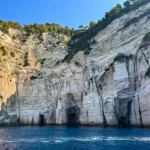







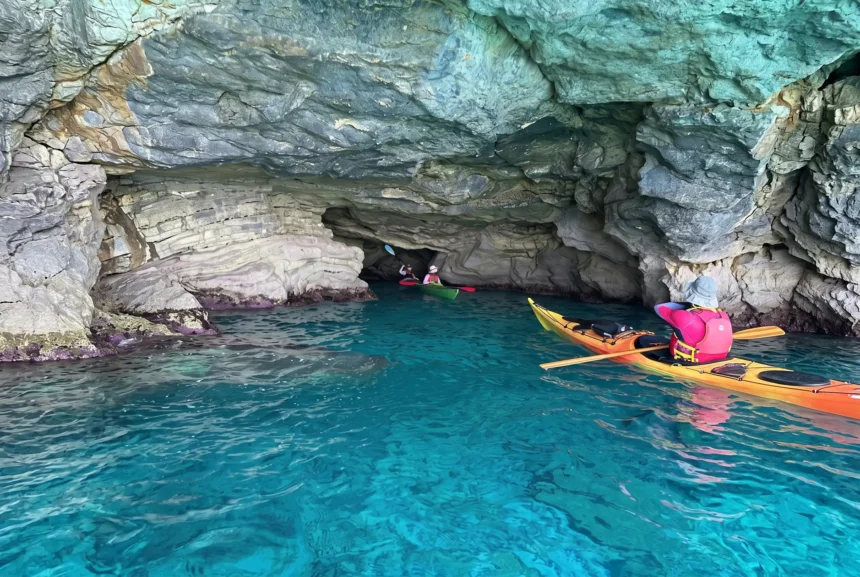
Paxos kayaking splits into the sheltered east coast, ideal for easy paddles between coves near Gaios, Loggos and Lakka, and the exposed west coast with sea caves and the Tripitos arch, best explored on a guided trip on a calm morning.
Paxos kayaking comes in two very different flavours. The sheltered east coast, between Gaios, Loggos and Lakka, is ideal for relaxed paddling from cove to cove, even for beginners. The wild west coast, a line of white limestone cliffs riddled with sea caves and topped by the Tripitos arch, is one of the most spectacular kayak routes in the Ionian, but it faces the open sea and should be paddled only on calm days, ideally with a local guide. Here is how to plan both.
Quick facts
- Season: May to October; June and September offer the best mix of warm water and calmer, quieter seas.
- Best time of day: morning, before the afternoon breeze from the northwest picks up.
- East coast: sheltered coves, easy paddling, suitable for beginners and families.
- West coast: sea caves, cliffs and the Tripitos arch; exposed, best on a guided trip.
- Typical guided trip: around three hours, with swim and snorkel stops.
- Good for: swimmers comfortable in deep water, couples, active families with older children.
Why Paxos is made for kayaking
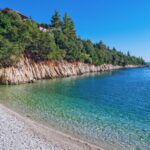
Paxos is small, about 10 km long, and has two coasts that feel like different islands. The east side faces the mainland and Corfu across a narrow channel, so it is protected from the open sea, with olive groves running down to small pebble coves and three harbour villages. The west side faces the open Ionian: sheer white cliffs drop straight into deep blue water and are cut by dozens of sea caves. Many of these places cannot be reached by land at all, and from a kayak you see them at water level, slowly, and without engine noise. If you are new to the island, our Paxos travel guide sets the scene.
The west coast: sea caves and the Tripitos arch
This is the paddle people come for. The western cliffs hold a chain of sea caves, some large enough to paddle into, where sunlight reflecting off the white sea floor turns the water an electric blue. Among the best known are:
- Ypapanti: one of the largest caves on the island, in the northwest near Lakka, with a wide entrance and a deep interior.
- Achai: a cave with a maze of passages, best explored with a guide who knows which openings are safe.
- Ortholithos: a tall rock pillar rising vertically from the sea in front of a cave, one of the most photographed sights of the coast.
- Tripitos arch: a natural stone arch more than 20 m high near the southern end of the island. Guided kayak trips often pass beneath it when the sea allows.
Between them are the Erimitis cliffs, small shingle beaches you can only reach by water, and clear, deep water for snorkelling. Paddling under cliffs this high is humbling, and the quiet of a kayak lets you hear the swell breathing inside the caves.

Safety on the west coast
The west coast is fully exposed to wind and swell from the west and northwest. Even organised excursion boats take care here when westerly winds blow, and many local operators advise against taking small boats there without experience. Conditions can change within an hour, landing spots are few, and swell surging into a cave can be dangerous. Go with a qualified local guide, who will choose the day, the route and which caves are safe to enter. Unguided west coast paddling is only for experienced sea kayakers with proper equipment, a reliable forecast and a plan for getting off the water.
The east coast: easy paddling between coves
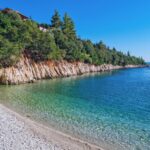
For a gentle paddle, the east coast is ideal. Short trips from the harbours let you explore pebble coves, swim in clear water and stop for coffee in a village.



Around Gaios
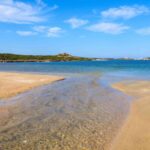
Gaios sits behind two small islets that shelter its harbour. Agios Nikolaos, the larger, has the remains of a Venetian fortress whose construction began in 1423; Panagia, a little further out, has a church that is the focus of the island’s big mid August festival. Paddling around the islets is an easy first outing, and you can continue south to Mongonissi, at the southeastern tip of Paxos, which has the island’s only real sandy beach with shallow water. Watch for the ferries, water taxis and day boats in and out of Gaios, especially from late morning.
Loggos and the middle of the island
Loggos, the smallest of the three harbour villages, has beaches on either side, with Marmari, Kipos and Kipiadi nearby and Monodendri a little further north towards Lakka. The shoreline between them is a string of coves with olive trees almost to the water. A morning paddle north from Loggos, with swim stops, is one of the most pleasant short trips on Paxos.
Lakka bay
Lakka sits around an almost enclosed horseshoe bay at the northern tip of the island, with very clear, shallow water near the beaches. It is a lovely spot to try a sit on top kayak for the first time. Experienced paddlers can head out of the bay and round the northern cape towards the west coast, but only on a calm day, since the sea changes character as soon as you leave the shelter of the bay.
Guided trip or self guided?
| Guided trip | Self guided rental | |
|---|---|---|
| Best for | West coast caves, first time sea kayakers | East coast coves, short paddles |
| Typical length | Around three hours, sometimes longer | One hour to half a day |
| Equipment | Kayak, paddle, buoyancy aid, dry bag, often snorkel gear | Kayak, paddle and buoyancy aid; bring your own dry bag |
| Main advantage | Local knowledge of caves, safe entry points and the weather | Freedom to stop where you like |
Guided trips run through the season from the main villages and usually need booking a day or two ahead in July and August. Some beaches also have sit on top kayaks and canoes for hire by the hour, which are perfect for the calm coves near Loggos and Lakka. Prices vary by season and route, so compare what is included before you choose.
Other ways to see the coast
If a long paddle is not for you, you can still see the cliffs and caves. Small motorboats are available to hire in the harbours, and on a calm day they can take you along the coast; our guide to hiring a boat without a licence explains how these boats work and what to watch out for. Day boats from Gaios run to the caves and on to Antipaxos, and if you are coming from Corfu, the Corfu to Paxos day cruise passes the same coast. You can also see the clifftops from land: our guide to walking trails on Paxos covers the paths to Erimitis and the Tripitos arch, an excellent way to look down on the waters you have paddled.
Paddling to Antipaxos
Antipaxos lies a short distance south of Paxos, and its beaches at Voutoumi and Vrika have some of the clearest water in Greece. Crossing by kayak is possible for strong, experienced paddlers in calm conditions, but the channel is open water with boat traffic, so most people take a water taxi from Gaios and swim or snorkel once there. Our guide to the Antipaxos beaches covers the options.
Practical tips
- Start early: in summer the sea is usually calmest in the morning, and a northwesterly breeze often builds in the afternoon.
- Check the forecast: look at wind direction as well as strength. A westerly or northwesterly matters on the west coast; the east side is more forgiving.
- Wear a buoyancy aid at all times, even if you are a strong swimmer.
- Sun protection: there is almost no shade on the water. Use a hat with a strap, sunglasses with a cord, high factor sunscreen and a long sleeved rash vest.
- Water and snacks: bring more water than you think you need, in a dry bag with your phone and a light layer.
- Respect wildlife and boats: keep your distance from swimmers and moored yachts, and give way to working boats in the harbours.
- Getting there: Paxos is reached by ferry from Corfu and Igoumenitsa; see our guide on how to get to Paxos.
Frequently Asked Questions
Can you kayak into the sea caves of Paxos?
Yes, several caves on the west coast, such as Ypapanti, are large enough to paddle into on calm days. Conditions depend on swell and wind, so it is best to go with a local guide who knows which caves are safe to enter.
Is sea kayaking in Paxos suitable for beginners?
Beginners can paddle comfortably along the sheltered east coast around Gaios, Loggos and Lakka. The exposed west coast with its caves and cliffs is better tackled on a guided trip, where the guide sets the route and pace.
What is the best time for kayaking in Paxos?
The season runs roughly May to October, with June and September offering warm water and fewer boats. Paddle in the morning, as the sea is usually calmer before the afternoon breeze picks up.
Can you kayak under the Tripitos arch?
Guided kayak trips along the west coast often pass under the Tripitos arch, which is more than 20 m high, when the sea is calm. In swell it is not safe, and guides will skip it.
Can you kayak from Paxos to Antipaxos?
It is possible for experienced paddlers in calm conditions, but the crossing is open water with boat traffic. Most visitors take a water taxi from Gaios to Antipaxos instead and swim or snorkel once they arrive.