


Corfu is best visited from May to June or September to early October, reached by direct flight to Corfu International Airport or by ferry from Igoumenitsa, and explored by hire car or KTEL bus. A week covers Corfu Old Town, Paleokastritsa, the north-east coast and a day trip to Paxos.
Corfu is the greenest and most layered of the Greek islands: a Venetian-built capital listed by UNESCO, a dramatic west coast of cliffs and coves, an olive-covered interior and a busy, sociable north. Most visitors fly straight into the airport on the edge of Corfu Town, pick one part of the island as a base and explore by car or bus. This guide covers when to go, how to arrive and get around, how the island divides up and what deserves a place on a first trip.
Quick facts
- Getting there: Corfu International Airport (CFU) sits just south of Corfu Town; ferries run from Igoumenitsa on the mainland in about 1 hour 30 minutes
- Best time: May to June and September to early October
- Time needed: a week covers the highlights without rushing
- Getting around: a hire car gives the most freedom; green KTEL buses cover the island, blue city buses cover the town and nearby coast
- Good for: history, varied beaches, walking, families and food
Corfu at a glance
Corfu (Kerkyra in Greek) is the northernmost of the Ionian Islands, lying off the coast of Epirus with Albania visible across the strait from the north-east. It is a large island by Greek standards, and driving from Kassiopi in the north to Kavos in the south takes well over an hour on winding roads.
Its history explains much of its character. Venice ruled Corfu from 1386 to 1797 and used it as a fortress guarding the entrance to the Adriatic; the island resisted Ottoman sieges in 1537 and 1571. Brief French rule followed, then a British protectorate from 1815 to 1864, after which Corfu joined Greece. The result is an Italianate old town, a cricket pitch in the main square, a taste for ginger beer (tsitsibira) and a cuisine with Venetian names. Winters are wetter here than in the Aegean, which is why the hills stay green with olive groves and cypress through the summer.
When to visit
May and June are arguably the best months: the countryside is still green, wildflowers line the roads, the sea is warming and resorts are open without being full. July and August bring heat, the highest prices and the heaviest traffic, especially around Paleokastritsa, Sidari and the Old Town when cruise ships are in. September and early October offer the warmest sea of the year and a calmer pace, though some beach businesses start closing from mid-October.
From November to March, Corfu Town carries on as a working city with cafés, music and university life, but most resort hotels and tavernas along the coast shut. Rain can be heavy in winter. Greek Orthodox Easter is a major event on the island, with brass bands and processions, and is worth planning a trip around if you can book early.
Getting to Corfu
By air
Corfu International Airport, named after Ioannis Kapodistrias, is unusually close to town: the runway runs alongside the Chalikiopoulos lagoon just south of the centre, a short taxi ride from the Old Town. In summer there are direct flights from much of the UK and Europe, many of them seasonal. Outside the season you will usually connect through Athens. Blue city bus 15 links the airport with the town and port; for taxis and private transfers, see our separate Corfu airport transfer guide.
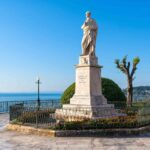
By ferry
The main ferry link is with Igoumenitsa on the mainland. Two operators, Kerkyra Lines and Kerkyra Seaways, run frequent crossings in season, taking roughly 1 hour 10 minutes to 1 hour 30 minutes. Igoumenitsa connects by motorway to Ioannina and Thessaloniki, making this the natural route for anyone driving through Greece. Seasonal international ferries also link Corfu with ports in Italy, and small boats cross to Saranda in Albania. Schedules change each year, so check the operators directly.
Getting around
A hire car is the most practical way to see Corfu properly. Roads are narrow, often without verges, and the mountain routes over Pantokrator and down to the west coast are slow, with tight hairpins. Allow more time than the map suggests and avoid parking under olive trees with branches low enough to scrape the roof.
Public buses come in two colours. Blue city buses serve Corfu Town, the airport, the port and nearby coastal villages such as Gouvia, Dassia, Ipsos, Perama and Benitses; bus 10 runs to the Achilleion. Green KTEL buses run island-wide routes from the KTEL station in town, reaching places like Paleokastritsa, Sidari, Kassiopi and Glyfada. Tickets for the two networks are not interchangeable, and timetables are reduced outside summer. Taxis are available in town and at the airport but are scarce in villages, so arrange return journeys in advance.
Corfu’s regions explained
Where you stay shapes the trip more than on smaller islands. Our guides to where to stay in Corfu and choosing north or south Corfu go into detail; this is the short version.
| Area | Character | Main places |
|---|---|---|
| Corfu Town | History, restaurants, year-round life | Old Town, Garitsa, Kanoni, Mon Repos |
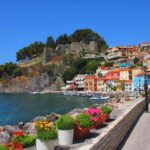
| North-east coast | Pebble coves, clear water, views to Albania | Barbati, Nissaki, Kalami, Kouloura, Kassiopi |
| North coast | Long sandy beaches, larger resorts | Sidari, Roda, Acharavi, Arillas, Agios Stefanos |
| West coast | Cliffs, sandy bays, sunsets | Paleokastritsa, Liapades, Glyfada, Pelekas, Agios Gordios |
| South | Flatter land, dunes, quieter villages and the Kavos party strip | Lake Korission, Issos, Agios Georgios, Lefkimmi, Kavos |
What to see on a first visit
Corfu has far more than a week’s worth of sights, so prioritise. These are the places most first-time visitors regret missing:
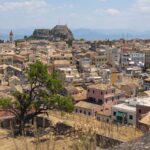
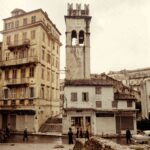
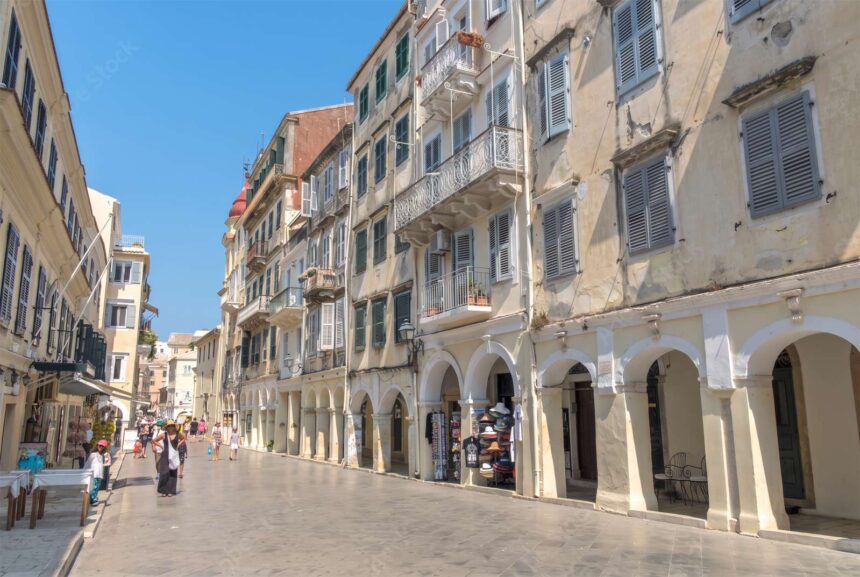
- Corfu Old Town: the UNESCO-listed historic centre, with the Liston arcades, the Spianada, the Church of Saint Spyridon and the Old and New Fortresses.
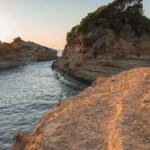
- Paleokastritsa: a series of small bays on the west coast, with a 13th-century monastery on the headland and boat trips to sea caves.
- Angelokastro: the ruined Byzantine castle on a cliff about 300 metres above the sea, north of Paleokastritsa.
- The Achilleion: Empress Elisabeth of Austria’s palace at Gastouri. The interior is closed for restoration, but the gardens and statues are open.
- Kanoni and Mouse Island: the classic view of Vlacherna monastery and Pontikonisi, with planes landing just beyond.
- The north-east coast: Kalami, Agni and Kassiopi, with swimming in clear water and long lunches by the sea.
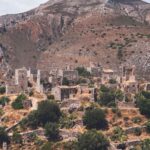
- Mount Pantokrator: the island’s highest point, with views to the Albanian mountains and the abandoned village of Old Perithia on its slopes.
Beyond the island, day cruises to Paxos and Antipaxos are the most popular excursion, and the ferry to Saranda makes a day in Albania possible, including the ancient site of Butrint. Bring a passport for Albania.
Food and drink basics
Corfiot cooking differs noticeably from mainland Greek food. Look for pastitsada (beef or rooster slow-cooked in a spiced tomato sauce, served with pasta), sofrito (veal in a garlic, vinegar and parsley sauce) and bourdeto (fish stewed with plenty of red pepper). Kumquats grow in the north of the island and turn up as liqueur, preserves and sweets in every souvenir shop. Local ginger beer, a legacy of British rule, is still made on the island. Our guide to Corfu food covers dishes and where to find them in more depth.
A simple five-day outline
- Day 1: Corfu Old Town on foot, the Old Fortress, then evening on the Liston.
- Day 2: Paleokastritsa in the morning, a boat to the caves, Angelokastro in the late afternoon.
- Day 3: The north-east coast, swimming at Kalami or Agni and an afternoon in Kassiopi.
- Day 4: The Achilleion gardens, Kanoni and the Mon Repos estate, then a seafood dinner in Benitses or Garitsa.
- Day 5: A day cruise to Paxos, or a beach day on the west coast at Glyfada followed by sunset in Pelekas.
Practical tips
- Book August early: accommodation, hire cars and boat trips sell out, and prices peak in the first three weeks of the month.
- Watch the cruise schedule: the Old Town is far calmer early in the morning and in the evening when ships are not in port.
- Cover up for churches and monasteries: shoulders and knees covered; Paleokastritsa monastery lends wraps at the door.
- Drinking water: many visitors and locals drink bottled water; ask your accommodation about the tap water where you are staying.
- Cash still matters: cards are widely accepted, but small tavernas, kiosks and bus conductors may prefer cash.
- Plan around the heat: in July and August, sightsee before 11:00 and after 17:00 and keep the middle of the day for swimming.
Frequently Asked Questions
How many days do you need in Corfu?
A week is ideal for a first visit: enough for a full day in Corfu Town, a day on the west coast around Paleokastritsa, a day in the north-east and a day trip to Paxos, with time left for beaches. Three or four days is enough to see the town and one or two coastal areas if you hire a car.
Do you need a car in Corfu?
Not strictly, but it helps a great deal. Buses link Corfu Town with the main resorts, yet services between resorts are limited and thin out outside summer. If you stay in town and only plan a few excursions, buses and organised tours can work.
What is the best month to visit Corfu?
June and September offer the best balance of warm weather, sea temperatures and manageable crowds. May is greener and cooler, while July and August are the hottest and busiest months with the highest prices.
Is Corfu Town worth staying in?
Yes, especially for travellers interested in history, food and evening life, and for anyone visiting outside high summer. The trade-off is that the nearest good beaches are a drive or bus ride away, so beach-focused travellers often prefer the north-east or west coast.
Can you visit Albania from Corfu?
Yes. Ferries cross from Corfu port to Saranda in Albania, taking from around 30 minutes on fast boats, and organised day trips often include the ancient site of Butrint. Carry your passport and check the return sailing time before you go.