


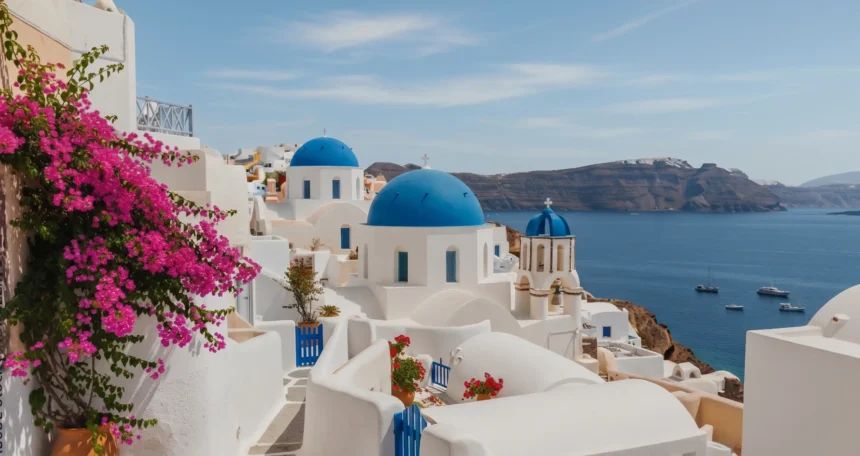
Beyond the sunset, the best things to do in Santorini are the Fira to Oia caldera walk, Akrotiri, Ancient Thera, winery visits, a boat trip to the volcano and evenings in Pyrgos, Megalochori and Emporio.
The best things to do in Santorini besides watching the sunset are walking the caldera path from Fira to Oia, exploring the Bronze Age town of Akrotiri, climbing to Ancient Thera, tasting Assyrtiko at the island’s wineries, sailing to the volcano and wandering the inland villages of Pyrgos, Megalochori and Emporio. Santorini rewards curiosity: the volcanic landscape, the archaeology and the wine are every bit as memorable as the view from Oia. For seasons, bases and transport, start with our Santorini travel guide.
Quick facts
- Best time: May, June, September and early October for walking and sightseeing in comfortable heat.
- Time needed: 3 to 4 full days to cover the highlights below.
- Getting around: buses radiate from Fira; a car or scooter makes wineries and villages much easier.
- Good for: walkers, history lovers, wine lovers and couples.
- Tip: visit Fira and Oia early or late on cruise ship days and use the middle of the day for sites and wineries.
Walks and views
1. Walk the caldera path from Fira to Oia
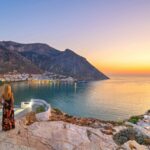
The classic Santorini walk runs about 10.5 km along the rim of the caldera, through Firostefani and Imerovigli and then over open, rocky ground to Oia. Allow three to five hours. The first half is paved and busy with hotels and cafés; the second half is rougher, steeper in places and almost entirely without shade. Start by 7:00 or 8:00 in summer, carry at least two litres of water, and catch the bus back from Oia.
2. Climb Skaros Rock
Below Imerovigli, a path drops and climbs again to Skaros, a rocky headland that once held a medieval castle and the island’s main settlement. Almost nothing of the fortifications remains, but the views of the caldera cliffs are superb. The round trip from Imerovigli takes around an hour and a half; the path is uneven, so wear proper shoes.
3. Hike from Kamari to Ancient Thera
Ancient Thera sits on the ridge of Mesa Vouno, around 370 metres above the sea between Kamari and Perissa. You can drive the steep zigzag road up from Kamari or walk the path up from Perissa. The city was founded by Dorian settlers and most of what you see dates from the Hellenistic and Roman periods: streets, an agora, sanctuaries, a theatre and houses, with long views over both beaches. The site keeps morning and early afternoon hours and closes one day a week, so check before you go.
4. Drive up to Profitis Ilias
The highest point of the island, at around 560 metres above Pyrgos, is crowned by the Monastery of Profitis Ilias and a cluster of antennas. On a clear day you can see much of the Cyclades. A rough path also links it to Ancient Thera along the ridge for keen walkers.
Archaeology and museums
5. Explore Akrotiri
Akrotiri was a prosperous Bronze Age town buried by volcanic ash during the great eruption in the 17th century BC. Its multi-storey houses, streets and drainage survive under a huge protective roof, and it is one of the most remarkable prehistoric sites in the Mediterranean. Interestingly, no bodies or valuables have been found, suggesting the inhabitants had time to escape. Full admission was raised to €20 in 2025; visit early to beat both heat and tour groups, and consider a guide, as the site has limited signage.
6. See the frescoes at the Museum of Prehistoric Thera
In Fira, this compact museum displays the finds from Akrotiri, including wall paintings, painted pottery, tools and furniture casts. Seeing it after Akrotiri brings the town to life. It is a good choice for the hottest hours of the day.
7. Visit the Tomato Industrial Museum
Next to Vlychada beach in the south, a 1945 tomato-canning factory has been turned into a museum about Santorini’s small, intensely flavoured cherry tomatoes and the industry built on them. It is a different angle on island life, and the old machinery is well presented. It is usually open from spring to late autumn and closed on Mondays.
8. Browse the Maritime Museum in Oia
Before tourism, Oia was a village of sea captains and sailors, and this small museum in a restored mansion tells their story through models, figureheads and documents. It adds depth to a walk through the village.
Wine and food
9. Taste Assyrtiko at the wineries
Santorini’s vineyards are unlike any other: low vines are woven into basket shapes on the ground to shelter the grapes from wind and sun, and they draw moisture from sea mist on porous volcanic soil. The flagship grape, Assyrtiko, makes crisp, mineral white wines, and Vinsanto is a rich sweet wine from sun-dried grapes. Wineries welcoming visitors include Santo Wines on the caldera edge near Pyrgos, Venetsanos (built in 1947) on the cliff at Megalochori, Gavalas in Megalochori, Domaine Sigalas near Oia and Artemis Karamolegos at Exo Gonia. Tastings typically come in sets of several wines with local snacks. Do not drive afterwards; book a tour or take a taxi.
10. Take a cooking class or food tour
Local cooks run classes around fava (yellow split pea purée), tomato fritters, white aubergine and chloro cheese. A class is a good way to understand what grows on the island and why it tastes so concentrated.
11. Eat fish at Ammoudi
Below Oia, down a long flight of steps from the village (or a short drive round by road), the small harbour of Ammoudi has fish tavernas right on the water. Strong swimmers cross the short channel to the islet of Agios Nikolaos, but only on calm days.
On the water
12. Sail to the volcano and hot springs
Boats leave from the Old Port below Fira and from Ammoudi to Nea Kameni, the young volcanic island in the middle of the caldera. A walk of around an hour leads up over black lava to the craters, where steam still seeps from the ground. Trips usually stop off Palea Kameni, where you swim to a cove with warm, iron-rich water, and many continue to the island of Thirassia. There is a separate small fee for Nea Kameni. Bring shoes for the lava, as the ground is sharp and hot.
13. Spend a day on Thirassia
Thirassia, the smaller island on the western rim of the caldera, has a few villages and quiet tavernas and gives you the caldera view in reverse, looking back at Oia and Fira. Local boats run from Ammoudi; check return times carefully.
14. Swim on the black sand beaches
Kamari and Perissa on the east and south coasts have long beaches of dark volcanic sand and pebbles, with clear water and plenty of facilities. Vlychada, further west, has dramatic wind-carved cliffs. The sand gets very hot, so bring beach shoes. Santorini’s beaches are pleasant but not the best in the Cyclades; if beaches matter most to you, combine Santorini with Naxos or Milos.
Villages beyond the caldera
15. Wander Pyrgos
Pyrgos climbs a hill around the remains of a Venetian castle, with lanes, churches and terraces overlooking the whole island. It is a beautiful place for an evening drink and a quieter sunset.
16. Explore Megalochori and Emporio
Megalochori has a pretty square, old wine cellars and chapels with bell towers built over the lanes. Emporio, the largest village, has a fortified medieval core known as the kasteli, with houses joined to form a defensive wall and lanes barely wide enough to pass.
17. Watch a film at Cine Kamari
The open-air cinema in Kamari screens films on summer evenings among vines and trees, a relaxed alternative to the sunset crowds.
Practical tips
- Group sights by area: Akrotiri, the lighthouse and Megalochori in the south; Kamari, Ancient Thera and Pyrgos in the east and centre; Imerovigli and Oia in the north.
- A car is the easiest way to reach wineries and villages; our guide to renting a car in Greece explains what to check.
- Archaeological sites keep shorter hours outside summer and close one day a week; confirm opening times before you set out.
- If you are travelling on by boat, nearby Naxos and the beaches of Milos make a good contrast, and our Greek ferry guide covers how to plan connections.
- Many Santorini trips begin or end in the capital; our three days in Athens guide helps you plan that part.
- Carry water and sun protection everywhere: the island has little natural shade.
Frequently Asked Questions
What is there to do in Santorini besides the sunset?
Walk the caldera path from Fira to Oia, visit Akrotiri and Ancient Thera, taste local wine, take a boat to the volcano and hot springs, and explore inland villages such as Pyrgos, Megalochori and Emporio.
Is Akrotiri worth visiting?
Yes. It is a Bronze Age town preserved under volcanic ash and one of the most important prehistoric sites in the Mediterranean. Combine it with the Museum of Prehistoric Thera in Fira, where its wall paintings are displayed.
How long is the Fira to Oia hike?
It is about 10.5 km one way and usually takes three to five hours, depending on pace and stops. Start early, take plenty of water, and return by bus from Oia.
Can you swim in the hot springs in Santorini?
Yes. Most volcano boat trips stop off Palea Kameni, where you swim a short distance to a cove with warm, mineral-rich water. It is better suited to confident swimmers.
What are the best wineries in Santorini?
Popular choices include Santo Wines near Pyrgos, Venetsanos and Gavalas in Megalochori, Domaine Sigalas near Oia and Artemis Karamolegos in Exo Gonia. Book tastings ahead in summer and avoid driving afterwards.