


Lesvos is best explored over five days or more by hire car, staying in Mytilene and in Molyvos or Petra. Highlights include ouzo distilleries in Plomari, the petrified forest at Sigri, hot springs at Eftalou and Polichnitos, and villages such as Agiasos.
Lesvos is a big, unhurried island in the north-east Aegean, best for travellers who like villages, food and landscape more than beach clubs. Base yourself in Mytilene for the town and the south, or in Molyvos or Petra for the north coast, hire a car, and give it at least five days: the drive from one end to the other takes around two hours. The island’s calling cards are ouzo from Plomari, a petrified forest at Sigri, hot springs, and some of the most authentic village life in the Greek islands.
Quick facts
- Getting there: flights to Mytilene airport from Athens and Thessaloniki, plus seasonal flights from Europe; overnight ferries from Piraeus and routes from Thessaloniki and Kavala
- Best time: late April to June and September to October; spring is outstanding for wildflowers and birds
- Time needed: five days minimum, a week or more to do it justice
- Getting around: a hire car is close to essential; KTEL buses link Mytilene with the main villages but are infrequent
- Good for: food lovers, walkers, birdwatchers, slow travel and couples
Lesvos at a glance
Lesvos (also written Lesbos) is the third largest Greek island after Crete and Evia, lying just off the Turkish coast. Two deep gulfs, Kalloni and Gera, cut into its southern side, giving it an unusual shape and long stretches of sheltered water. The east is green, covered in olive groves and pine forest around Mount Olympos (not the mainland one), while the far west is bare and volcanic. Olive oil has been the backbone of the economy for centuries, and the island counts its olive trees in the millions.
It is also an island with a strong cultural identity: the birthplace of the poet Sappho, a centre of Greek ouzo production, home to the naive painter Theophilos, and a place where village kafeneia still fill up at noon with men playing tavli. Tourism exists, especially in Molyvos, Petra and Skala Eresou, but it does not dominate the way it does on the better known Cycladic islands.
Where to stay
Mytilene
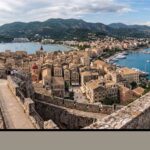
The capital is a real working port town with a university, a busy waterfront and an evening life driven by locals rather than visitors. The large castle on the hill above the harbour, begun by the Byzantines and extended under the Genoese Gattilusi family and the Ottomans, is worth an hour. Stay here if you want restaurants, ouzeri and easy access to Plomari, Agiasos and the airport.
Molyvos and Petra
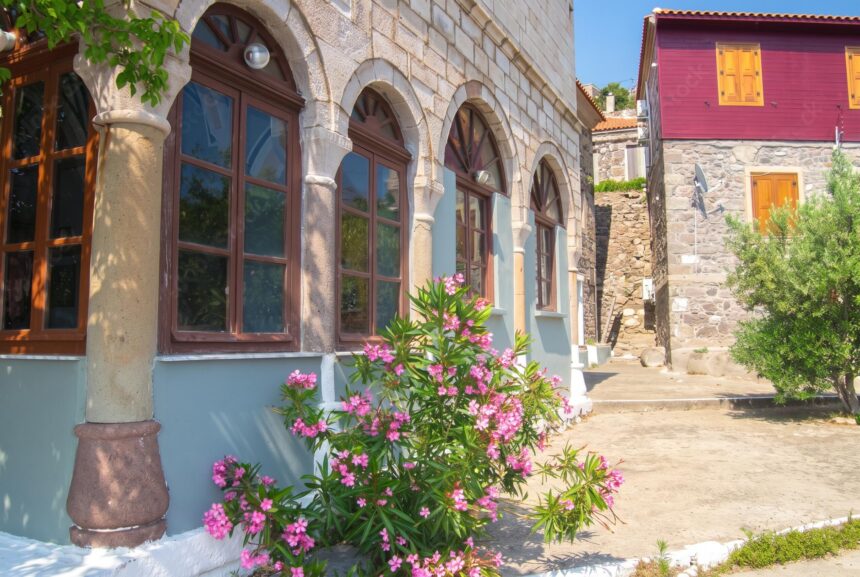
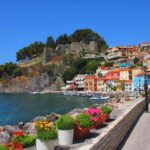
Molyvos (officially Mithymna) is the island’s postcard: stone houses with wooden balconies climbing a hill to another Gattilusi castle, with a small fishing harbour below. It is the most popular base in the north and busy in August. Petra, 5 km south, is flatter and more relaxed, with a long sandy beach and the church of Panagia Glykofilousa perched on a rock in the middle of the village, reached by around 114 steps. Both are good bases for the north coast and the hot springs at Eftalou.
Skala Eresou
On the south-west coast, Skala Eresou has one of the island’s best beaches, a long stretch of dark sand, and a relaxed, international atmosphere. Sappho was born in ancient Eresos, and the village has long been a destination for women travellers. It also makes a convenient base for the petrified forest at Sigri.
Villages worth the drive
- Agiasos: a mountain village on the slopes of Mount Olympos, with cobbled lanes, pottery and woodcarving workshops and the important pilgrimage church of the Panagia. The festival around 15 August is one of the biggest in the North Aegean.
- Plomari: the ouzo town on the south coast, with a harbour, neoclassical mansions and distilleries.
- Sigri: a quiet fishing village at the western tip, home to the petrified forest museum.
- Mantamados: in the north-east, known for the Monastery of the Taxiarchis and for its local cheese and yoghurt.
- Vatousa and Antissa: traditional villages on the road west, where life still revolves around the square.
Ouzo, olive oil and the Lesvos table
Lesvos is the heartland of Greek ouzo. In Plomari, ouzo-making goes back to the 19th century, when merchant families from Asia Minor brought the craft of distilling aniseed spirits in copper stills. Two distilleries near Plomari open their doors to visitors: the Barbayanni distillery and museum, which displays an early alembic and old bottling equipment, and the Isidoros Arvanitis distillery with its World of Ouzo museum. Visits take 30 minutes to an hour, and opening hours vary by season, so check ahead.
Ouzo here is drunk properly: slowly, with ice or water, alongside small plates. The classic match is grilled or salted sardines from the Gulf of Kalloni, among the most prized in Greece, eaten whole with a squeeze of lemon. Look out too for ladotyri, a hard sheep’s cheese preserved in olive oil, for stuffed courgette flowers in summer, and for the island’s excellent olive oil, which is lighter and more delicate than many from the south. For more on what to order in tavernas, see our guide to 25 Greek dishes to try.
The petrified forest and the Lesvos Geopark
Around 20 million years ago, volcanic eruptions in the west of the island buried whole forests under ash, and the trunks slowly turned to stone. Today standing and fallen petrified trees are scattered across the bare hills between Sigri and Eresos. The Natural History Museum of the Lesvos Petrified Forest in Sigri explains the geology well and manages several outdoor parks where you can walk among the fossil trunks. The museum also runs the Lesvos UNESCO Global Geopark, one of the founding members of the European Geoparks Network. Allow half a day for the museum and one of the parks, and bring water and a hat: the west of the island has little shade.
Hot springs
Lesvos sits on active geology and has several thermal springs, some in simple traditional bathhouses with domed roofs. The best known are:
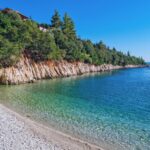
- Eftalou: on the coast a few kilometres east of Molyvos. An old domed bathhouse sits right by the shore, so you can move from very hot water to the sea.
- Polichnitos: in the south, among the hottest springs in Europe, with water that comes out of the ground at well above bathing temperature and is cooled for the pools.
- Thermi: north of Mytilene on the east coast, with historic baths.
- Gera: on the shore of the Gulf of Gera, with simple baths near the water.
Facilities are basic and opening hours change with the season, and some smaller baths close for renovation from time to time, so ask locally before making a special trip.
Beaches and nature
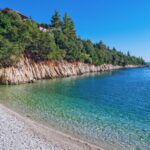
Lesvos is not primarily a beach island, but it has good ones: Skala Eresou and Petra for long sandy stretches, Vatera on the south coast for a huge beach with calm water, and Tsonia near Mantamados for reddish sand. The salt pans and wetlands around the Gulf of Kalloni are one of the most important birdwatching sites in Europe in April and May, when migrating flamingos, storks, herons and raptors stop over. Spring also brings wildflowers across the hills, and the old footpaths between villages make good walking outside the hot months.
Getting there and around
Mytilene airport has year-round flights from Athens and Thessaloniki and seasonal flights from several European cities. Ferries run from Piraeus, usually overnight, and there are routes north to Thessaloniki and Kavala and east to other islands; our Greek ferries guide explains how to book. If you are coming from the north, Lesvos pairs naturally with a stay in the city covered in our Thessaloniki travel guide, and from the south with a night or two in Athens, covered in our Athens travel guide.
On the island, distances are long and roads wind around the gulfs, so a car makes all the difference. Read our tips on renting a car in Greece before you collect one at the airport.
Practical tips
- Split your stay: two bases, one in Mytilene and one in Molyvos or Petra, save a lot of driving.
- Time it for spring: late April and May are ideal for birds, flowers and walking. Our best time to visit Greece guide covers the weather month by month.
- Eat at the ouzeri: order a small carafe of ouzo and several plates to share, as locals do, rather than one main course each.
- Plan for August: the 15 August festivities, especially in Agiasos and Petra, are wonderful but accommodation fills early.
- Bring cash for villages: small kafeneia and bakeries do not always take cards.
Frequently Asked Questions
How many days do you need on Lesvos?
Five days is a sensible minimum, because the island is large and roads are slow. A week lets you split your stay between Mytilene and the north coast and add the far west, including Sigri and Skala Eresou.
Where is the best place to stay on Lesvos?
Molyvos and Petra are the best bases for the north coast and the most popular with visitors. Mytilene suits travellers who want a lively town, restaurants and easy access to the south. Skala Eresou is best for a long sandy beach and a relaxed atmosphere.
Can you visit ouzo distilleries on Lesvos?
Yes. Near Plomari on the south coast, the Barbayanni distillery and museum and the Isidoros Arvanitis distillery with its World of Ouzo museum both welcome visitors. Opening hours vary by season, so check before you go.
Do you need a car on Lesvos?
In practice, yes. KTEL buses connect Mytilene with the main villages, but services are infrequent and the island’s sights are spread out. A car lets you reach Sigri, the hot springs and the mountain villages at your own pace.
Is Lesvos good for beaches?
It has good beaches, including Skala Eresou, Petra and Vatera, but it is not a pure beach destination. Most visitors come for the villages, food, walking and nature, with beach time as part of the mix.