




To travel Greece on a budget, go in late spring or September, choose islands like Naxos or Crete over Santorini and Mykonos, stay in family-run rooms, take conventional ferries and buses, and eat street food and taverna lunches. Around €55 to €80 a day per person is realistic in 2026.
Greece on a budget is very doable if you avoid three things: August, the two most famous islands and taxis. Travel in May, June, September or October, base yourself on islands like Naxos, Crete or the mainland rather than Santorini and Mykonos, take conventional ferries and buses, and eat where Greeks eat. Done that way, a careful traveller can still manage on roughly €55 to €80 a day per person in 2026, excluding flights.
Quick facts
- Cheapest months: April, May, October and the winter for cities; late May, June and September for islands.
- Budget daily spend: around €55 to €80 per person in 2026, sharing a room.
- Cheapest transport: conventional ferries, KTEL buses, the Athens metro.
- Cheapest meals: gyros or souvlaki wraps, bakery pies, taverna lunches.
- Biggest savings: travel outside July and August and skip the caldera view.
When to go
Season matters more than anything else. Accommodation prices on the islands can double or triple between early June and mid August, and ferry seats and rental cars become scarce. Late May, June and September give you warm weather and sea, full ferry timetables and noticeably lower prices. April and October are cheaper still, though some island hotels and tavernas only open from Easter or May. Avoid the week around 15 August, the biggest Greek holiday, when Greeks themselves fill the islands.
Winter is the cheapest time for Athens, Thessaloniki, Nafplio, Meteora and the mountain villages, and the per-night accommodation tax drops sharply from November to March. See our guide to the best time to visit for the weather month by month.
Where to go for less
Some destinations are simply cheaper. Naxos (see our Naxos island guide), Paros (outside Naoussa), Crete, Andros, Tinos, Ikaria, the Peloponnese, the Pelion peninsula, Thessaloniki and much of northern Greece offer good food and rooms at much lower prices than Santorini or Mykonos. On Crete and the mainland, family-run rooms and small hotels still compete hard on price.
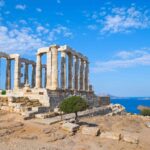
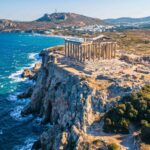
If you do want Santorini, stay in Kamari, Perissa or Fira’s back streets rather than on the caldera rim, and visit Oia for the sunset by bus. Day trips are another trick: you can see Aegina or Hydra from Athens without paying island hotel prices.
Accommodation
Rooms, studios and guesthouses
The traditional Greek “rooms to let” (domatia) and family studios, often with a small kitchen, remain the best value. Outside peak season, budget rooms on most islands and in Athens run at around €40 to €70 a night in 2026, rising in July and August. A studio with a kitchenette lets you make breakfast and simple dinners, which saves a lot.
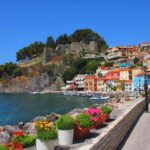
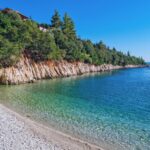
Hostels and camping
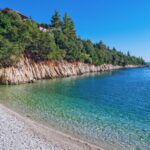
Athens has several good hostels, and a few islands, including Santorini, Ios, Naxos and Crete, have hostels or organised campsites. Wild camping is not allowed in Greece, but official campsites are cheap and often near good beaches.
The accommodation tax
Every hotel and short-term rental charges a climate resilience fee per room per night, usually at check-in. In 2026 it is around €2 a night for 1 to 2 star hotels and rented rooms between April and October, around €5 for 3 star hotels and around €8 for short-term rental apartments, and much lower from November to March. Factor it into comparisons, because it is often not included in the online price.
Booking tips
- Book early for June to September; the cheapest good rooms go first.
- Compare booking platforms with the property’s own website or phone number; small owners sometimes offer better rates for direct bookings or longer stays.
- Stay longer in fewer places. Many owners discount stays of four nights or more, and you save on transfers.
- Choose a base in the main village or town near a bus stop, so you do not need a car every day.
Getting around cheaply
Ferries
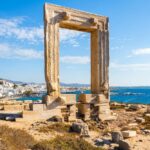
Conventional ferries are slower but much cheaper than high-speed catamarans. In 2026, a conventional ferry from Piraeus to Paros or Naxos costs in the region of €30 to €45 for a deck or economy seat, compared with roughly €45 to €70 on fast boats; overnight sailings to Crete are often cheaper still, and you save a night’s accommodation. Deck class gives you access to lounges and outdoor decks, which is fine for daytime crossings. Our Greek ferry guide explains ticket classes and booking.
Plan routes that follow ferry lines so you do not have to go back through Piraeus, and avoid paying for car spaces: hire cars locally instead.


Buses and trains
KTEL, the regional bus network, links nearly every town on the mainland and runs local services on the larger islands. Island bus fares are usually a few euros. On the mainland, buses connect Athens with Delphi, Nafplio and the Peloponnese for far less than a rental car. Trains run on a limited network, mainly Athens to Thessaloniki, with connections towards Kalambaka for Meteora.
In Athens
The Athens metro, trams and buses share a cheap 90 minute ticket, and there are good-value daily and tourist passes. The airport metro and express bus cost more but are far cheaper than a taxi. The centre is compact enough to walk between the Acropolis, Plaka, Monastiraki and Syntagma. Our Athens travel guide has a three day plan.
Cars
A small rental car shared by two or more people can be good value on islands such as Crete or Naxos, especially outside July and August. Book early, pick the smallest car that suits the roads, and check what the insurance covers. Fuel in Greece is expensive by European standards, so keep distances sensible.
Eating well for less
Greek food is one of the best budget pleasures in Europe if you choose well.
- Street food: a gyros or souvlaki wrap (pita) costs around €3.50 to €5.50 in 2026 and makes a full lunch.
- Bakeries: spinach pie (spanakopita), cheese pie (tiropita) and koulouri sesame rings are cheap breakfasts.
- Tavernas at lunch: many offer daily cooked dishes (mageirefta) such as gemista, moussaka or briam. Share a few plates and a salad.
- House wine: a half-litre carafe is often around €5 to €10, usually cheaper than beer or cocktails.
- Markets and supermarkets: buy fruit, tomatoes, feta, olives and bread for beach picnics. Laiki street markets in towns sell produce cheaply.
Avoid waterfront restaurants with photo menus and staff calling you in, and anywhere directly facing the main sight. Walk two streets back, or look for places full of Greeks at 22:00. Remember that bread and any cover charge are added per person; they should be listed on the menu.
Sightseeing for less
- Use the free admission days at state museums and archaeological sites: 6 March, 18 April, 18 May, the last weekend of September, 28 October and selected Sundays from November to March.
- EU citizens under 25 enter state sites free all year, and non-EU children up to 18 too; bring ID.
- Pick your paid sites. The Acropolis costs around €30 in 2026, so combine it with free walks around the Areopagus hill, Filopappou and the old neighbourhoods.
- Beaches are free. Sunbeds cost money, sometimes a lot on famous beaches, but you can always use your own towel and umbrella.
- Hike. Many of Greece’s best experiences, such as island footpaths, gorges and village walks, cost nothing.
Sample daily budgets for 2026
| Item | Budget | Mid-range |
|---|---|---|
| Room (per person, sharing) | around €20 to €35 | around €45 to €75 |
| Food and drink | around €25 to €35 | around €50 to €70 |
| Local transport | around €5 to €10 | around €15 to €25 |
| Sights and extras | around €5 to €15 | around €15 to €30 |
| Total per day | around €55 to €80 | around €120 to €160 |
These are rough figures for shoulder season on mid-priced islands and Athens; add 20 to 40 percent for Santorini and Mykonos, and for July and August.
Practical tips
- Carry a refillable bottle; in places where tap water is not drunk, buy large bottles from supermarkets rather than small ones from kiosks.
- Withdraw cash from bank ATMs and always choose to be charged in euros, not your home currency.
- Ask for a receipt for every purchase; it is the law and keeps prices honest.
- Travel with hand luggage only on domestic flights when possible; checked bags often cost extra.
- Read our full list of Greece travel tips for the habits and rules that help you avoid costly surprises.
- Prices change every season: treat all figures here as a guide and check current fares and rates before you book.
Frequently Asked Questions
How much does a day in Greece cost on a budget?
Around €55 to €80 per person per day in 2026 if you share a room, eat street food and taverna lunches, and use buses and conventional ferries. Santorini, Mykonos and August push that up considerably.
What is the cheapest Greek island to visit?
There is no single answer, but Naxos, Crete, Andros, Tinos and the North Aegean islands are generally much cheaper than Santorini or Mykonos, with good food and family-run rooms. Outside July and August most islands become affordable.
What is the cheapest month to visit Greece?
For islands, May and October are the cheapest months with reliable weather and most services open. For Athens and the mainland, the winter months from November to March are cheapest, with lower accommodation taxes too.
Are ferries in Greece expensive?
Conventional ferries are reasonably priced, often around €30 to €45 from Piraeus to Paros or Naxos in 2026. High-speed boats cost much more. Booking early and following one island chain keeps costs down.
Is it cheaper to rent a car or take buses in Greece?
For solo travellers buses are cheaper. For two or more people exploring a large island such as Crete or Naxos outside peak season, a small rental car can be good value, though fuel is expensive.