







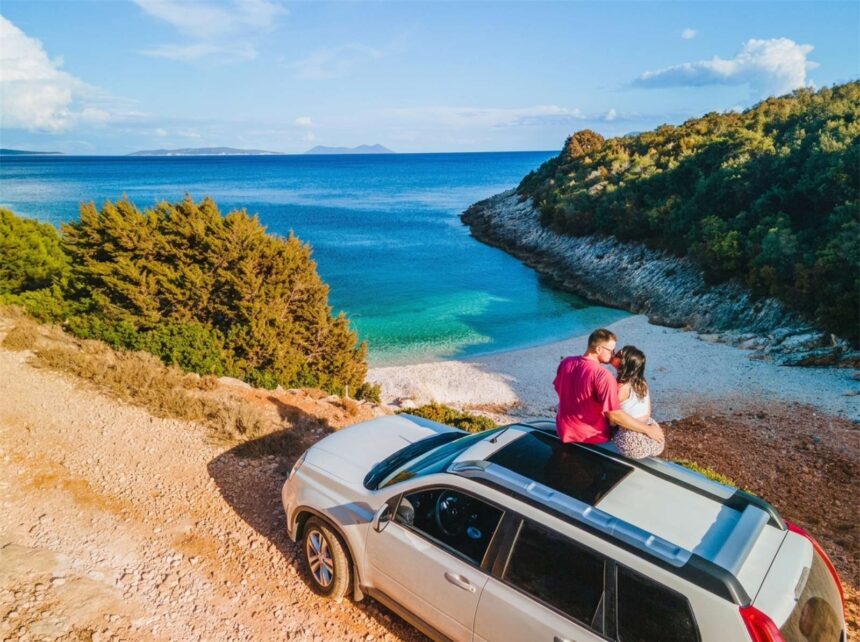
To rent a car in Greece you need a valid licence (plus an International Driving Permit for most non-EU, non-UK licences), a credit card in the driver's name and usually to be at least 21 to 23 years old. Check insurance exclusions and ferry rules before you sign.
Renting a car in Greece is the best way to see the mainland and the larger islands, and it is straightforward if you sort out three things before you travel: the right licence documents, an insurance package you understand, and realistic expectations of Greek roads. Drivers with EU and UK licences can usually rent on their home licence alone, while many other visitors should carry an International Driving Permit. Most companies want renters to be at least 21 to 23 years old and to have held a licence for a year.
Quick facts
- Drive on: the right.
- Licence: EU, EEA and UK photocard licences are accepted; carry an International Driving Permit with most other non-EU licences.
- Minimum age: 18 to drive, but rental companies typically set 21 to 23, with a surcharge for under-25s.
- Speed limits (2026): 30 km/h on most urban streets, 90 km/h on open roads, 110 km/h on expressways and 130 km/h on motorways, unless signed otherwise.
- Emergency number: 112.
Do you need a car in Greece?
It depends on where you go. A car is close to essential on large islands with scattered villages and beaches, such as Crete, Kefalonia, Lefkada and its west coast, Naxos and its mountain villages and Corfu, and for mainland road trips through the Peloponnese, Epirus or the Meteora region. Public buses do reach the main sights, but often only a few times a day.
You do not need a car in central Athens, where traffic and parking are difficult and the metro is efficient. On small islands, walking, buses, taxis and boats are often enough, and on car-free Hydra private cars are not allowed at all. A common plan is to explore Athens on foot, then pick up a car at the airport or on arrival on your island.
Licence requirements in 2026
Rules depend on where your licence was issued, and rental desks can be stricter than the law, so check both before you travel.

EU and EEA licences
A valid licence from any EU or EEA country is accepted on its own, just as at home.
UK licences
UK government guidance states that visitors holding a UK photocard licence do not need an International Driving Permit to drive in Greece. Some rental companies have still asked for one, so read your booking terms. If you have an older paper licence, check the current guidance before travelling.



Australian licences
Since November 2021, Greek law has recognised Australian licences, and the Australian Embassy in Athens advises that holders no longer need an International Driving Permit.
US, Canadian and other non-EU licences
For licences from most other countries, including the United States and Canada, the safest course is to carry an International Driving Permit (IDP) together with your national licence. Interpretations of the rules have varied over the years, rental companies commonly ask for an IDP, and the police may request it at a roadside check. Without the right documents you risk a fine and problems with your insurance after an accident. An IDP must be obtained in the country that issued your licence before you travel; it is a translation that only works alongside the original licence.
Age, card and other rental requirements
- Minimum age: the legal driving age in Greece is 18, but most rental companies set a minimum of 21 to 23 and require the licence to have been held for at least one year. Larger or more powerful cars often have higher age limits.
- Young drivers: drivers under 25 usually pay a daily surcharge. Some companies also set a maximum age or ask older drivers for extra conditions.
- Credit card: most companies need a credit card in the main driver’s name for the deposit. Debit cards are not always accepted, so check before booking.
- Documents: bring your licence, IDP where required, passport or ID card and your booking confirmation.
- Additional drivers: anyone else who will drive must be named on the contract and meet the same requirements.
Insurance explained
Third-party liability insurance is compulsory and included in every rental. Beyond that, the terms vary widely, and they are where most disputes arise.
- Collision Damage Waiver (CDW): limits what you pay for damage to the car to an excess, which can be substantial.
- Full or super cover: reduces the excess, sometimes to zero, for a higher daily rate.
- Theft protection: covers the car if it is stolen, usually with its own excess.
- Common exclusions: tyres, wheels, glass, the underside of the car and damage on unpaved roads are often excluded even from fuller cover. Read the list carefully, especially if you plan to drive to remote beaches on dirt tracks.
Before you drive away, walk round the car with the agent, photograph or film every scratch and dent, check the fuel level and make sure all existing damage is marked on the contract. Do the same when you return it.



Taking a rental car on a ferry
Many contracts do not allow the car to leave the island or region where you rented it, and taking it on a ferry without permission can void your insurance. If you want to drive from the mainland to an island or between islands, ask for written permission in advance and check what cover applies at sea and on the other island. Often it is simpler and cheaper to return one car and hire another on arrival. Our Greek ferry guide explains booking vehicle spaces.
Rules of the road
Greece introduced a stricter road traffic code in 2025, with much higher fines, and lower urban speed limits followed on 1 January 2026.
- Speed: since 1 January 2026, the general limit in built-up areas is 30 km/h, although 50 km/h still applies on wider urban roads such as major Athens avenues. Outside towns, the limits for cars are 90 km/h on ordinary roads, 110 km/h on expressways and 130 km/h on motorways, unless signs say otherwise. Speeding fines start at €150 and rise steeply, with licence suspensions for serious offences.
- Alcohol: the limit is 0.5 g/l of blood for most drivers and 0.2 g/l for drivers who have held a licence for less than two years. The simplest rule is not to drink at all if you are driving.
- Seat belts: compulsory in the front and back seats.
- Phones: using a hand-held phone while driving is prohibited and heavily fined.
- Children: young children must travel in a suitable child seat; reserve one with your rental.
What driving in Greece is really like
Main roads and motorways are generally in good condition. The challenges are elsewhere: narrow mountain roads with hairpin bends and no barriers, village streets built for donkeys, goats on the tarmac, scooters weaving through traffic and local drivers who overtake briskly. On two-lane highways, slower drivers often move onto the hard shoulder to let faster cars pass; do so only when it is clear and safe.
A few habits help:
- Choose a small car: it is easier on narrow roads and in tight village parking.
- Use your horn on blind bends in the mountains, as locals do.
- Allow more time than the map suggests: a short distance on a winding island road can take much longer than you expect.
- Avoid driving at night on unfamiliar mountain roads.
Tolls, fuel and parking
Greece’s main motorways, including those linking Athens with Thessaloniki, the Peloponnese and western Greece, have toll booths. Carry some cash; many booths also take cards. Island roads are toll-free.
Many petrol stations are staffed, so you stay in the car while an attendant fills up. In rural areas and on smaller islands, some close in the evening and on Sundays, so fill up when you can. Check whether your car takes petrol or diesel before the first stop.
In towns, parking is often regulated, with paid zones that may be marked by blue lines and residents’ spaces. Do not park on yellow lines, at bus stops or blocking narrow lanes; fines are common in summer and towing happens in cities.
Practical tips
- Book early for summer: automatic cars and small cars sell out first in July and August, especially on islands.
- Airport pick-up: collecting a car at the airport is convenient, but if you are spending your first days in the capital, read our guide to Athens airport transfers and pick the car up later.
- Read the contract: check the excess, exclusions, fuel policy, mileage limits and ferry rules before you sign.
- Keep documents in the car: your licence, IDP if needed, ID and the rental papers should always be with you.
- In an emergency: call 112, then the rental company’s assistance number, and do not move the car after an accident until the police or the company advise you.
Frequently Asked Questions
Do I need an International Driving Permit to rent a car in Greece?
Not with an EU, EEA or UK photocard licence, and Australian licences have been recognised since 2021. For most other non-EU licences, including US and Canadian ones, carry an International Driving Permit alongside your licence, as rental companies and police may ask for it.
What is the minimum age to rent a car in Greece?
The legal driving age is 18, but most rental companies require drivers to be at least 21 to 23 and to have held a licence for a year. Drivers under 25 usually pay a young driver surcharge.
Can I take a rental car on a ferry in Greece?
Only with the rental company’s written permission. Many contracts forbid it, and insurance may not cover the car at sea or on another island, so ask before booking or hire a second car on arrival.
What are the speed limits in Greece?
Since 1 January 2026, the general urban limit is 30 km/h, with 50 km/h on wider urban roads. Outside towns, cars are limited to 90 km/h on ordinary roads, 110 km/h on expressways and 130 km/h on motorways unless signed otherwise.
Is it easy to drive in Greece?
Main roads and motorways are generally good, but mountain and island roads can be narrow and winding, and local driving is assertive. A small car, extra time and avoiding night driving on unfamiliar roads make it much easier.