



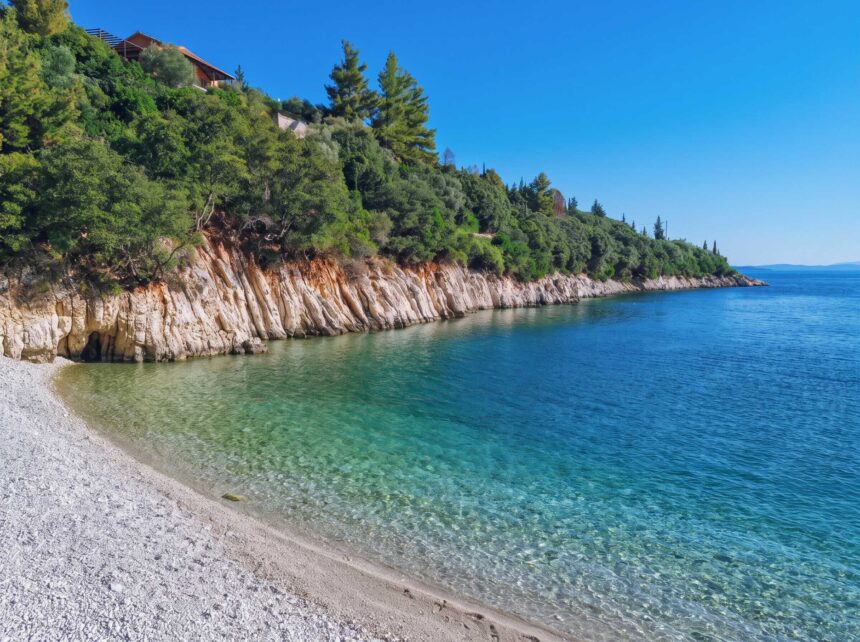
Antiparos is a small Cycladic island seven minutes by car ferry from Pounta on Paros. Visit for its Venetian Kastro village, the stalactite cave, sandy beaches and boat trips to the ancient sanctuary of Apollo on Despotiko.
Antiparos is the small, easy-going island just off the west coast of Paros, reached in about seven minutes by car ferry from Pounta or in around half an hour by passenger boat from Parikia. It has one real village, a Venetian castle at its heart, a dramatic cave full of stalactites, sandy beaches within a short ride, and the ancient sanctuary of Apollo on the islet of Despotiko offshore. It works as a day trip from Paros, but it is at its best over two or three slow nights.
Quick facts
- Where: central Cyclades, separated from Paros by a narrow channel.
- Getting there: car ferry from Pounta on Paros (about 7 minutes) or summer passenger boat from Parikia (about 30 minutes).
- Time needed: a day trip covers the village and cave; 2 to 3 nights to enjoy the beaches and Despotiko.
- Best time: June and September; July and August are busy but still relaxed compared with Paros.
- Good for: couples, families, slow travellers, anyone who wants a small island without long ferry journeys.
Getting to Antiparos
From Pounta (car ferry)
The car ferry from Pounta, on the west coast of Paros, is the main link. The crossing takes about seven minutes and boats shuttle back and forth all day, roughly every 20 to 30 minutes in summer and less often in winter, with late sailings into the night in high season. In 2026 fares were around 1.50 euros for a foot passenger and around 7 euros for a car, paid in cash on board or at the port with no advance booking. Fares and timetables change, so check on the day. Buses run from Parikia to Pounta to meet the boats.
From Parikia (passenger boat)
From late May to October a passenger boat sails directly from Parikia harbour to Antiparos port several times a day, taking around 30 minutes; the one-way fare was around 7 euros in 2026. It is the easiest option if you are staying in Parikia without a car. Our Paros travel guide explains how to reach Paros itself from Athens and the other islands.
Chora: the village and the Kastro
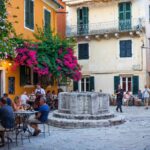
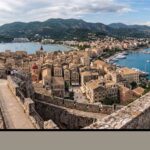
Antiparos has only one sizeable village, usually just called Chora or Antiparos town, which runs up from the port. The main pedestrian street climbs from the harbour past bakeries, small shops, bars and tavernas to the central square, shaded by a huge eucalyptus tree. In the evening it fills with families, couples and the island’s well-heeled summer regulars, but it never feels as hectic as Naoussa or Parikia.

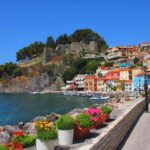
At the top of the village is the Kastro, a Venetian castle from the 15th century built by the Loredano family to protect the island from pirates. It is not a castle with towers and battlements: the outer walls are the backs of houses arranged in a square, with a single gate, and the inner courtyard once held a central tower. Families still live in many of the houses. Walk through the low arch into the lanes, where whitewashed stairways, bougainvillea and tiny chapels give the old core real character.
The Cave of Antiparos
The cave is the island’s great sight. It lies about 8 km south of Chora, on the slopes of the hill of Agios Ioannis, next to the white chapel of Agios Ioannis Spiliotis. A concrete stairway of about 411 steps with handrails leads down through chambers hung with stalactites and stalagmites to a depth of around 85 metres. Near the entrance stands a huge column that local tradition holds to be among the oldest formations in Europe.

The cave has drawn visitors for centuries, and many left their names on the walls. The most famous episode came at Christmas 1673, when the Marquis de Nointel, French ambassador to the Ottoman court, held a mass deep inside it with hundreds of guests. Lord Byron is also said to be among the visitors who left their mark. Take time on the way down: the lighting is good, and the scale of the main chamber is impressive.
In 2026 the cave was open daily from about 10:00 to 16:00 (last entry 15:30) until the end of October, with a ticket of around 6 euros for adults and around 3 euros for children aged 6 to 12; the ticket also covered the island’s small historical and folklore museum. Visits in winter could be arranged through the municipality. Check current hours before you go. The climb back up is steady rather than difficult, but bring water, as there is nothing to buy at the cave itself. In summer a bus from the port runs roughly hourly; otherwise drive, ride or cycle the paved road from Chora.
Despotiko and the sanctuary of Apollo
Off the southwest tip of Antiparos lies Despotiko, an uninhabited islet that turned out to hold one of the most important archaeological sites in the Cyclades. At a place called Mandra, excavations led by archaeologist Yannos Kourayos since 1997 have uncovered a sanctuary of Apollo used from the 7th century BC into Roman times, with a Doric temple dating to around 500 BC and buildings for ritual dining. Parts of the temple have been reassembled, and the site has been open to visitors since 2018.
Despotiko is reached by boat. In summer, excursion caiques and island tours from Antiparos port and from Agios Georgios on the south coast visit the islet, often combined with swimming stops at its beaches; Livadi, on Despotiko, has silvery sand and very clear water. Check the details locally, as departures depend on demand and weather.
Beaches
Near Chora
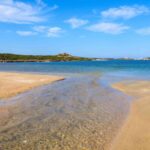
The closest swims are Psaralyki, a sandy, shallow beach a few minutes’ walk south of the port with water sports, and Sifneikos Gialos just beyond it. North of the village, the beaches facing the strait are good for an early morning dip, and on the northern tip is the long naturist beach often called Kampos or Livadia, with sand dunes and no facilities.
South and west
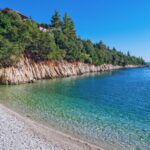
Further down the east coast, Glyfa is a family-friendly bay of sand and shallow water, and Soros is a popular, partly organised beach with tavernas. On the south coast, Agios Georgios is a small settlement with tavernas on the water, views across to Despotiko and some of the best sunsets on the island. Faneromeni, near the church of the Panagia Faneromeni (whose feast day is on 7 September), is calm and quiet, and Sifneiko or “Sunset Beach” on the west side lives up to its name. Like Paros, Antiparos feels the summer meltemi; on windy days the beaches facing south and southeast are usually calmer. For more swims across the strait, see our guide to the best beaches in Paros.
Where to stay and eat
Chora is the most convenient base, with rooms, small hotels and everything within walking distance of the port and the evening square. Agios Georgios and the south coast suit those who want quiet and have a car or scooter. Antiparos has also become home to a number of upmarket villas and resort developments in recent years, especially in the south, so prices in high summer are not low. Book early for July and August.
For food, the waterfront tavernas in Chora and Agios Georgios focus on fresh fish and simple island cooking. Order the catch of the day grilled simply with lemon and oil, octopus dried in the sun and grilled, and salads with local Cycladic cheeses. Our Greek food guide covers the dishes to order.
Antiparos as part of a Cyclades trip
Because Paros is one of the busiest ferry hubs in the Aegean, Antiparos is easy to fold into an island-hopping route. A typical combination is a few nights on Paros, two or three on Antiparos, then onward to neighbouring Naxos or further to quieter islands like the cliffside island of Folegandros. Our guide to Greek island hopping itineraries has tested routes.
Practical tips
- Cash: the Pounta car ferry is paid in cash; keep small notes and coins.
- Transport on the island: a small bus links the port with the cave and the south in summer. Scooters, quads, bicycles and cars can be hired in Chora.
- Day trip timing: visit the cave in the morning, swim in the afternoon and stay for dinner in Chora; the late ferries back to Pounta make it easy.
- Off-season: Antiparos has a year-round population, but from November to April most hotels and many tavernas close.
- Sun and shade: trees are scarce on many beaches; bring an umbrella to the unorganised ones.
Antiparos is not a place of big sights. It is a place for a long lunch, a swim, a walk through the Kastro at dusk and a drink under the eucalyptus in the square. That, more than anything, is why people come back.
Frequently Asked Questions
How do you get to Antiparos?
Take the car ferry from Pounta on the west coast of Paros, which crosses in about seven minutes and runs all day. From late May to October a passenger boat also sails from Parikia in about 30 minutes.
Is Antiparos worth a day trip?
Yes. In a day you can walk the Kastro in Chora, visit the cave and swim at a beach like Psaralyki or Soros. Stay two or three nights if you also want a boat trip to Despotiko and quiet evenings in the village.
How much is the Cave of Antiparos?
In 2026 the ticket was around 6 euros for adults and around 3 euros for children aged 6 to 12, with free entry for under 6s, and it included the local folklore museum. Hours were about 10:00 to 16:00 in season, so check before you go.
Do you need a car on Antiparos?
Not necessarily. Chora and the nearest beaches are walkable, and a summer bus runs to the cave and the south. A scooter, quad or car gives you the freedom to reach Agios Georgios and the quieter coves.
Can you visit Despotiko?
Yes, by boat. Excursions from Antiparos port and Agios Georgios visit the islet in summer, usually combining the sanctuary of Apollo with swimming stops. Check departures locally.