





The best Paxos walks are Lakka to Gaios (about 12 km), Lakka to Loggos along the east side, Magazia to the Erimitis cliffs and the short hike to the Tripitos arch. Walk in spring or autumn and carry a map, as signage is patchy.
Paxos is one of the best small islands in the Ionian for walking: a network of old stone mule tracks and lanes threads through olive groves planted under the Venetians and links almost every village, beach and clifftop. On the best Paxos walks you can go from Lakka to Gaios in about two and a half hours, reach the Tripitos arch from the inland hamlets of the south, and watch the sun set over the Erimitis cliffs after a gentle hike from Magazia. Spring and autumn are the seasons to do it; in July and August, walk early or not at all.
Quick facts
- Best time: April to early June, and mid September to October.
- Terrain: stone mule tracks, dirt paths and quiet lanes through olive groves; the high point of the island is only around 240 m.
- Signage: patchy; many routes are waymarked but junctions can be confusing, so carry a walking map or a downloaded app route.
- Signature walks: Lakka to Gaios, Lakka to Loggos, Magazia to the Erimitis cliffs, the Tripitos arch.
- Time needed: 1 to 3 hours per walk; a week lets you cover most of the island on foot.
- Good for: walkers who want gentle gradients, shade and a swim at the end.
Why Paxos works so well on foot
Paxos is small, roughly 10 km long and a few kilometres wide, and almost all of it is covered in olive trees, more than a quarter of a million by most counts. For centuries the only way to move oil, firewood and people between the hamlets was on foot or by donkey, and the result is a dense web of paths edged with dry stone walls, many of them still in use. The interior is a patchwork of tiny settlements named after the families who built them (Magazia, Fontana, Bogdanatika, Ozias, Manesatika), with chapels, old olive presses and ruined windmills along the way.
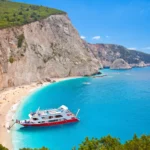
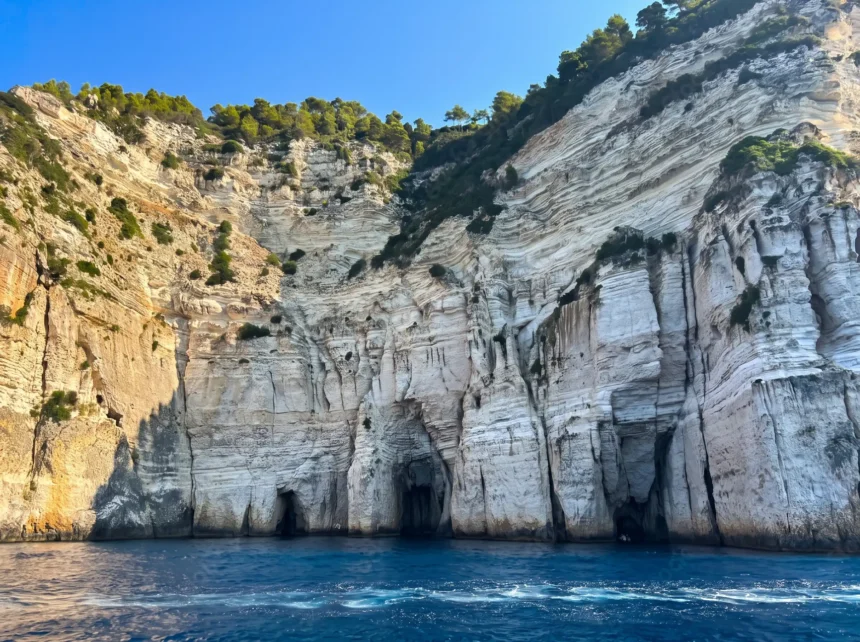
The two coasts could not be more different. The east coast, where Gaios, Loggos and Lakka sit, is low and sheltered, with pebble coves you can drop down to for a swim. The west coast is a wall of white limestone cliffs dropping into deep blue water, pierced by sea caves and almost uninhabited. The best walks cross from one to the other, and that contrast is what makes Paxos walking memorable. If you are new to the island, our Paxos travel guide explains how the three harbour villages differ.
The best walks on Paxos
Lakka to Gaios: the island end to end
The classic long walk on Paxos runs from Lakka at the northern tip to Gaios in the south. It is about 12 km and takes around two and a half hours at a steady pace, longer with stops. The route climbs gently out of Lakka through olive groves, crosses the spine of the island (the highest point on the way is a little over 240 m) and drops through the inland hamlets to Gaios. Gradients are easy, but some stretches are on stony tracks that need proper shoes. Most people walk it north to south, then catch the bus or a taxi back, or plan an evening in Gaios before a taxi home. It works well as the long day of a walking week.
Lakka to Loggos along the east side
This is the walk that most visitors do, and with good reason. The path from Lakka to Loggos is around 7 km and follows the east side of the island through olive groves, with detours down to small bays such as Orkos and Monodendri. You can do a shorter variant of about 5 km between Loggos, Orkos beach and Lakka. Allow two to three hours with a swim, and finish with a drink on the waterfront in Loggos. In the main season, a water taxi or the island bus can bring you back.
Magazia to the Erimitis cliffs
Magazia is the inland village at the centre of Paxos, and from here a moderate walk of around 4 km leads through old groves to the Erimitis cliffs on the west coast. The cliffs are pale limestone, sheer and dramatic, and this is one of the best places on the island to watch the sunset. On the way you pass the church of the Agioi Apostoloi, which looks out over the Erimitis coast. If you walk out for sunset, take a torch: it gets dark quickly in the groves, and the paths are uneven. Kastanida, a little further north on the same coast, is another good sunset spot.



The Tripitos arch
The Tripitos arch is a natural rock bridge on the west coast near the southern end of Paxos, more than 20 m high and formed from the collapsed roof of an old sea cave. You look down on it from the path, and with a good head for heights you can walk across the top. The usual approach is to drive or take a taxi to the hamlet of Ozias, south of Magazia, and walk the last stretch through the groves. It is not far, but the start is poorly marked, the final section has loose rock and short steep scrambles, and there is often no phone signal. Download directions before you go, wear shoes with grip, and do not try to climb down to the sea. You can also walk to the area from Gaios through the olive groves, which turns it into a half day.
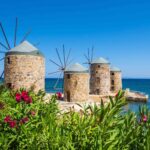
A ruined windmill stands roughly 10 to 15 minutes’ walk from the arch. Paxos once had more than 20 windmills grinding grain; none work today, but the shells make fine viewpoints.
Lakka lighthouse and the northwest
From Lakka, an easy walk heads out to the lighthouse on the northwest tip of the island, about a kilometre from the village. The last part is along an unpaved track, and the views open up over the cliffs and towards the Ypapanti sea cave. You can extend the walk to Plani beach and come back for an evening in the village, which makes a good short outing on your first day.
Gaios waterfront and the south
For something very easy, an early morning stroll from Gaios follows the shore past Gianas beach to the new port and continues to Kaki Lagada beach, around 40 minutes from town. Another short route from Gaios climbs through the groves to Tranakatika and the ruin of the Lesianitis windmill, from where you can see the islet of Panagia and, on clear days, across to Corfu.


Walking on Antipaxos
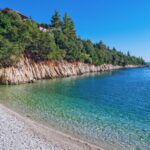
A sea taxi from Gaios reaches Antipaxos in about 15 minutes, and most people go straight to the beaches. If you have time, walk up from the bay through vineyards and olive groves towards the lighthouse in the southeast of the island. The track is simple, there is almost no shade, and you will meet only a handful of people. Combine it with a swim at Voutoumi or Vrika; our guide to the Antipaxos beaches covers both, and the boats back to Gaios stop running in the late afternoon, so check the last departure.
What you will see along the way
- Olive groves: ancient trees with huge, twisted trunks, and black nets stored or spread beneath them depending on the season.
- Stone villages: hamlets of a few houses, many restored, some abandoned, with chapels whose bells you will hear across the groves.
- Olive presses and cisterns: Paxos has no rivers, so rainwater cisterns are everywhere, along with old presses that tell the story of the oil economy.
- Wildlife: lizards, butterflies, birds of prey over the cliffs and, in May and June, fireflies in the groves after dark.
- Coves: on the east side, steps and paths lead down to pebble beaches where you can swim without having seen a road.
When to walk
Spring is the best season: in April and May the groves are green, wild flowers are out, the air is fresh and the sea is just about swimmable by late May. Autumn, from mid September into October, is the other good window, with warm water and softer light. In July and August the heat is serious and the groves hold it; walk from first light to about 10:00, or in the last two hours before sunset, and carry far more water than you think you need. Winter walking is possible on mild days, but much of the island closes and services are limited.
If you are visiting outside the main season, plan your crossing carefully, since ferries are fewer; our guide on how to get to Paxos covers the options from Corfu and Igoumenitsa.
Practical tips
- Navigation: Paxos has dozens of paths but signage is inconsistent, and many junctions look alike. A dedicated walking map of Paxos, a walking guidebook or a hiking app with downloaded routes will save you from going round in circles. Do not rely on mobile data in the groves.
- Footwear: walking shoes or light boots with grip. Sandals are fine on lanes but not on stony tracks or near the cliffs.
- Water: there are no springs and few shops between villages. Carry at least a litre per person for a short walk and more in summer.
- Cliffs: the west coast has big unfenced drops. Keep children close and stay well back from the edge, especially in wind.
- Getting back: buses link Gaios, Loggos and Lakka, and taxis are available but limited at busy times, so ask your accommodation for a number before you set out.
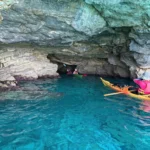
- Combine walks with the sea: one of the nicest ways to see the cliffs you have walked over is from the water. A sea kayak trip along the coast shows you the caves below the paths.
- Refuel: plan to finish in a village with a taverna. Our guide to where to eat in Paxos picks out places in Gaios, Loggos and Lakka.
Is Paxos good for a walking holiday?
Yes, if you want walking that is about atmosphere rather than summits. There are no big climbs here, and none of the routes is technically difficult, but the combination of shade, silence, stone villages and the sudden drama of the west coast is hard to match. A week gives you time for the long Lakka to Gaios crossing, a couple of sunset walks to the cliffs, a morning on Antipaxos and lazy afternoons by the sea. If you only have a day, a walk from Lakka towards Loggos with a swim on the way gives you the essence of the island, and it is a far richer experience than seeing Paxos only from a day cruise from Corfu.
Frequently Asked Questions
How long does it take to walk from Lakka to Gaios?
The walk is about 12 km and takes around two and a half hours at a steady pace. Allow longer with breaks and photo stops. The gradients are gentle, but some sections are stony, so wear proper walking shoes.
How do you get to the Tripitos arch on Paxos?
Most walkers drive or take a taxi to the hamlet of Ozias in the south of the island and walk the final stretch through the olive groves. The start is poorly signed and the last part has loose rock, so download directions first and wear shoes with grip.
Are the walking trails on Paxos marked?
Some routes are waymarked, but signage is inconsistent and many junctions look alike. A walking map of the island or a hiking app with routes downloaded in advance is strongly recommended, as phone signal is weak in places.
When is the best time for walking on Paxos?
April to early June and mid September to October are ideal, with mild temperatures and green groves in spring. In July and August, walk only early in the morning or close to sunset and carry plenty of water.
Is Paxos walking suitable for beginners?
Yes. The island is low, with a high point of only around 240 m, and most routes follow old mule tracks with easy gradients. The main hazards are heat, uneven ground and unfenced cliffs on the west coast.