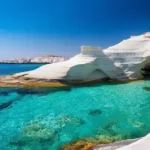



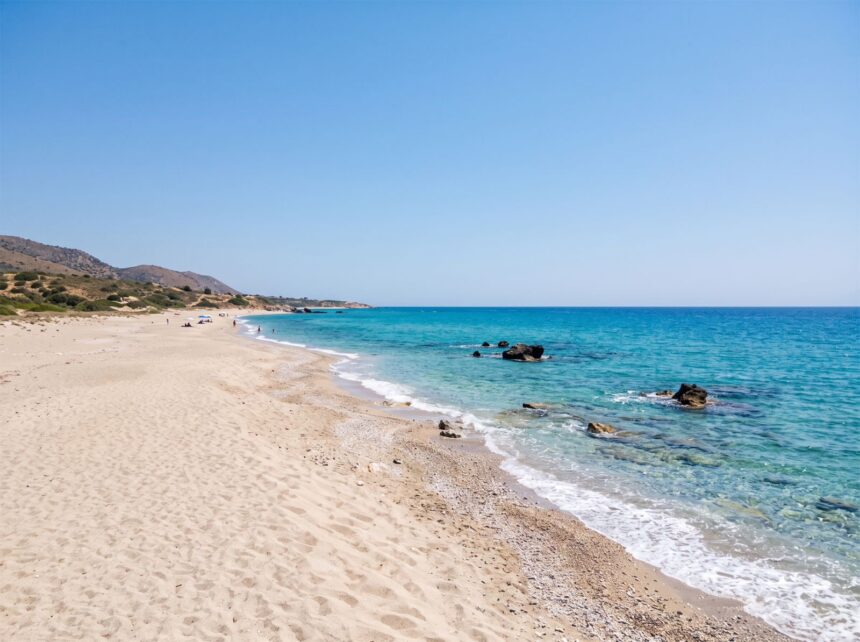
Lefkada's west coast has the famous white beaches such as Porto Katsiki, Egremni and Kathisma, with turquoise but open, often windy sea. The east coast has calmer, warmer pebble bays like Mikros Gialos and Desimi, better for families and windy days.
Lefkada’s beaches split cleanly into two types. The west coast has the famous ones, Porto Katsiki, Egremni, Kathisma and the Kalamitsi coves: long white strands under cliffs, with brilliant turquoise water, but also open sea, afternoon wind and cooler water that deepens quickly. The east coast, facing the mainland and the small islands off Nidri, has calmer, warmer, mostly pebbly bays with tavernas close by. Choose the west for scenery and sunsets, the east for easy swimming with children, and plan your days around the wind.
Quick facts
- West coast: white sand and pebbles, cliffs, big views and sunsets; exposed to afternoon wind and waves.
- East coast: sheltered, mostly pebble bays, warmer water, more facilities, views of the mainland and islets.
- Best time: June and September for warm water and fewer people; July and August are busy everywhere.
- Getting there: a car or scooter for the west coast; boats from Nidri and Vassiliki for Porto Katsiki, Egremni and Agiofili.
- Good for families: east coast bays and the shallower corners of Vassiliki and Mikros Gialos.
West coast vs east coast at a glance
| West coast | East coast | |
|---|---|---|
| Typical beach | Long white sand or fine pebble below cliffs | Small pebble or shingle bays |
| Sea | Open sea, waves on windy afternoons, deepens fast | Usually calm, warmer, gentler entry |
| Water colour | Vivid turquoise against white stone | Clear, greener and darker in tone |
| Facilities | Some lidos and canteens, several beaches with none | Tavernas, sunbeds and villages close by |
| Access | Winding roads, steps, paid parking at the busiest | Mostly flat and easy from the coast road |
| Sunset | Directly over the sea | Behind the mountains |
The west coast beaches, north to south
Agios Ioannis and Gyra
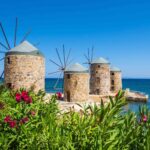
Just outside Lefkada Town, the long beach of Agios Ioannis runs beside old stone windmills. It faces north and west and catches the prevailing wind, which makes it a favourite with kitesurfers and windsurfers rather than calm-water swimmers. It is the easiest place for a sunset swim if you are staying in town.
Pefkoulia
North of Agios Nikitas, Pefkoulia is a long stretch of sand and pebbles with pines behind and a car park and taverna at one end. It is rarely as crowded as the beaches further south, and you can usually find space by walking along it.
Agios Nikitas and Mylos
Agios Nikitas is the only real village on this coast right at the water, with a small pebbly beach in front of a lane of tavernas. Just over the headland, Mylos beach is reached by a steep path of about 15 to 20 minutes or, more easily, by small boats that shuttle from Agios Nikitas in summer. Mylos has no facilities, so bring water, food and shade.
Kathisma
About 15 km southwest of Lefkada Town, Kathisma is the most developed west coast beach: a long sandy strand with beach bars, sunbeds, watersports and tavernas on the slope behind. Paragliders often launch from the hills above. It is the easiest west coast beach to reach by car and the best choice if you want facilities, but parking is hard in August, and when the wind is up the waves can be strong.
Kalamitsi coves: Kavalikefta, Megali Petra and Avali
Below the village of Kalamitsi, a winding road leads down to a cluster of beaches. Kavalikefta has sunbeds and a bar, Megali Petra is named for a large rock offshore and has no facilities, and Avali has a small bar. These are the beaches to choose if Kathisma feels too busy, with the same white stone and blue water but fewer people.

Egremni
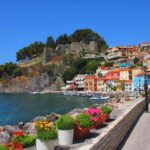
Egremni is a long ribbon of white sand and pebbles beneath high cliffs, about 2.5 km in length. The 2015 earthquake destroyed the staircase from the road and for several years the beach could only be reached by sea. The road has since been repaired and the stairs rebuilt; they now number several hundred steps, a serious climb back up in the heat. Expect a walk on a steep paved road from the parking area to the top of the stairs, very limited facilities on the sand and no lifeguard. Excursion boats from Nidri and Vassiliki also stop here when the sea allows. Because the situation has changed several times since 2015, check current access locally before you go.
Porto Katsiki
At the southern end of the west coast, about 40 km from Lefkada Town and around 15 km from Vassiliki, Porto Katsiki is the beach on every poster: a curve of white sand under sheer pale cliffs. A flight of steps leads down from the car park, where there are canteens selling food and drinks. The cliffs shade much of the beach by early afternoon. It is very busy in July and August, particularly when several excursion boats arrive at once, so come early in the morning or late in the afternoon. Parking is paid and prices have risen in recent years.
Combine Porto Katsiki with the drive out to the lighthouse at Cape Lefkatas for sunset, one of the best things to do in Lefkada away from the sand.
The east coast beaches, north to south
Lygia and Nikiana
South of the town, the former fishing villages of Lygia and Nikiana have small pebble beaches with views across to the mainland and seafood tavernas within a few steps. They are simple places to swim rather than destinations, but the water is usually calm and they are convenient if you are based in town.

Nidri, Desimi and the Vlychos bay
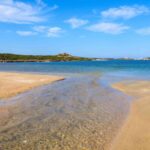
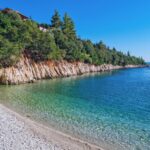
Nidri is the busiest resort on the island, with a mixed sand and pebble beach, lidos, restaurants and bars. The beach itself is fine for a quick swim, but the real draw is the view of Madouri, Skorpios and Meganisi and the boats that leave for them every morning. To the south, the sheltered Vlychos bay and nearby Desimi have quieter swimming in calm, shallow water, popular with families and campers.
Mikros Gialos
Below the village of Poros in the southeast, Mikros Gialos is a long shingle and pebble beach in an enclosed bay, with lidos, bars and tavernas. It is one of the best east coast beaches, with clear water and a quieter feel than Nidri.
Ammouso
Further round, Ammouso is a large pebble beach in rocky surroundings, off the main routes, with a lido and taverna. It suits people who want a simple, uncrowded beach day.
Vassiliki and Agiofili
Vassiliki sits in a wide bay in the south, with a long pebble beach, tavernas, bars and one of Europe’s best known windsurfing centres. Mornings are usually calm and good for swimming; the wind fills in during the afternoon. Our guide to windsurfing in Vassiliki explains the pattern. Around the headland to the east, Agiofili is a small, quiet pebble cove backed by green hills, most easily reached by small boat from Vassiliki.
Seeing the west coast from the sea
If the drive to Porto Katsiki and Egremni does not appeal, excursion boats from Nidri and Vassiliki follow the south coast round to both beaches and often stop at Agiofili as well. You get the cliffs from their best angle and avoid the steps, at the cost of time spent on the boat and landings that are cancelled when the sea is rough. For the islands on the other side, see our boat trip guide to Meganisi and Skorpios.
Which coast should you choose?
- For the famous views: the west coast, ideally on a calm morning, finishing with sunset.
- For small children: the east coast, especially Desimi, Mikros Gialos and the calmer end of Vassiliki.
- For windy days: stay on the east coast, or go to Agios Ioannis or Vassiliki to watch or try windsurfing and kitesurfing.
- For a quiet beach: the Kalamitsi coves, Pefkoulia, Ammouso or Agiofili.
Where you base yourself makes a difference: west coast days are much easier from Agios Nikitas or Kalamitsi, east coast days from Nidri or Vassiliki. Our guide to where to stay in Lefkada compares the main areas.
Practical tips
- Check the wind forecast every evening. On days with a strong northwesterly, west coast beaches have waves and swirling sand while the east coast stays calm.
- West coast beaches shelve steeply and the water is often a few degrees cooler. Weak swimmers and children should stay close to shore.
- Many west coast beaches have no lifeguard and few or no facilities. Bring water, food, shade and shoes for hot stones.
- Parking at Porto Katsiki and Egremni is paid; carry cash.
- Leave early. The roads to the southwest are narrow and slow, and the car parks fill by late morning in summer.
- Never leave valuables in a parked car at the busy beaches.
For more on the island, including getting there across the bridge from the mainland, start with our complete Lefkada travel guide.
Frequently Asked Questions
Which side of Lefkada has the best beaches?
The west coast has the most spectacular beaches, including Porto Katsiki, Egremni and Kathisma, with white stone and turquoise water. The east coast has calmer, warmer water and more facilities, which many families prefer.
Is Egremni beach open?
After the 2015 earthquake Egremni could only be reached by sea, but the road has been repaired and the stairs rebuilt. There are several hundred steps, so it is a demanding climb. Access has changed several times, so check locally before you go.
How do you get to Porto Katsiki?
By car, it is about 40 km from Lefkada Town and around 15 km from Vassiliki, with paid parking and a flight of steps down to the sand. Excursion boats from Nidri and Vassiliki also stop there when the sea is calm.
Which Lefkada beaches are best for children?
East coast beaches such as Desimi, the Vlychos bay, Mikros Gialos and the calmer end of Vassiliki are best. The water is usually flat and warmer, and tavernas and shade are close by.
Why are Lefkada’s west coast beaches so windy?
The west coast faces the open Ionian Sea and the prevailing northwesterly wind, which usually strengthens in the afternoon. Mornings are often calmer, so go early or switch to the east coast on windy days.